


Like a number of other government agencies, the National Weather Service has felt the blade of President Reagan’s budget cuts. It will soon be losing 5% of its personnel and closing 38 local weather-reporting stations across the country. And while the agency claims that public safety (in matters involving storm warnings and the like) won’t be adversely affected by the belt tightening, it freely admits that local forecasts simply won’t be as accurate as they have been.
Therefore, skill in do-it-yourself weather forecasting could come in mighty handy in the years ahead. Besides, when you become familiar with your particular locality’s weather patterns, you’ll probably be better at short-range forecasting than meteorologists 50 or 100 miles away could ever be.
The fact is that nature is chock-full of helpful clues for weather predicting. Of course, no single one of them will prove correct on every occasion, but by using pieces of such evidence in combination, you can often produce uncannily accurate forecasts. Keep in mind, of course, that some of the following tips (especially those concerning winds) may have to be modified to suit your region, particularly if you live near a mountain range or large body of water. However, once you learn the local patterns, you’ll likely find them consistent enough to enable you to adapt the general information given here.
In any case, a cumulus cloud is a cumulus cloud, whether it’s floating over Canada, South Africa, or Australia. So let’s look first at the various types of airborne weather forecasters.
Feathers, Fleece, and Fog
There are three basic groups of clouds: cirrus (the feathers), cumulus (the fleece), and stratus (the fog).
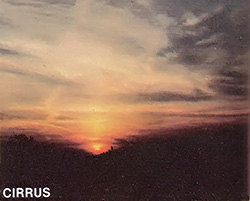
The highest fliers are cirrus clouds: wispy, white configurations that are composed primarily of ice crystals. When you see these feathery formations scattered sparsely in a mostly blue sky, expect a sunny day. Remember, however, that the delicate, silky, hairlike tufts (sometimes known as “mares’ tails”) travel at speeds of up to 100 miles per hour and precede weather fronts. Cirrus will frequently be followed–within a period of hours–by other cloud formations, which will vary in type according to the temperature of the front that’s moving in.
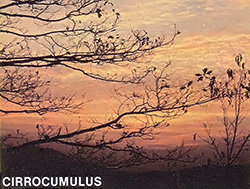
Mares’ tails could, for example, give way to cirrocumulus clouds, which are sheets or layers of small white masses that ripple like windblown beach sand or resemble fish scales. If this “mackerel sky” is followed by winds from the west to the north, no precipitation is likely …but when northeast to southerly winds blow, you can probably expect “falling weather” within 24 hours.
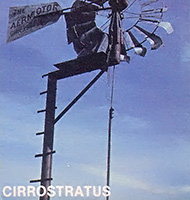
Another high-altitude, ice-crystal cloud cover is known as cirrostratus. This variety is frequently transparent and fibrous in appearance, giving the sky a milky look. Occasionally, a layer of cirrostratus causes a halo to form around the sun or moon, and–when it does so–the phenomenon generally heralds precipitation (expect it within 15 to 25 hours or even sooner, if the winds are from the southeast or the south).
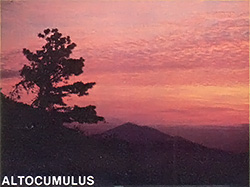
Altocumulus clouds are occasionally mistaken for cirrocumulus, but float at lower altitudes. They appear in masses, rolls, or waves with edges touching (as if a tractor had plowed a pure field of snow). Sometimes the flattened areas will be a light gray color. This darker shade can help the observer distinguish the clouds from cirrocumulus, which are always white. Though threatening in appearance, altocumulus are not rainmakers in themselves …but precipitation is likely within 15 to 20 hours after their appearance if the wind is steady from any direction between northwest and due south.
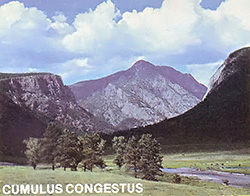
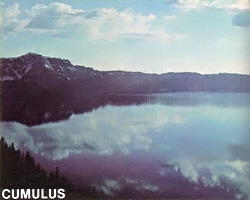
Cumulus clouds–which are produced when invections (rising winds) meet with cooler upper air–drift even lower than do altocumulus and are composed mostly of water droplets. If the fleecy, flat-bottomed configurations are gently rounded and white, they presage fair weather. But the pretty cotton-candy fluffs can grow into tall thunderheads.
Cumulus congestus–a large variety of cumulus cloud–is somewhat dark, and its top and sides are rounded like those of a cauliflower. If such floaters are slow-moving, fair weather is likely. When they’re traveling rapidly, storms will often follow (the downpours should pass quickly, though).
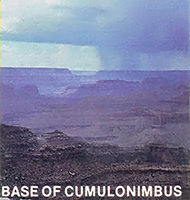
Towering cumulonimbus, the largest of the cumulus type, are heavy and dark. The sides of the thunderheads are cliff-like, with majestic vertical development, and their tops are either round or have anvil-shaped crowns. A line of these fast-moving weathermakers stretching across the sky from north to northwest means you should be prepared for a wind shift to the south or southwest and heavy rain squalls with lightning and thunder …or, in the winter, very heavy snowfall. The massive cloud “mountains” can measure as much as five miles from base to crown, and the height of the formations will usually be paralleled by the violence of the storm they bring.
When the air is very muggy and oppressive, watch cumulonimbus clouds carefully. If they become tinged with yellow or a dirty greenish black, roll and churn like boiling water, and bulge downward like upside-down cumulus clouds (from below they’ll resemble huge clusters of grapes), seek shelter immediately, especially if the wind shifts suddenly. Such clouds (known as cumulomannatus) signal the approach of fierce lightning and hailstorms, or possibly even a tornado.
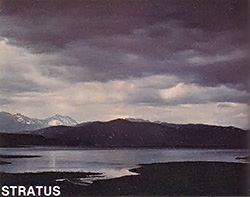
Stratus clouds–the third type–hang in very low horizontal layers or in ragged patches called fractostratus, and are light to dark gray. When they’re combined with winds from the northeast to south, these bleak blankets often announce heavy precipitation that can last, off and on, for several days. When they’re accompanied by winds from other directions, however, the clouds presage light snow or drizzle …or perhaps just overcast days with no precipitation at all.
But remember that no matter what the weather is–fair or foul–no change will occur until there’s a switch in the existing surface wind direction. Therefore, the amateur meteorologist can learn a lot by paying attention to the breezes.
Telltale Winds
The old saying “Winds from the west bring weather at its best” often proves to be true, simply because North American air currents normally flow from west to east, and thus westerly winds (northwesterlies in the winter and southwesterlies in the summer) can commonly be seen as evidence that no major disturbances are nearby (except, perhaps, when this type of breeze occurs along the Pacific coast and the Gulf coast of Florida, where it may be announcing the arrival of ocean-born storms).
You can also count on the fact that storms in the Northern Hemisphere revolve counterclockwise around low-pressure areas. Therefore, if you face the wind and point to your right, you’ll be pointing toward the nearest storm center.
When air currents at different attitudes run in differing directions, you can watch for a weather change. (Usually, the lower-level clouds will be broken, allowing you to see the direction in which the upper layer is moving.) In such a case, apply the “crossedwinds rule.” This rule states that if you stand with your back to the lower wind and the upper wind comes from the left, the weather will normally deteriorate … while if the upper winds come from your right, clearing will probably follow.
Perhaps the best weather clue that winds provide, however, is not just their direction, but their change in direction. When winds shift in a clockwise manner (for example, from south to southwest), anticipate fair weather, but when they change in a counterclockwise direction, prepare for precipitation. (Easterly winds in the Northern Hemisphere usually indicate the counterclockwise movement of air around low-pressure centers, and signal the coming of severe weather.)
A weather vane, of course, is an inexpensive tool to use to keep up with wind directions, and few old farms were without one. Birds, too, are natural weather vanes: Because they can take off more quickly into the wind than with it at their backs–and since they don’t like to get their feathers ruffled–they usually sit facing a breeze.
Flying Barometers
Like a weather vane, a barometer–an instrument for measuring air pressure–can be a valuable and inexpensive weather-predicting device. A drop in pressure means a storm is brewing, whereas rising pressure foretells a clear day. And just as nature provides ways to monitor changes in wind direction, there are backyard substitutes for this piece of meteorological equipment.
When the air pressure drops, you see, the atmosphere becomes unusually thin. Aside from making it more difficult for birds and bats to stay aloft, this thin air hurts the ears of such creatures …so they tend to fly lower, where the atmosphere is thicker. Falling pressure also keeps insects closer to the ground, forcing insect-eaters to skim low in order to feed. (Fish jumping out of the water for such bug swarms are another indication of low air pressure.) Some bird species–including geese, gulls, crows, and robins — actually avoid any flight before a storm.
There are, in fact, few excuses for persons even slightly weather-wise to let a storm take them by surprise because nature offers literally dozens of clues to a barometric drop. For instance, wells and springs rise higher than usual, soot falls down from chimneys, smoke drifts horizontally or drops to the ground, reptiles tend to be more active, and bees hide in their hives. Other flying insects–such as mosquitoes, gnats, and flies–tend to swarm at about face level, and they bite more readily when the pressure drops, too.
Generally speaking, insects are more active approximately 12 hours before a rain starts, but they stop flying about two hours prior to a downpour. (You’ll sometimes see flies swarming on screen doors as the storm gets close.) Many spiders take advantage of the increased bug activity by building large webs, which they abandon as the rain becomes imminent. You might notice, too, that spiders fix their frame lines short during unsettled weather … whereas when the web anchors are long, there are probably several days of fair weather ahead.
Your own body is yet another natural barometer. For one thing, it’s common knowledge that declining air pressure will cause some people’s bones and/or teeth to ache.
Even if you aren’t particularly sensitive to pressure shifts, you may still be able to smell a storm because odors–which are repressed in a high-pressure center–suddenly escape just before bad weather moves in. Sound levels increase, as well. Acoustical analysts say that the dense cloud cover accompanying a storm acts as a barrier, bouncing sound waves back toward the earth and thus seemingly magnifying noises.
Finally, as the old adage goes, “the farther the sight, the nearer the rain.” In a high-pressure area, air is relatively static and laden with dust, which tends to reduce visibility … but as a storm approaches, the atmosphere clears, and distant objects appear to be closer.
Blooming Hygrometers
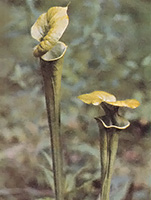
Another harbinger of approaching rain is an increase in humidity, which professional meteorologists measure with a hygrometer. You, however, can monitor the moisture in the air with the help of the plant world because many flowers tend to close up as the atmosphere becomes damper. These “weather flora” include dandelions, hawkweed, marigolds, pimpernels, rattleweed, tulips, clover, chickweed, morning glories, and daisies. (The pitcher plant, however, opens just before a shower.)
And don’t overlook the messages sent by that human moisture gauge, your hair. Straight locks will feel lifeless as humidity increases, and curls will be unusually hard to manage. In fact, many modern hygrometers are still designed to include human hair that’s been treated to remove natural oils. (Blond hair, from a child, works best.) When the strand–which is connected to a meter–stretches or shrinks, it records the changing humidity very accurately.
Singing Thermometers
In addition to supplying free barometers and hygrometers, nature can sometimes help you to judge the temperature. In fact, field crickets are more accurate than many mercury thermometers. Just count the number of times one of the insects chirps in a 15-second period, then add 37. The total will equal the temperature (in degrees Fahrenheit) at the spot where the cricket sits.
Less precise, but equally interesting, are katydid calls. When the temperature is about 78°F, these insects give their full call of “kay-tee-did-it.” At approximately 74° they cut it back to “kay-tee-didn’t.” At around 66° it’s “kay-didn’t.” At 62°, “kaytee;” at 58°, simply “key.” At 55 ° or lower the insects are silent.
And while you’re monitoring temperature changes, keep this in mind: If the air becomes warmer between 9:00 p.m. and midnight, you can place a bet that rain will follow and win!
Hue Clues
If you remember that the weather conditions that you see in the west today will probably arrive in your area tomorrow, while the situation you view in the east generally won’t affect you, sunsets and rainbows can serve as reliable weather-predicting tips. Because colors produced by the setting sun result from the dust and moisture content of the air, you can predict the likely content of your local air tomorrow by the colors of the sunset tonight. Rosy pink shades dominate when the atmosphere is dry and dusty, so they presage a fair day (as the old saying goes, “Red sky at night, sailors’ delight”). However, dark red indicates that the dust particles are laden with moisture, and precipitation is likely. Greens and yellows mean that the air is dry and clear, whereas whites and grays occur when the atmosphere is very humid.
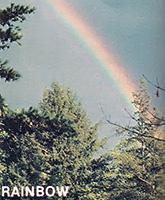
Additionally, early in the day when the sun’s in the east, rainbows may appear near clouds in the west (which could be moving toward you). But in the evenings you’ll sight rainbows near clouds to the east (which are probably moving away from you). It’s said, too, that if blue is the most dominant color in the arch, the air is clearing; an abundance of green indicates continued rain; and if red shows up strongly in a rainbow, paling all other hues, it’s a sign of heavy precipitation to come.
Coronas and halos can also provide clues for the backyard weather-watcher. The former phenomena are small tinted rings around the sun, moon, or–in some cases–stars. They’re red on the outside and blue on the inside and result from strong light bending through water droplets. An expanding corona is evidence that the moisture is evaporating and the weather is clearing, while shrinking circles mean that the water droplets are growing and will soon come down as rain.
Halos are often confused with coronas but they are much larger, look white with an occasional red inner ring, and don’t change size. These are caused by light bending through the ice crystals in high altitude clouds, and–as mentioned earlier–such formations normally occur at the top of a major storm center and precede rain, snow, or all-round nasty weather.
The color of lightning–white, red, or yellow–can also provide forecasting information. Red and yellow “skyworks” don’t usually portend rain: Such “heat” lightning is seen at a distance through dust-packed air and indicates that the storm will pass to the north, south, or east. A storm that’s headed your way will be seen through clearer air, so the lightning will seem white.
If you want to judge how far away the aerial electrical display is, just count the number of seconds between the flash and the resulting thunder. The speed of sound is about one mile in five seconds. For example, if you count 12 seconds, you can assume that the storm is about two and a half miles away. (The rumbling can sometimes be heard as far as 20 miles, but usually carries for only half that distance.) If the lightning is to the northwest, west, or southwest, it’ll be moving toward you at roughly 30 MPH and you’ll have about five minutes to take cover. But if the flashes are to the north, east, or south, the thundershower will probably pass you by.
The Night Watch
Coronas, halos, and lightning can all give nighttime tips about the weather to come, but other forecasting tools are available in the dark hours, as well.
Naturally, the presence of many stars means that there are few clouds and little chance of showers. However, since a clear sky doesn’t provide the earth with a lot of insulation, the thermometer will probably dip during cloudless nights, the drop in temperature will cause moisture to condense out of the air, which will produce dew, ground fog, or frost by morning. All of these, in turn, are indications of a fair day to come.
While you’re out, observe the moon’s color. Generally, a white or silver orb indicates a dry atmosphere and fair weather. A red face–which is seen through moist air–means rain in 12 to 14 hours, or within about ten hours after the moon loses a visible outline.
Most meteorologists maintain that the moon’s phases–while affecting the tides — have little to do with the weather. But in 1962 an astronomer fed 50 years of U.S. Weather Bureau rainfall data into a computer, together with information on the lunar phases during the same half-century. He found that rain and snow tend to fall within three days of the new moon, and that there’s a much greater tendency to dryness at the midpoint of its waxing or waning.
That gentleman’s discovery would have come as no surprise to Theophrastus, who observed–in the fourth century B.C.–that “the ends and the beginnings of the lunar months are apt to be stormy.” Of course, there’s no guarantee that homegrown meteorology will help you make discoveries that place you 24 centuries ahead of your time … but it could well help you be a very proficient short-term weatherperson.
EDITOR’S NOTE: You’ll find even more assistance in “How to Forecast Weather.”






