

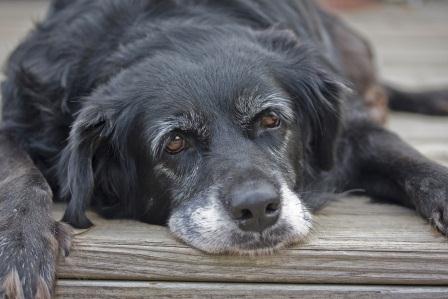
Every year I get more and more aware of the aging process. I’m now wearing bifocals, my joints tend to creak a mite when I first rise from a chair, and when the grandsons want to wrestle I’d usually just as soon read to them from Mother Goose.
Dogs and cats (and other pets) go through the same sort of changes as they age. And because a pet’s life span is so much shorter than yours and mine, an animal can seem literally to age before our eyes.
There’s no way that I or my pets can halt our aging; we’ve all been genetically programmed to live a certain number of years, give or take a few. What we can do, however, is improve the quality of the time we’ve got.
As an animal ages, all its body systems tend to lose their strength, suppleness and efficiency. But some organs and body parts in particular develop problems that warrant special attention in senior pets.
Kidneys and the Aging Process
The kidneys are a pair of crucial organs that are greatly affected by the aging process, especially in dogs. Kidney functional loss–to some degree or other–is the price your dog will almost surely pay for growing old.
One of the first signs that the kidney isn’t behaving up to par is when a dog drinks more fluids to help his kidneys function–and when, as a result, he spends lots of time with his leg lifted at the fire hydrant. If it is allowed to progress, chronic kidney disease can lead to severe physical problems, uremia and even death.
The problem that comes along with kidney functional loss is that other parts of the body are affected as well. For example, the kidneys help regulate the amount of mineral that’s deposited in the bones. With severe kidney dysfunction, a dog’s bones may become rubberlike–a syndrome often referred to as “rubber jaw.”
Other body functions, such as red-blood-cell production and body-salt regulation, are also controlled by the kidneys. So loss of any amount of functional kidney can create an extreme hardship on the aging animal.
Keeping your pet’s kidneys healthy, then, is one of your primary tasks. Keep plenty of fresh water where your pet can easily get to it–and expect that you may have to revert to some of the puppy-training tactics you used years ago. More frequent outings will be necessary to give Pooch a chance to pass off the excess wastes. And it might be a good idea to put down layers of paper somewhere near your pet’s bed to catch the nighttime dribbles.
It’s been shown that excess dietary protein can actually harm an animal’s kidneys. To avoid this, plan a diet that has a decreased amount of high-quality protein. In addition to protein’s potential for harm, the mineral phosphorus–in excess amounts–can cause demineralization, or softening, of the bones. Dietary intake of phosphorus should therefore be limited.
There are specially prepared, low-protein and low-phosphorus diets for senior pets that are commercially available. Check with your veterinarian for recommendations.
Joint Pain in Older Animals
When a pup playfully romps around the yard, it does so on joints that are perfectly smooth and flexible. As your pet ages, however, “normal” wear and tear may cause those smooth joint surfaces to erode and eventually roughen. (These painful changes are, of course, greatly accelerated if the pup or kitty has had an accident that affects a joint, or if it has spent a lifetime walking on legs that are structurally abnormal.)
As you can well imagine, every time those eroded joint surfaces are flexed, the one roughened surface rubbing against the other can cause a considerable amount of ouch! This type of pain is usually the kind that wears off as Pooch “warms out of it.” That is, after Pooch takes a few reluctant first steps, the initial pain gradually diminishes, and he begins to walk normally.
There is some evidence that in humans much of our joint damage due to age can be avoided by maintaining a moderate exercise program throughout our lifetime. It’s been my observation that this is generally true in pets also–animals that are kept reasonably active don’t come down with joint ailments later on.
So keep your dog feeling like a puppy throughout the dozen or so years he’ll be with you. Take him on a 20- to 30-minute walk at least four or five times a week. As he ages he’ll undoubtedly be less and less apt to take off for far-flung romps. That’s perfectly OK. Let the old geezer decide how hard he wants to exercise. But for his health’s sake, make sure he gets that exercise.
If the old man seems to be in pain, try a daily dose of aspirin. Maintenance aspirin dosage in dogs is 25 to 35 mg/kg of body weight every eight hours. Translated, this means about one adult aspirin (325 mg) per 20 to 30 pounds of average-sized pooch, three times a day. Baby aspirin (81 mg per tablet) can be used for the smaller critters, with appropriate dosage based on body weight.
Pet Dental Care
Although dogs and cats are not immune to tooth decay, cavities are not nearly as prevalent in them as they are in our sweets-loving children. However, dental calculus (a buildup of crusty, mineral material on the surfaces of the teeth) is often a severe problem, especially in the elderly. Excessive calculus can cause infection and eventual tooth loss and can even be life-threatening when untreated.
If your pet has nasty breath, chances are good he already has dental calculus. Ol’ Rotten Mouth needs a professional tooth cleaning and scaling, best performed while he’s under an anesthetic. See your vet.
Dogs and cats that are fed dry or kibbled foods are less likely to develop calculus. An occasional doggie bone also acts as a fair tooth cleaner. But to really do an effective job of tooth care, get out the toothbrush. There are toothbrushes and toothpastes specially made for pets, which will help eliminate calculus.
It’s amazing to me just how quickly (admittedly after a few training sessions) most pets come to appreciate their daily tooth cleaning. I’ve had folks tell me that Pooch will find and fetch the toothbrush when it’s time for the daily brushing.
Eyes, Ears, Nose and Tongue
Just as I’ve had to learn to live with my bifocals, so too will a pet–and his human family–have to learn to live with sense organs that are gradually losing their abilities. Older dogs and cats simply don’t see as well as they once did, and they’ll probably need a louder shout to bring ’em home from the back forty. As a pet’s sense of smell and taste gradually diminish, so too may his appetite.
An animal that can’t see or hear up to par may react suddenly to quick movements or noises; work and play around the old man quietly and slowly. Expect a little crotchetiness; you and I will probably feel the same way when we’re a little older. And try to make any changes as gradual as possible–changes in diet, for example, or in your daily exercise routine.
Your Pet’s Later Years
While it may seem that some of your pet’s body parts are aging faster than others, remember that all systems are undergoing change. The overall mass of cells of the brain gradually decreases (which may explain why it is that when Rufus and I now go into a room, neither of us can remember why we are there). Muscle mass also tends to decrease with age, and the belly may become more like a paunch.
Heart failure is not uncommon in the older pet, and tumors of the skin, lungs and other parts of the body can accumulate with age. Specific diseases, such as diabetes and prostatitis, are more prevalent with each passing year. Even a pet’s hair betrays him, gradually taking on the silver hues that announce to the world his senior citizenship.
That’s the bad news; the good news is that we can slow or halt many of these changes. Consistent exercise–in moderation–is a potent fighter of the “normal” ravages of aging. Proper nutrition helps each and every body part, generating a healthy, well-oiled machine that may not last forever, but that will certainly go its share of the miles.
And finally, the love that comes from a family that cares–truly cares–is like a gentle and lasting heart massage, giving a pet every reason to feel his best, do his best and last his longest.






