Save time and resources with easy gardening for seniors to make your experience more enjoyable.
On my 75th birthday, I reflected on how my views, objectives, and practices have changed in the 50-plus years since I began gardening and homesteading. I thought: If only I’d known (this or that) when I first started.
I hope my reflections and tips can save you time and resources and make your experience more enjoyable in your travels through time.
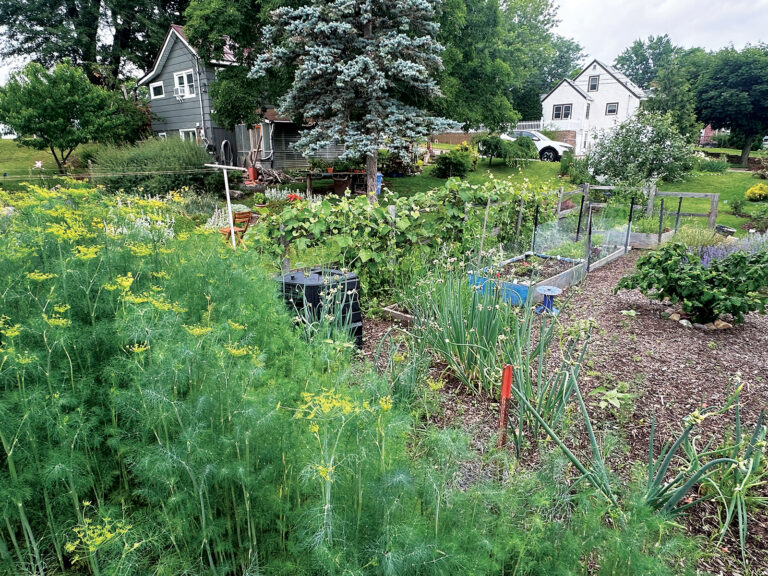
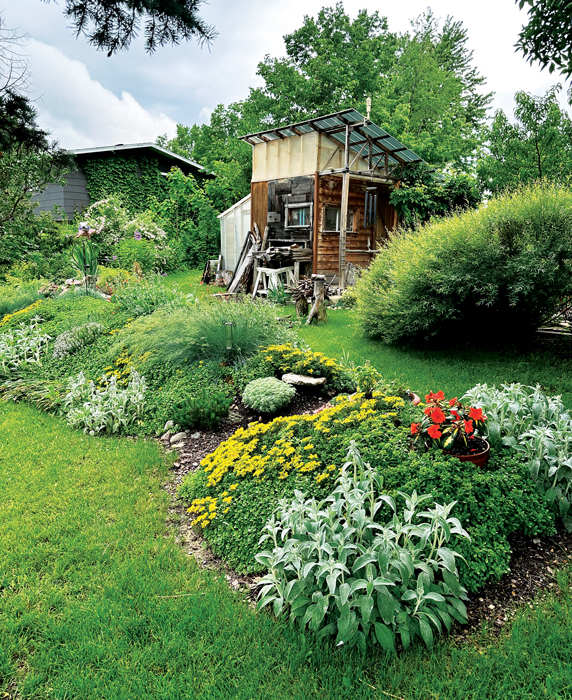
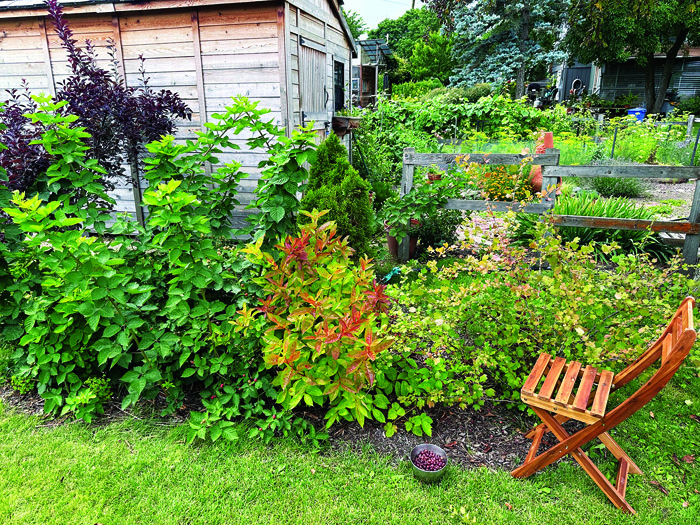
I’m still outdoors nearly every day. I now live on a small-town double lot with gardens that contain a mixture of food and ornamental plants, including fruiting trees and shrubs, perennial herbs and vegetables, and annual crops in raised beds.
Self-reliance varies from person to person. You can have an apartment in a large city and make your own coleslaw with veggies purchased from a farmers market or store (instead of premade), or have a huge, multi-acre farm where you grow cabbage and carrots and make oil from your olive trees and vinegar from apple scraps. It could be anything in between – which is where most of us are.
As we age, how do we keep living our dream life of self-reliance?
Plan to Thrive
Expose yourself to a wide variety of ideas. Write the end of your story first. Figure out what you want, what you like, and what your goals are. Don’t be concerned about being “perfect.” Reality is as good as it gets and, therefore, perfect as is.
I like to “brainstorm” by writing everything that comes to mind about a topic on a large sheet of paper or a dry-erase board. Some call it “mind mapping.” I do this for several minutes until my thoughts slow down and seem less spontaneous. Then, I take a break and do something else (or nothing) for a while.
Narrow your focus. Review your ideas. Consolidate similar ones. Scratch those that are too “out of the ballpark.” Ideas rejected (for now) can be saved in a jar for future review.
Prioritize. Look at those ideas that are left and ask: Which one will get me the biggest bang for my buck now? Figure out what you’ll need to accomplish the one you choose.
Review resources. Resources can be money, time, physical energy, tools or equipment, systems, and education.
Be aware of money. Do you have enough? If you need more, how will you get it? Will you sacrifice project quality to get it done sooner? I’ve learned to buy the best tool I can when I need it. If I have a choice of a plastic mallet for $1 or a 20-pound, forged-steel sledgehammer for $20, I’ll get the steel one because it’s the right tool for the job, I doubt the price will go down, and it’ll last longer.
Value time. I used to get up about a half hour before sunrise and work until it was too dark to see. Now, my day starts later and ends sooner. In late afternoon, I shower the day’s dirt off so I can sleep in a clean bed, and I watch the daylight fade. It’s quite meditative.
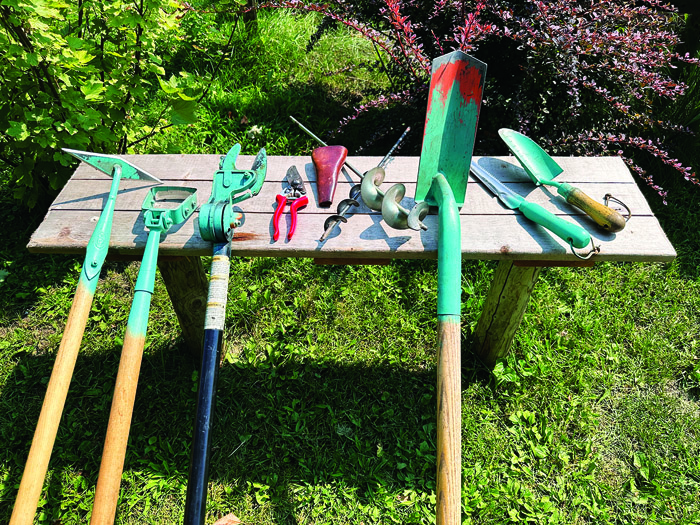
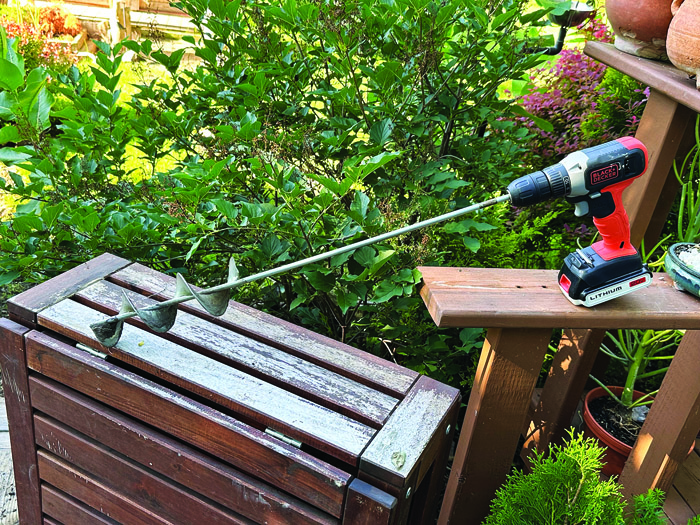
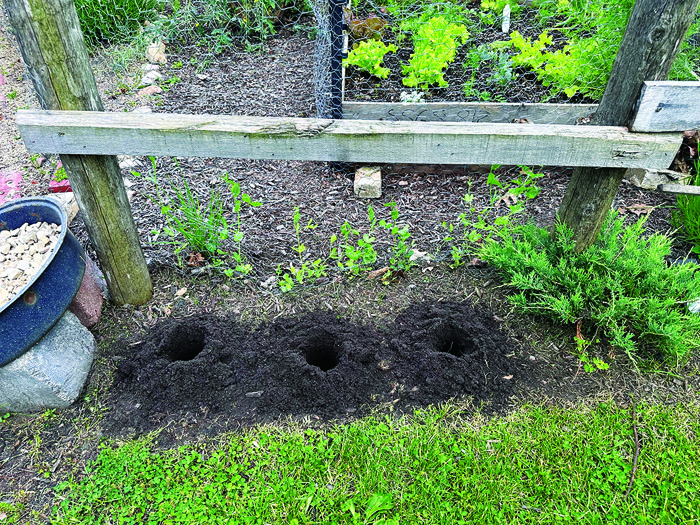
Conserve physical energy. Kiss the muscles and endless energy of your 20s and 30s goodbye! You have to work smarter, not harder. For example, when installing potatoes or other small plants, I used to dig with a big ol’ spade. I still have the spade for tree and shrub work (I keep it just in case), but I mostly use a 4-inch trenching shovel and a cordless drill with a couple of different auger sizes. I drill holes and drop in the bulbs and plants, then backfill. It requires substantially less energy and saves a lot of time.
Develop systems. I highly suggest devising a system for any kind of project or task you’ll have to do more than once. Calendars are systems. I generally schedule times to order and start seeds, and then do succession planting about every two weeks.
When I have multiple chores to accomplish in one day or week, I use time blocks. For example, I’ll spend 15 minutes a week for bathroom cleaning or an hour each week to wash, hang, take down, and then fold the laundry.
Review everything. Periodically review your ideas, plans, systems, buildings you’ve constructed, and your lifestyle itself. Ask lots of questions. For example, with a building: Does the capacity serve the objective?
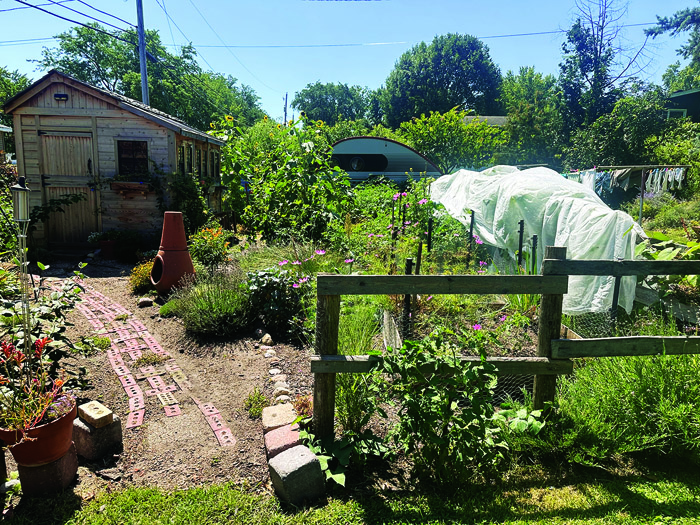
Is expansion needed? Is it too big? What can be done with excess space?
Look to the future. The forged, 20-pound sledge purchased in your 20s will be difficult to use in a few decades. What’ll you need then? I went to a 2-pound mallet with a splitting wedge for firewood. I sold the 20-pound sledge to help defray the cost and reduce the amount of items I store in my “museum” (shed). I donate many things to the community resale shop in my town.
Expect obstacles. If a goal is large or might take too long, break the project into smaller, more achievable steps. I suggest adding a time element to the mix, for motivation and measurement. Everything has to work for you, not for someone else’s idea of the right amount of time, resources, or experience. If you’re working with others, discuss the project before beginning, so you all agree. This will minimize any future slowdowns. Plus, “many hands make light work.”
Rules of Thumb
These guidelines or rules work for me. Keep, toss, or modify as suits you.
- Do what works best for you. You can always artsy it up after it works.
- Use the right tool for the job; it makes things go more easily.
- Acquire the best quality you can afford at the time. You’ll save money and time in the long run.
- Manage time. Fifteen minutes of planning time equals an hour of “doing” time. In the later stages of life, time may be your most precious resource, for, without it, there’s nothing. Even a few seconds can make a difference in enjoying the experience of work.
- Create your own ecosystem. Set up what you need on your property; for example, growing space, workspace, and relaxing space. Do it in a way that works for you. Drawing it out can help. Community is necessary, be it a neighborhood, village, or activity-based group. Design systems that work for you.
- Develop clerical (recordkeeping, bookkeeping) systems. Create written schedules to share with others so they can tend your garden when you’re away or unavailable.
Mental and Physical Well-Being
Knowledge. I use notebooks and attend classes and seminars whenever I can. Teach others what you’ve absorbed in order to help them learn, while cementing the knowledge in your mind. Sometimes, discussions generate new ideas (which are always welcome!). Learn horticulture, physics, art. Create your own library of directories, phone numbers, and reference books.
Personal time. Make sure to have “me” time. It’s like hitting the reset button on your mind.
Appropriate attire. Check in with Mother Nature (reality) before beginning an activity so you know how to dress and how long you’ll comfortably have for a task before rain, heat, bugs, etc.
Creative time. Ensure you use this aspect of your mind, either with a hobby or in your daily activities. Use your senses and pay attention to your emotions.
In the Garden and Outside
Scale down. Use smaller, lighter tools. Don’t climb on roofs. Prune fruit trees compactly. Use shorter ladders. Instead of 80-pound bags of birdseed, reduce to 20- or 10-pounders. The smaller bags might cost more per pound, but they’re still cheaper than a doctor visit.
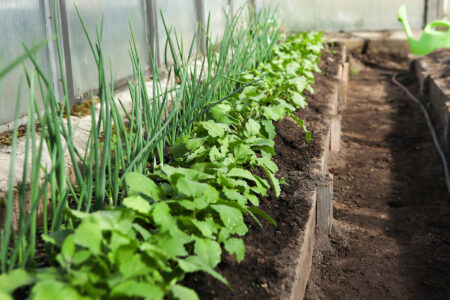
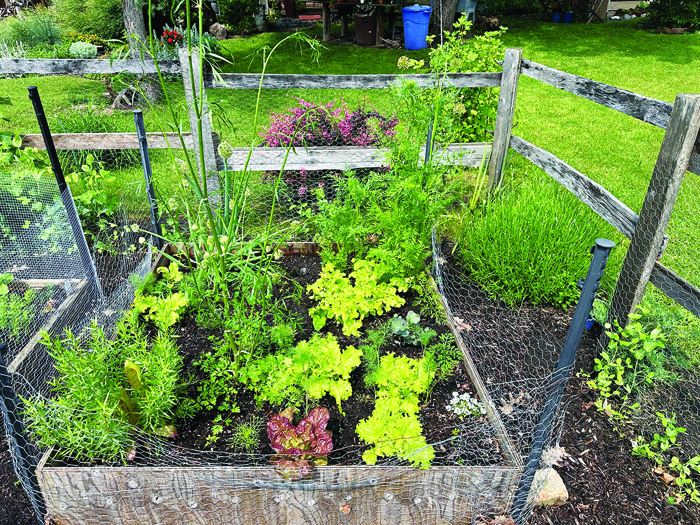
Consolidate. Instead of rows of monocrops, plant in raised beds and use the square-foot method. For example, use a 1-foot-square block (approximately) with the appropriate number of a particular plant in that square: one tomato, four lettuces, nine beets, 16 radishes, 20 carrots, etc. Include flowers to attract pollinators and make the bed more visually interesting. If you throw a fluted flower in, you’ll likely attract hummingbirds too.
Choose multiple-use items over single-use. I have a decorative post-and-rail fence of sorts, made from salvaged woods, to define garden borders. On the inside, I added 3-foot-high chicken wire. Along the top of the fence, I have grape vines, which grow 2 to 3 feet above ground level. Under the grape vines, on one side, I have sweet potatoes, ground-vining squash, melons, and the like. Inside, along the shadier side of the fence, I have several varieties of peas, which love the chicken wire (and the cooler temps provided by my grape leaves in the afternoons). It’s one recycled-material fence with three separate growing conditions.
Choose tools you love. For planting most potted and seed-started plants, sweet potato slips, potato tubers, and spring and summer flowering bulbs, I use a cordless drill with a 3-inch auger to drill the planting hole (and loosen the soil). I also use a 4-inch-wide trenching shovel rather than a larger shovel or spade – there’s less soil to pry from the ground, and it’s less to lift, smaller, lighter to carry, and easier to store. Other favorites are my two hoes: One is a diamond, which cuts weeds on four sides, and the other is my oscillating, or stirrup, hoe. The stirrup hoe can cut on two sides as it wiggles back and forth and, with a little pressure, it can churn up the soil several inches down, making seed or plant installation easier (two tasks, one device).
Plant multiples of an item versus one. Plant in different spots on your property to confirm ideal growing conditions and a successful harvest. Use heirlooms so you can save the seed. Let some deliberately go to seed, save some seed, and let nature plant some for you in the location that provided the best harvest. Mixed beds (versus monocrops) include flowers to attract a variety of pollinators, increasing the likelihood of success. Include fun stuff – and let your inner child play. Make sure to leave space for the plant to reach maturity.
Philosophy
A variety of thoughts that weren’t present in my past go through my head these days. I consider it an evolution in my thinking. Thinking doesn’t cost anything. It’s great to reflect after a productive day in the garden.
Ed Block has been gardening and homesteading for more than 50 years. He’s a Master Gardener and former farmers market vendor, and he ran garden-design and plant-propagation businesses. He founded the Prairie du Chien Community Gardens Project and currently writes a weekly garden column in the Driftless region paper The Courier Press. His love for gardening was a seed planted by his grandmother, who grew tomatoes in the shade in the same spot year after year. From this, he learned that anything was possible.
Originally published in the February/March 2026 issue of MOTHER EARTH NEWS and regularly vetted for accuracy.