

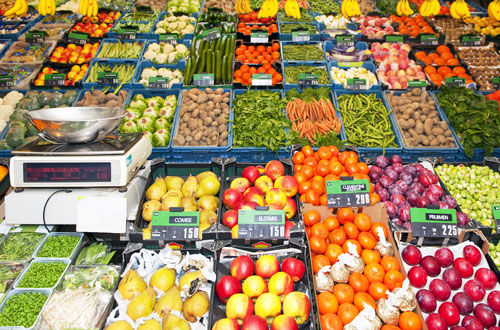
Rising Food Costs
“Food prices will soar at least 16 percent this year,” says James A. McHale, Secretary of Agriculture of the Commonwealth of Pennsylvania. This does not mean, however, that the people who grow that food will profit from those prices. In fact, says Mr. McHale, “Farmers will be paying 80 percent more for fuel, 40 percent more for fertilizer and 20 percent more for pesticides in 1974 than they did in 1973. The extra money they receive for their crops and produce will in no way match these production cost increases. It’s the middlemen – the processors, canners and distributors – who increasingly control, and profit from, agriculture in this country. If we do not move quickly to break the monopoly that the food industry is rapidly creating, we may see the price of supermarket food double and triple in a single year.”
Famine in India
India stands poised on the brink of disaster, in the judgment of Patrick Moynihan, U.S. Ambassador to that nation. “A resource-depleted, population-exploded collapse is about to occur in the subcontinent,” he says, “and, because of last year’s droughts and this year’s shortage of fertilizer (due to the oil embargo), we can expect a 25 percent shortfall in India’s grain production during 1974. This means famine no matter how you calculate it.” Moynihan also notes that the United States is no longer in a position to ship massive amounts of grain to India as was done in 1966-67, when the nation last faced starvation. “India has no choice but to turn to the Soviet Union this time,” says Moynihan, “which will put the Indo-Soviet relationship to a strong test.”
Dangerous Hormones in Meat
DES (diethylstilbestrol) is an artificially produced hormone that stimulates growth in beef cattle. It is also a known carcinogen (cancer-causing agent) that can be detected in measurable amounts in the meat from those same cattle. For that reason, it was banned from use in animal feed in August of 1972. Never, however, underestimate the power of the agribiz industry: It has now pressured the Food and Drug Administration to open new hearings on the use of DES . . . due to the “current shortage” of meat.
The Pencil and Paper Diet
Doctors at New York’s Mount Sinai Hospital have found that an ordinary pencil and sheet of paper can be the most valuable of all reducing tools. The idea? Simply write down every single morsel that you swallow each day. This will (1) probably appall you when you’re initially confronted with a no-nonsense record of just how much you really do eat every 24 hours, (2) intensify your guilt about gorging yourself and (3) give you a documented report you can be proud of as you do cut down on the calories you consume. Result? A melting away of pounds that you can see.
A Natural Cure-All?
“Pure oil of cinnamon — which can be purchased at almost any drugstore and many supermarkets — will cure cancer, skin disease, heart ailments and other disorders.” That’s the startling claim made by J.C. Wells in the February 22, 1974 issue of the Los Angeles Free Press. Wells–in a completely undocumented article–stated that his doctor had given him less than a year to live in 1963 (due to an unspecified disease which J.C. leads the reader to believe was lung cancer). A single drop of cinnamon oil taken daily in orange juice or tea for a month, however, restored Wells to such vibrant health that he no longer even suffers from head colds. The same treatment, according to the author, has healed a 10-year-old patch of bleeding skin for a lady friend, helped an emaciated 70-pound cancer patient gain 60 pounds, erased festered sores from the head of a 6-year-old child and accomplished other miracles. Maybe, maybe not. One thing’s certain, though: It’s hard to see how a drop of cinnamon oil imbibed daily could possibly hurt anyone. Which is more than modern science can say about some of the “cures” it now devises.






