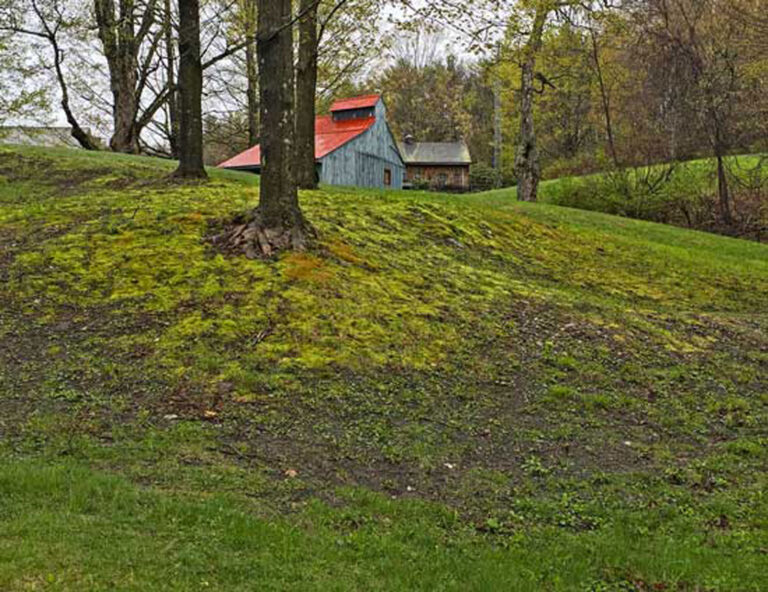
Some methods for removing lawn are more climate-wise than others; anything that minimizes soil disruption and doesn’t burn fuels has a smaller carbon footprint. Options include:
Stop Mowing, Fertilizing, and Watering
In some drier climates, the turfgrass will die on its own when all its artificial support is removed. In more diverse lawns, some plants may survive and (unless they are known invasives for the region) you should let them grow. Add other native meadow plants such as attractive bunching grasses and drought-tolerant perennials or freely seeding wildflowers.
Smother the Lawn
Leaves, wood chips, or other readily available organic materials, laid over the lawn about six inches deep, will block the light, and, if left for six weeks or more, should kill most of the plants growing in the lawn. (Use a much thinner layer under trees so their roots are not damaged by lack of oxygen.) This treatment is climate-wise because there is a minimum disturbance of the soil, and the dead plants under the layers create another layer of mulch.
Solarize the Grass
Cover the lawn area to be removed with plastic sheets and weigh down the edges with bricks or rocks to keep the sheet in place for at least six weeks summer is the best time of year for this treatment. After removing the plastic, add a thin layer of compost (about½ inch) to revitalize the soil’s ecosystem and help decompose the dead lawn.
Physically Remove Turf
This can be done manually, using cultivators, shovels, and rakes; or mechanically, using a plow, rototiller, or specialized sod-cutting machine. Manual removal is recommended for areas up to 30 feet around established trees, so their roots are not harmed too much. If the sod is removed, it could be used in a compost pile where it could be layered with dead leaves or other brown materials to build a hot compost. The advantage to this method is that it’s quick-given the right tools and enough workers-and the replanting can begin right away. The disadvantage of this method is that soil disturbance will release CO2, and the use of fossil-fuel-based tools will emit CO 2 as well.
Last Resort
Apply herbicide. For some projects, particularly large ones, lawns can be eliminated with an application of a nonselective herbicide, like glyphosate. Before applying any herbicide, be sure to read and follow the instructions.

More from Climate-Wise Landscaping
- Climate-Savvy Alternatives to Lawns
- How to Stop Invasive Plants
- How You Can Benefit from a Cool Roof
Excerpted from Climate-Wise Landscaping by Sue Reed and Ginny Stibolt, copyright © Sue Reed and Ginny Stibolt, 2018. Used with permission from New Society Publishers.