

The New Directions Radio column shares the latest on radio activities, this issue covers getting a ham radio license.
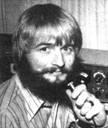
Copthorne Macdonald is an amateur radio enthusiast, inventor of slow scan television, a method of amateur radio transmission that allows ham operators to both hear and see each other during shortwave broadcasts, and founder of New Directions Radio. New Directions Radio article MOTHER EARTH NEWS NO. 46, July/August 1977.
Getting a Ham Radio License
Citizen’s band radio — which we discussed last time around In this column — is a tremendously useful form of short-range (up to 20 miles) radio communication. Nonetheless, the fact that it is short-range limits its usefulness.
To communicate via radio across hundreds or even thousands of miles, it’s necessary to turn to amateur (“ham”) radio. Of course, long distance costs more: In this case, the higher “price” is a more complicated (compared to CB) licensing procedure for the station operator.
At present, there are five classes of ham license: Novice, Technician, General, Advanced, and Extra (see the accompanying table). Persons wishing to obtain any of these licenses must pass both a practical test on Morse code and a written test covering radio theory and FCC (Federal Communications Commission) rules. The higher the license class, the more difficult the exam . . . and the more privileges — in the form of additional modes of transmission and a greater number of available frequencies — conferred upon the licensee.
Note: The information contained in the accompanying table is subject to change. There has been talk of the FCC reducing the General Class code speed requirement from 13 to 10 words per minute and eliminating the speed requirement from the Novice code test altogether. (As of this writing, however, these changes have not been made.)
The Technician, General, Advanced, and Extra Class tests are administered by federal examiners at regional offices of the FCC. The Novice Class exam — on the other hand-is given not by the FCC but by a volunteer ham examiner, which can be anyone who [1] holds a General Class (or higher) license, and [2] is at least 21 years old.
If you were a high-speed operator in the service and you’ve worked In the electronics field for years, you might want to try the Extra Class exam straightway. Most people, however, start with the Novice test and move on to the more difficult exams as their technical knowledge and code speed increase.
There are two ways to prepare for an FCC exam: [1] Attend classes given by a ham radio club, or [2] study on your own. The advantage of the first route is that it brings you face to face with someone who can answer your questions. Also, the classroom provides that element of structure which often helps one get down to a serious study of the subject at hand. And since the final ritual in all Novice classes is taking the FCC license test under the supervision of an instructor, you don’t (if you’re going for the Novice Class license) have to track down a volunteer ham examiner this way, as you would it you were on your own. (The American Radio Relay League will supply the names of the U.S. or Canadian ham clubs nearest you if you’ll write to the League, located in Newington, Connecticut. Be sure to enclose a self-addressed, stamped envelope.)
If you find that there are no classes near you, don’t despair . . . a great many hams have used books, practice code tapes, etc., to teach themselves everything they needed to know. One book that’s helped countless hams pass their Technician and General exams is the AmateurRadio Theory Course ($4.95 plus 75¢ postage from Amoco Publishing Corp., Williston Park, N.Y.). Another good one is The Radio Amateur’s License Manual, published by the ARRL. This all-In-one guide contains study questions and answers for all classes of exams, the complete text of the FCC regulations pertaining to amateur operations, and the addresses of the FCC regional offices where exams are given. At $11.50 postpaid, the ARRL License Manual is a real bargain. It’s also an absolute must for anyone taking an FCC test!
Still another study aid I’d strongly suggest you get your hands on If you’re planning to study at home for the Novice exam is the ARRL’s new Tune in the World With Ham Radio course, which consists of a book and a Morse code tape cassette. In addition to containing chapters on elementary radio theory and learning the code, this book Introduces the reader to a wide variety of ham activities and outlines several approaches to the problem of how to acquire equipment and put a station together. The price of the course: $7.00 postpaid.
The American Radio Relay League is presently preparing a General Class course to go along with their Novice course and Is also working on higher-speed code practice tapes. These should be available by the time you read this.
No doubt about it, obtaining an amateur radio operator’s license is more difficult than getting a permit to operate a CB radio. In my opinion, however, it’s worth the extra effort to get a ham license . . . because the rewards are greater. With CB radio, you’re limited to communications within your Immediate neighborhood. With ham radio, the entire world (potentially, at least) is yours to explore.
Peace,
Cop Macdonald (VE1 BFL)
99 Fitzroy St.
Charlottetown
Prince Edward Island
Canada C1A 1R6
New Directions Radio is an international network of radio amateurs concerned with those ways of using ham radio
(and related modes of communicating) that promote our own growth as individuals, and that we perceive as helping to
create a more aware, more caring, and more responsible human society. We encourage all who share these interests to
work with us. A current schedule of on-the-air activities is included in each issue of the bimonthly New
Directions Roundtable Newsletter, published by Randy Brink (WA7BKR) and “Bo” Bogardus (W6HSE) as a service to the rest of us. Send one 13¢ stamp for each issue desired to: Randy Brink, Port Orchard, Washington .






