The great renaissance is well underway in the world of foraging. Restaurants that don’t claim to have mushrooms that have been handpicked from within a couple of miles are not taken seriously anymore and are far from the vanguard of this movement. True and scary scarcity led to the British government’s encouraging all to reap the “hedgerow harvest” (not unlike “victory gardens” in the US) during the Second World War. The baton was picked up in the 1960s and ’70s by authors such as Euell Gibbons, who wrote Stalking the Wild Asparagus, and Richard Mabey, with his book Food for Free. And then more recently it has been carried with such élan by practitioners like Miles Irving, famous in the UK as a forager extraordinaire, that the suspicion must be that there are performance-enhancing fungi out there.
It’s true of foragers, as it is of practitioners of other ancient, fundamental skills, that our instinct is often to patronize them. Isn’t it so . . . lovely, so quaint? A nice mug of nettle soup to enjoy as you wash the berry stains from toes that poke out of sandals. Elderflower fritter, anyone? It is all so adorable! (With inevitable suspicions of “alternative” personal hygiene.)
Even among foraging’s supporters, this is a broad and entrenched attitude and hard to overturn. It may, however, change some minds to know that records appear to show that people were up to 6 inches taller before agriculture than for some time after, and their diets contained up to five times more plant types. A richly diverse, plant-based diet seemed to work for them just fine.
Foraging offers a deep, rich, and fascinating world for those who choose to pursue it keenly. It also offers very easy entry points for those who wish to dabble. The fastest way to nurture a connection with nature through foraging is to seek out something you have never eaten before and swallow it — having taken the small but important precaution of checking that it is not poisonous.
If we look at some of the most accessible wild foods — elderflowers and elderberries, blackberries, nettles, dandelions — there is a good chance that you have sampled one or more but not all. Or perhaps you have tried many of them, but not from your own fair hand. Pick one, literally, that you have not sought out before, cook it, and delight yourself by proving how eating it does not lead to a slow and painful death. Eventually, many who are totally new to foraging make a startling discovery: Not only does wild food not lead automatically to a trip to the hospital, but it can actually go some way toward taking away feelings of hunger.
There comes a moment when these basic activities allow us to meet our ancestors briefly. Glancing past some nettles, we catch a glimpse of their hairy faces smiling back at us and grunting something to the effect of, “We might have been savages, but we weren’t idiots,” before they slope off to settle a mild dispute by clubbing someone to death. Fortunately, we can enjoy the best of both worlds: It is possible to revel in the satisfaction of fundamental activities without the need to witness blunt trauma.
Foraging, like all outdoor skills, initially shows us the natural world through a very basic lens. Plants are either poisonous, edible, or of little interest. As the skill develops the lens becomes refined. We learn to associate certain plants with certain times of the year and to cherish those that offer us nutrition when the ground is barest. A new respect is found for plants that shrug off winter, like the dandelion; the season widens our gaze, leading us to discover roots underground.
Experts in most arts find the greatest joy in the subtleties, paradoxes, and challenges of their art. Black bryony has edible young shoots but poisonous berries. The more we get to know each part of the natural world, the more we realize that while it is tempting to pigeonhole simplistically, it is not always realistic. This is true of most plants, animals, and people we encounter.
In truth, foraging on its own is a lean business. It can stave off hunger for a period, especially in late summer, but suffice it to say that foragers are not the target of recent campaigns to stem the obesity epidemic. It takes higher-energy foodstuffs to build reserves, and such foodstuffs have plans of their own. The art of making a plan that is smarter than the plan of the food you are trying to eat is called “hunting.”
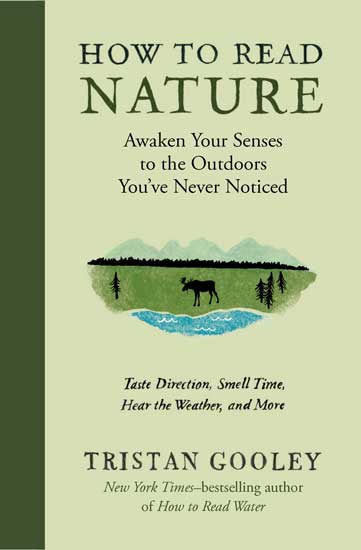
How to Read Nature: Awaken Your Senses to the Outdoors You’ve Never Noticed (The Experiment, 2017), by Tristan Gooley, teaches methods to reading and understanding nature for means of survival, navigation, and appreciation. Gooley is a fellow of the Royal Institute of Navigation and the Royal Geographical Society. He established the Natural Navigator school and is the vice chairman of Trailfinders. As a longtime explorer and navigator, he has led expeditions on five of the seven continents and both flown and sailed the Atlantic solo.
Reprinted by the permission of the publisher, The Experiment. © Tristan Gooley, 2017. Available wherever books are sold.
Real Food
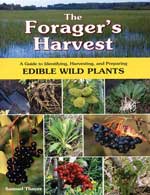
The Forager’s Harvest has many unique features that will appeal to naturalists, hikers, campers, survivalists, homesteaders, gardeners, chefs, Native Americans and whole-food enthusiasts. The book contains a calendar of harvest times for wild produce, a step-by-step protocol for positive identification, an illustrated glossary tailored to the needs of foragers, a recommended reading list, plus special sections on conservation, safety, nutrition, harvest techniques, preparation methods and storage. While The Forager’s Harvest is not a regional guide, it will prove most useful to readers in the eastern US and Canada, the Rocky Mountains and the Pacific Northwest.Order from the MOTHER EARTH NEWS Store or by calling 800-234-3368.