

Can you eat tree leaves? Take a bite on the wild side with these arboreal flavors from edible trees, and make a mulberry jam recipe, a momiji tempura recipe, and a spruce tip recipe.
We can grow delicious food in our gardens and forage for tasty herbs in our backyards, but let’s not forget about the nutritious ingredients from our local edible trees. When we think about harvesting food from trees, some obvious choices might come to mind, such as walnut and hickory or apple and pear. Fruit and nut trees are certainly great options, but even common forest trees, such as maple, linden, and spruce, can provide quality fare for the hungry forager.
Can You Eat Tree Leaves?
Whether tender leaves in spring, fragrant flowers in summer, or nutritious seeds in autumn, trees can provide us with delicious food throughout the seasons. As always, proper identification is required before harvesting anything from the wild, but these trees are easy to identify and plentiful. Enjoy your time in the woods and wild places, and never harvest more than you plan to use. Be creative with your recipes, and have fun exploring the flavors of the forest.
Edible Trees: Linden Flowers and Leaves
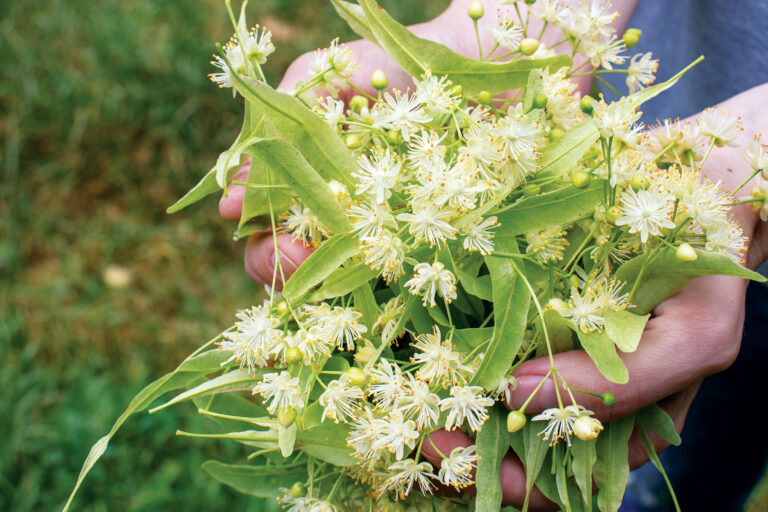
Also known as “basswood,” linden trees (Tilia americana) can be found throughout central and eastern North America. The trees produce beautiful and fragrant flowers that are attractive to honeybees and other pollinators. Linden flowers are often brewed into tea, which is said to be beneficial for relieving stress and anxiety while supporting a good night’s sleep. The seeds are occasionally roasted and brewed into a nutty beverage, but linden’s leaves are most well-known as a foraged foodstuff. The leaves are often described as reminiscent of ‘Buttercrunch’ lettuce. If you harvest them when they’re just beginning to unfurl, they’re the most tender and flavorful. Since linden leaves taste like lettuce, you can combine them with other spring ingredients to create a delicious spring salad.
Linden Salad
Yield: 4 servings.
- 6 to 8 handfuls young linden leaves, washed and patted dry
- 2 cups dandelion greens, chopped
- 1 cup snow peas, cut in half
- 2 radishes, sliced thin
- Violet flowers for garnish (optional)
Vinaigrette (Optional)
- 3/4 cup olive oil
- 1/4 cup white wine vinegar
- 1 teaspoon Dijon mustard or garlic
- Combine ingredients in a bowl and toss with your favorite dressing.
- For the simple vinaigrette, combine the ingredients in a food processor and blend until smooth.
Edible Trees: Maple
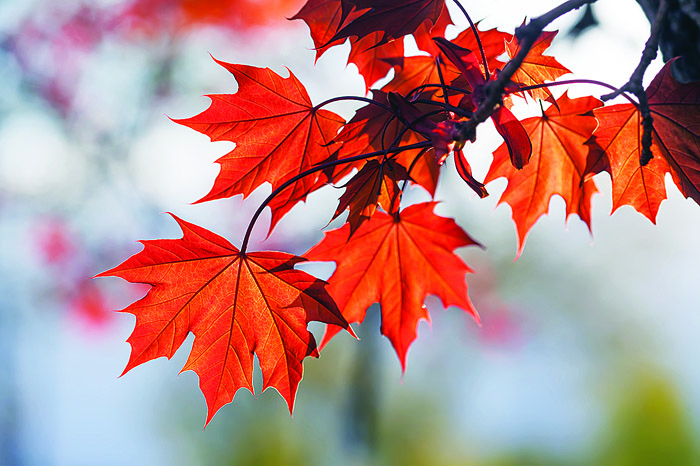
Various species of maple can be found across the Northern Hemisphere. These magnificent trees are widely utilized for lumber but can also provide something tasty to eat. The most well-known food that can be collected from maple is the sweet syrup boiled down from the tree’s sap. Sugar maple (Acer saccharum) is the most common species for syrup production, but we’ve also tapped the red maples (A. rubrum) on our property, which still produce a quality product. I’ve also enjoyed the raw sap as a base for beverages, including home-brewed beer. Maple seeds are a nutritious snack that the trees gift you in late summer, while the young leaves can be collected and eaten in spring.
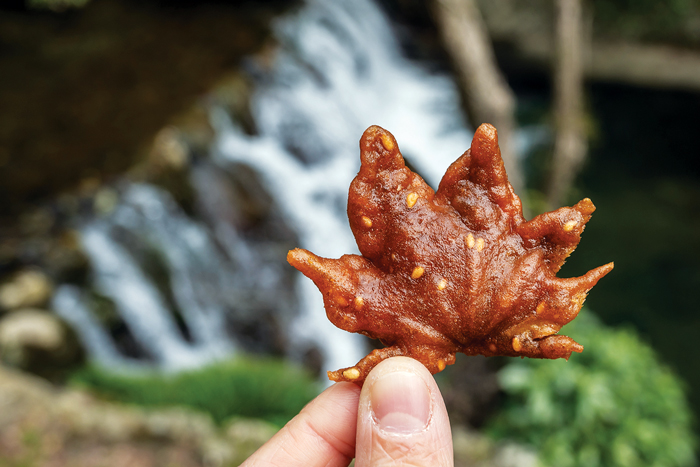
In Japan, maple leaves are harvested in fall, packed in salt for up to a year to cure, and then battered and fried to create a light and crispy snack called momiji no tempura.
Maple-Leaf Momiji Tempura Recipe
These crunchy leaves can be served as part of a dessert with maple syrup or ice cream, but they’re traditionally served with a dipping sauce made with soy sauce, broth, and shredded daikon radish. Experiment with different dips and flavor combinations until you find your favorite.
Yield: 4 servings.
- 15 to 20 maple leaves collected after falling, then washed and patted dry
- 2 tablespoons salt
- 1 cup cake flour (or 1 cup all-purpose flour and 1 tablespoon cornstarch)
- 1 cup cold sparkling water
- 1 egg, beaten
- 2 tablespoons sesame seeds
- 2 tablespoons brown sugar
- Oil for frying
- Prepare the maple leaves. Unlike the traditional preparation that involves stacking and storing the leaves in salt to cure for an extended period, you’ll flavor the maple leaves with a quick brine. To make the brine, add the salt to 1/2 cup of water and stir until dissolved.
- Add the leaves to the brine, gently stir, and then cover and let rest at least overnight or up to a week. Remove the leaves from the brine and carefully pat them dry with a towel.
- To make the batter, combine remaining ingredients in a large bowl and whisk until combined.
- Add oil to a heavy pan over medium heat. When the oil is hot, you’re ready to make your tempura. Dip each leaf into the batter one at a time, then carefully drop it into the oil.
- Cook for about 30 seconds on each side, flipping with a pair of tongs. Once the leaves are golden and crispy, place them onto paper towels to cool.
Edible Trees: Pine Needle
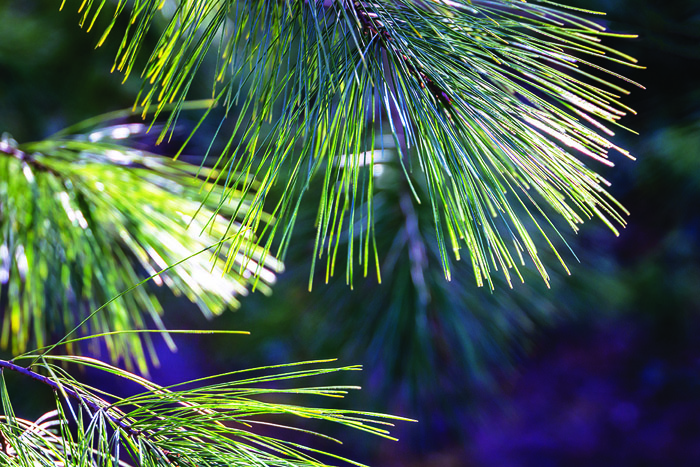
A widely distributed evergreen, pine is as beautiful in the landscape as it is useful in the kitchen. At Small House Farm, we have both red pine (Pinus resinosa) and white pine (P. strobus) growing on our property. While pine nuts might be the most popular coniferous ingredient, the seeds of these local species are too small to be worth the effort of collecting. Instead, we’ll harvest the needles, which can be brewed into a delightful tea. The immature cones and pine pollen are also culinary options, but the needles are my favorite part of the plant to work with. Let’s take our pine-needle tea to another level by blending it with honey or sugar to create a resinous and woodsy syrup.
Note: (Always be 100 percent certain of plant identification when you forage. Red and white pine needles are delicious, but keep in mind that not all “pines” are the same. Lodgepole ( P. contorta) and ponderosa pines ( P. ponderosa) are toxic, as is the American yew ( Taxus canadensis) and the Norfolk Island pine (Araucaria heterophylla). – Mother)
Pine-Needle Syrup Recipe
Yield: 4 cups.
- 1 cup fresh pine needles
- 3 cups water
- 2 cups sugar or 1 cup honey
- Combine pine needles and water in saucepan. Bring to a boil, lower heat, and let simmer for an hour or so until water is reduced by a third. Turn off heat and let the tea cool to room temperature. Then, transfer the tea into a quart jar, cover, and place in the refrigerator overnight to steep. This will give the syrup a strong flavor.
- The following day, strain out the needles and return the water to the saucepan. Add the sugar or honey, then bring to a gentle boil. Let boil and continue to stir constantly until the sweetener is fully dissolved.
- Pour into a container and let cool before capping and labeling. Store your syrup in the refrigerator, where it’ll keep for up to 1 month. Try it in mocktails, blended with sparkling water, or over pancakes. This syrup would also make an excellent glaze on meats, especially wild game, such as venison.
Edible Trees: Spruce Tips
Although the two trees are notably different in many ways, spruce is related to pine, and it also offers edible needles that you can enjoy in various recipes. Most often, people will use white spruce (Picea glauca), blue spruce (P. pungens), or Norway spruce (P. abies); we harvest white spruce. Spruce tips are the fresh new growth of spruce in spring, and these bright-green bundles are packed full of zippy, tart flavor. They can be brewed into teas (I also like them in our home-brewed beers), but you can also use spruce tips to create a unique and savory variation of pesto that’ll add a sharp flavor to spring dishes.
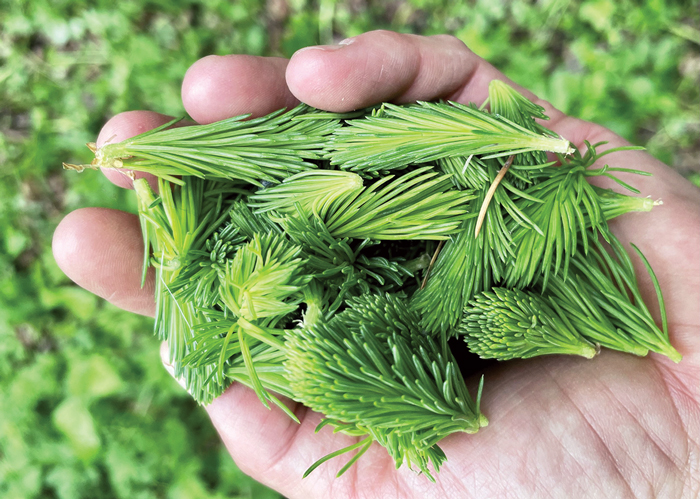
Spruce-Tip Recipe: Pesto
This pesto can be enjoyed on pasta, with chicken, or on pizzas and flatbreads. Yield: 2 to 4 servings.
- 1/4 cup pecorino, Asiago, or Parmesan cheese
- 1 cup fresh spruce tips
- 2 to 3 cloves garlic
- 2 tablespoons sunflower seeds or chopped walnuts
- 1/4 teaspoon salt
- 1/4 teaspoon black pepper
- 1/4 teaspoon lemon juice
- 2 tablespoons olive oil
- If your cheese is still in a chunk, toss it into your food processor and chop until broken down, then set aside. If the cheese is already shredded, skip this step.
- Add spruce tips, garlic, sunflower seeds, salt, pepper, and lemon juice to the food processor and run until smooth.
- Add the cheese back into the processor and run again until well-blended.
- Then, while the machine is still running, slowly drizzle olive oil into the pesto until everything is well-combined and smooth. At this stage, adding 1⁄4 teaspoon of cold water will help create a nice texture in the sauce.
Edible Trees: Mulberry
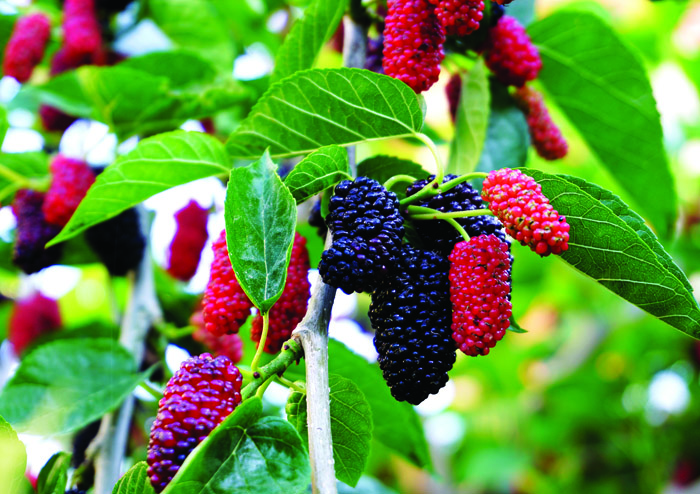
White mulberry (Morus alba) and red mulberry (M. rubra) are some of my favorite summer foragables, and the trees are always easy to find! Just look at the ground as you walk through town, and you’ll see the fallen berries that have stained the sidewalks as they ripen and drop. Not only can you enjoy the berries, but the leaves are also edible and can be cooked and eaten as vegetables or brewed into herbal teas. The trees grow quite tall, so we use a ladder to get up into the branches, or spread a sheet or tarp below the tree to catch the berries as they fall. The little fruits are perfect for snacking or on salads, but we also make them into a sweet jam to enjoy all year long.
Mulberry Jam
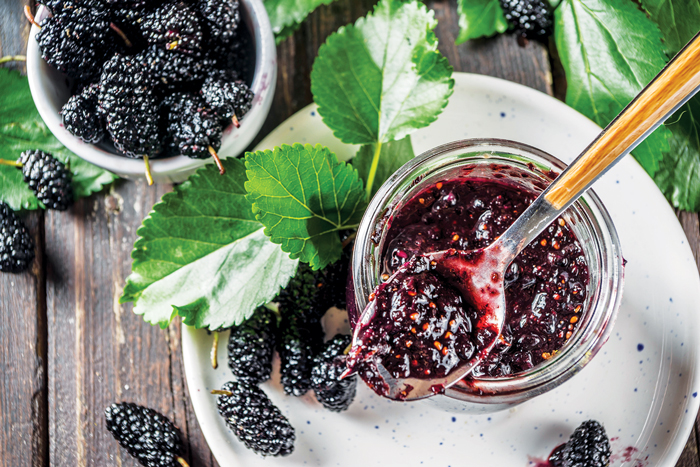
Yield: 6-1/2 pint jars.
- 4 cups mulberries, destemmed and washed
- 2 cups sugar
- 2 tablespoons lemon juice
- Combine ingredients in a large pot over medium heat. Bring to a boil and stir consistently until sugar is dissolved. Lower heat and let simmer. Gently smash the berries or leave them full for a chunkier jam.
- Let sauce continue to simmer over low heat for 30 to 40 minutes until reduced with a thick consistency. This longer cooking time will create a thick jam without the use of added pectin. Pour jam into sterilized jars, then seal.
Edible Trees: Spicebush
I was first introduced to the spicebush (Lindera benzoin) at a seed swap in southeast Kentucky. A fellow seed saver had brought bundles of young saplings to share with friends at the event. The small trees prefer growing along rivers and in flood plains, and they can be found growing across much of central and eastern North America. I’ve also seen them grown as yard specimens and landscaping plants in western states.
Spicebush is an attractive deciduous tree that has been used in the kitchens and apothecaries of foragers for generations. The berries are harvested, then dried and ground into a powder. The flavor is somewhat reminiscent of a peppery allspice. We can use this spice in jams, pies, and other sweet or savory dishes. The leaves are also edible and are often brewed into a warm, soothing tea. I recently joined the Mother Earth News crew at the Ohio Pawpaw Festival, where one of the vendors was selling a spicebush tea made from the dried leaves and twigs. It was warming and delicious. At home, I might add a small spoonful of honey to the tea.
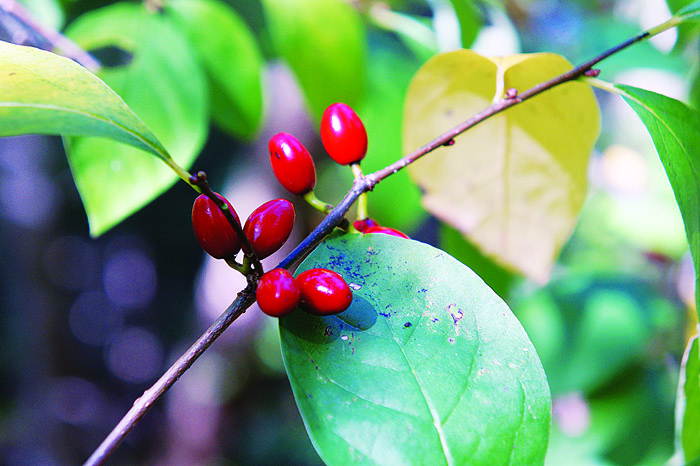
Spicebush Tea
- 2 cups water
- 4 tablespoons spicebush twigs broken into small pieces
- Honey (optional)
- Bring the water to boil in a small pot. Remove from heat, add spicebush twigs, and cover.
- Let steep for 10 to 15 minutes. Strain into your favorite teacups, sweeten with honey, and enjoy with a friend.
Bevin Cohen is an herbalist, author, owner of Small House Farm, and host of the popular “Seeds & Weeds” podcast. He’s a food and garden writer whose work has appeared in many national publications, and he’s the author of more than 10 books, including The Artisan Herbalist and Herbs in Every Season.
Originally published in the April/May 2026 issue of MOTHER EARTH NEWS and regularly vetted for accuracy.





