


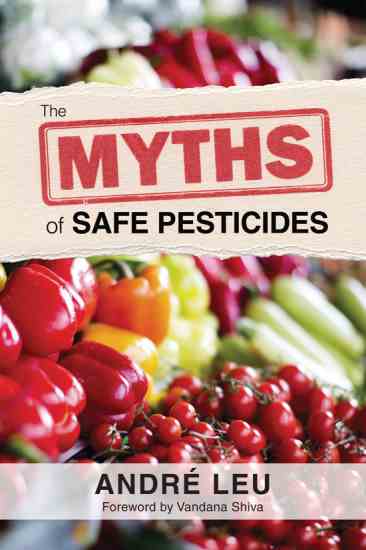
The conventional agriculture industry claims that the pesticides, herbicides and insecticides it uses are safe when used as directed, but peer-reviewed evidence suggests otherwise. André Leu investigates these claims in The Myths of Safe Pesticides (Acres U.S.A., 2014), translating technical jargon into layman’s terms to break down the five most-repeated myths about pesticide safety. The following excerpt is from chapter 1, “Myth #1: Rigorously Tested.”
You can purchase this book from the MOTHER EARTH NEWS store: The Myths of Safe Pesticides.
One of the greatest pesticide myths is that all agricultural poisons are scientifically tested to ensure that they are used safely. According to the United States President’s Cancer Panel (USPCP), this is simply not the case: “Only a few hundred of the more than 80,000 chemicals in use in the United States have been tested for safety.” The fact is that the overwhelming majority of chemicals used worldwide have not been subjected to testing. Given that according to the USPCP the majority of cancers are caused by environmental exposures, especially to chemicals, this oversight shows a serious level of neglect by regulatory authorities.
Pesticides have been subjected to more testing than most chemicals. However, where chemicals, including pesticides, have been subjected to testing, many leading scientists regard it as inadequate to determine whether they are safe for or harmful to humans. The USPCP report states: “Some scientists maintain that current toxicity testing and exposure limit-setting methods fail to accurately represent the nature of human exposure to potentially harmful chemicals.”
There are several key areas in particular in which many experts and scientists believe testing has not sufficiently established that the current use of pesticides and other chemicals is safe.
Chemical Cocktails in Food and Water
Regulatory authorities approve multiple pesticides for a crop on the basis that all of them can be used in normal production. Consequently a mixture of several different toxic chemical products is applied during the normal course of agricultural production for most foods, including a combination of herbicide products, insecticide products, fungicide products, and synthetic fertilizer compounds. A substantial percentage of foods thus have a cocktail of small amounts of these toxic chemicals that we absorb through food, drink, dust, and the air. According to the USPCP, “Only 23.1 percent of [food] samples had zero pesticide residues detected, 29.5 percent had one residue, and the remainder had two or more.” This means that about half the foods in the United States contain a mixture of chemical residues. Because people consume a variety of foods, with around 77 percent containing residues of different types of agricultural chemicals, most people’s normal dietary habits include consuming a chemical concoction of which they are unaware.
A study by the U.S. Center for Disease Control found a cocktail of toxic chemicals in the blood and urine of most Americans that they tested. In 2009 the Environmental Working Group found up to 232 chemicals in the placental cord blood of newborns in the United States. Many of these pollutants have been linked to serious health risks such as cancer and can persist for decades in the environment.
Regulatory authorities assume that because each of the active ingredients in individual commercial products is below the acceptable daily intake (ADI), the cocktail is thus also safe. They do not test these combinations of chemicals—the chemical cocktails that are ingested daily by billions of people—to ensure that they are safe.
Several scientific studies raise serious concerns. The emerging body of evidence demonstrates that many chemical cocktails can act synergistically, meaning that instead of one plus one equaling two, the extra effect of the mixtures can lead to one plus one equaling five or even higher in toxicity and damaging health effects.
Xenoestrogens and Endocrine-Disrupting Chemicals
The World Health Organization (WHO) and the United Nations Environment Programme (UNEP) published a comprehensive meta-analysis on endocrine- (hormone-) disrupting chemicals titled State of the Science of Endocrine Disrupting Chemicals 2012. Over sixty recognized international experts worked throughout 2012 to contribute to the meta-analysis to ensure that it was an up-to-date compilation of the current scientific knowledge on endocrine disruptors. This meta-study questioned the practice of testing single chemicals in isolation and ignoring the potential dangers posed by a cocktail of chemicals. “When the toxicity of chemicals is evaluated, their effects are usually considered in isolation, with assumptions of ‘tolerable’ exposures derived from data about one single chemical. These assumptions break down when exposure is to a large number of additional chemicals that also contribute to the effect in question.”
The WHO and UNEP study showed that an additive effect occurred when estradiol (a form of the female sex hormone, estrogen) was combined with other chemicals capable of mimicking estrogen. When each chemical was tested individually at low levels they did not produce any observable effect; however when they were combined they produced considerable adverse effects. Xenoestrogens are found in pesticides and insecticides like DDT, glyphosate, and endosulfan and have been linked to breast cancer and precocious puberty. According to the study,
“For a long time, the risks associated with these “xenestrogens” [artificial estrogens] have been dismissed, with the argument that their potency is too low to make an impact on the actions of estradiol. But it turned out that xenestrogens, combined in sufficient numbers and at concentrations that on their own do not elicit measureable effects, produced substantial estrogenic effects….When mixed together with estradiol, the presence of these xenestrogens at low levels even led to a doubling of the effects of the hormone (Rajapakse, Silva & Kortenkamp, 2002).”
A number of scientific studies detail the synergistic and/or additive effects of chemical cocktails in which the cocktail causes health problems even though testing each of the chemicals individually deemed that they were safe. A study called “Endocrine, Immune and Behavioral Effects of Aldicarb (Carbamate), Atrazine (Triazine) and Nitrate (Fertilizer) Mixtures at Groundwater Concentrations” in the journal Toxicology and Industrial Health showed that combinations of low doses of commonly used agricultural chemicals can significantly affect health. In the experiments conducted by Porter et al. at the University of Wisconsin-Madison, mice were given drinking water containing combinations of pesticides, herbicides, and nitrate fertilizer at concentrations currently found in groundwater in the United States. The mice exhibited altered immune, endocrine (hormone), and nervous system functions. The effects were most noticeable when a single herbicide (atrazine) was combined with nitrate fertilizer.
Atrazine is widely used in agricultural industries in conjunction with synthetic fertilizers that add nitrate to the soil. It is also one of the most persistent herbicides, measurable in corn, milk, beef, and many other foods in the United States. “The U.S. Geological Survey’s [USGS] national monitoring study found atrazine in rivers and streams, as well as groundwater, in all thirty-six of the river basins that the agency studied. It is also often found in air and rain; USGS found that atrazine was detected in rain at nearly every location tested. Atrazine in air or rain can travel long distances from application sites. In lakes and groundwater, atrazine and its breakdown products are persistent, and can persist for decades.”
In Europe atrazine was found in most water courses and in a significant percentage of rain samples. The European Union and Switzerland consequently banned it to prevent this widespread pollution, but it is still broadly used in many countries, and in some cases, as in the United States, is one of the most common herbicides.
Fetal Development Is Affected by Pesticide Exposure
The research by Porter et al. showed that the influence of pesticide, herbicide, and fertilizer mixtures on the endocrine system may also cause changes in the immune system and affect fetal brain development. Of particular concern was thyroid disruption in humans, which has multiple consequences including effects on brain development, level of irritability, sensitivity to stimuli, ability or motivation to learn, and an altered immune function.
A later experiment in 2002 by Cavieres et al. found that very low levels of a mixture of the common herbicides 2,4-D, Mecoprop, Dicamba, and inert ingredients caused a decrease in the number of embryos and live births in mice at all doses tested. Very significantly, the data showed that even low and very low doses caused these problems.
Research conducted by Laetz et al. and published in Environmental Health Perspectives studied the combinations of common pesticides that were found in salmon habitats and found that these combinations could have synergistic effects. There was a greater of degree of synergistic effects at higher doses. The scientists found that several combinations of organophosphate pesticides were lethal at concentrations that had been sublethal in single chemical trials. The researchers concluded that current risk assessments used by regulators underestimated the effects of these insecticides when they occurred in combinations.
One of the most concerning studies, by Manikkam et al., found that exposure to a combination of small amounts of common insect repellents, plasticizers, and jet fuel residues during pregnancy can induce permanent changes in the germ line (the first cells that lead to the formation of sperm or egg production cells) of the fetus. The researchers found that these changes are inherited by future generations.
A similar study investigated short-term exposure of pregnant female rats to a mixture of a fungicide, a pesticide mixture, a plastic mixture, dioxin, and a hydrocarbon at the time when the fetus was starting sex determination of the gonads. The researchers found that the next three generations had an increase in cysts, resembling human polycystic ovarian disease, and a decrease in the ovarian primordial follicle pool size, resembling primary ovarian insufficiency in humans. The researchers also found that the exposure had changed the way certain genes operated and that this change was passed on to future generations, an effect caused by several different classes of chemicals. The scientists stated, “Epigenetic transgenerational inheritance of ovarian disease states was induced by all the different classes of environmental compounds, suggesting a role of environmental epigenetics in ovarian disease etiology.” Epigenetics is the study of environmental factors that cause changes in the way genes express their traits without any changes in the DNA of the genes.
These studies raised two new and very concerning issues, firstly the health effects that may occur when low-level residues of common pesticides are combined with minute levels of residues of the numerous other types of common chemicals that are found in the environment and in humans. This is an area that has been largely neglected by the research community and completely ignored by all regulatory authorities, but it is a major concern in the context of multiple U.S. studies.
A study by the U.S. Center for Disease Control found a cocktail of many toxic chemicals in the blood and urine of most Americans. As previously mentioned, a 2009 study by the Environmental Working Group found up to 232 chemicals in the placental cord blood of newborns in the United States. Many of these chemicals, such as mercury and polychlorinated biphenyls, are known to harm brain development and the nervous system. These studies show the inaccuracy of the regulatory authorities’ assumption that because each of these chemicals is present at a low level in commercial products they will cause no health issues. This assumption clearly has no basis in science. Regulatory authorities should be making their decisions and taking appropriate actions based on scientific evidence, not on data-free assumptions.
Secondly, the fact that the researchers found that these changes are inherited by future generations is a major issue in terms of the lasting and widespread health damage that is most likely being inflicted on human society. Regulatory authorities should be taking urgent action to prevent this rather than completely ignoring the danger.
GMO Plants Produce Pesticides
Another area emerging as a concern is the combination of the pesticides produced by GMO plants (Bacillus thurengiensis, or Bt) with the herbicides and other pesticides used in crop production. The pesticide-producing GMO crops do not eliminate pesticide usage. They may reduce some types of pesticide usage, but some studies show an increased usage of pesticides with GMO plants, especially herbicide usage.
A peer-reviewed, published study that researched the combination of the GMO-produced Bt toxin pesticides and Roundup found that they altered the normal life cycle of cells in human organs. The researchers concluded: “In these results, we argue that modified Bt toxins are not inert on nontarget human cells, and that they can present combined side effects with other residues of pesticides specific to GM plants.”
Toxicity Testing Excludes Chemical Interactions
The ever-increasing body of peer-reviewed science shows that the current methodology of only testing the active ingredient as a single agent and not testing common combinations is flawed and insufficient to determine the safety of chemical exposure in a real-world situation where humans are exposed to daily cocktails of chemicals.
The USPCP clearly states, “In addition, agents are tested singly rather than in combination. Single-agent toxicity testing and reliance on animal testing are inadequate to address the backlog of untested chemicals already in use and the plethora of new chemicals introduced every year.”
Toxicity Testing Is Not Required for Inert Ingredients
The overwhelming majority of registered pesticide products used in agriculture as insecticides, herbicides, and fungicides are formulations of several chemicals. They are mixtures composed of one or more chemicals that are defined as the active ingredient(s) or active principle and are combined with other mostly toxic chemicals, such as solvents, adjuvants, and surfactants, that are defined as inerts.
The active ingredient is the primary chemical that acts as the pesticide. The other chemicals in the mixture are called inerts as they have a secondary role in the formulation. The name “inert” is misleading as most of these other compounds are chemically active in their functions in the pesticide formulations. They help to make the active ingredient work more effectively. According to the USPC report, many of these “inert” ingredients are toxic; however, they are not tested for their potential to cause health problems. “Pesticides (insecticides, herbicides, and fungicides) approved for use by the U.S. Environmental Protection Agency (EPA) contain nearly 900 active ingredients, many of which are toxic. Many of the solvents, fillers, and other chemicals listed as inert ingredients on pesticide labels also are toxic, but are not required to be tested for their potential to cause chronic diseases such as cancer.”
An example is Roundup and other glyphosate-based herbicide formulations. These pesticides are a mixture of glyphosate as the active ingredient and inerts such as ammonium sulfate, benzisothiazolone, glycerine, isobutane, isopropylamine, polyethoxylated alkylamines, polyethoxylated tallowamine, POE-15, and sorbic acid. Glyphosate barely works as an herbicide without the assistance of the inerts to boost its effectiveness.
The active ingredient is the only chemical in the formulation that is tested for some of the known health problems caused by chemicals—such as cancer, organ damage, birth defects, and cell mutations—to determine a safe level for the acceptable daily intake (ADI) and the maximum residue limit (MRL). The complete pesticide formulation of the active ingredient and the “inerts” is not tested for health problems.
Acute Toxicity and LD50 in Agricultural Pesticides
There are a limited number of registered products in which the whole formulation is tested for acute toxicity, or the amount of the product that is fatal to animals and humans. The most referenced value in acute toxicity tests is LD50, which stands for lethal dose (LD) 50 percent or median lethal dose. This number represents the milligrams of the chemical per kilogram of body mass needed to kill 50 percent of the test animals. The lower the number, the more toxic the chemical because a smaller amount is needed to kill the animals. LD50 100 mg/kg is more toxic than LD50 400 mg/ kg because only a quarter of the amount is needed to kill the same amount of animals.
LD50s are widely used as the main reference when judging a substance’s acute toxicity, or the adverse effects resulting from either a single exposure or multiple exposures in a short span of time. Adverse effects must occur within two weeks of the chemical being administered to be considered in acute toxicity. LD50s are thus irrelevant in showing the longer-term toxic effects of a chemical or compound. These are the toxicities that cause other health issues such as cancers, cell mutations, endocrine disruption, birth defects, organ and tissue damage, nervous system damage, behavior changes, and immune system damage.
Asbestos is a good example of how measuring only LD50 can be misleading about a chemical or compound’s toxicity. Asbestos does not have an LD50 because it is not acutely toxic. It is not a poison in the traditional sense. It is technically possible to eat asbestos by the bucket load and not be poisoned. However, a minute speck of asbestos dust entering the lungs can result in three fatal diseases: asbestosis, lung cancer, and mesothelioma. As early as the 1920s and 1930s there were studies linking asbestos to health problems. Asbestos is a classic case of regulatory neglect and industries misrepresenting the dangers of their products.
The fact that asbestos is not toxic under the LD50 criteria was used by the asbestos industry and government regulators for decades to deny that it was a dangerous product, resulting in the widespread and irresponsible use of asbestos in houses, schools, offices, cars, boats, hairdryers, and numerous other applications. Most communities are sitting on ticking time bombs healthwise, with numerous people in many countries dying from asbestos-related illnesses. The huge costs of removing and disposing of it into toxic waste dumps fall on governments and communities rather than the companies that profited from mining and selling it.
It took decades of activism by concerned scientists, nongovernmental organizations, and consumers before regulatory authorities took action to ban asbestos. In the meantime many thousands of people died unnecessary, cruel deaths, and many thousands more are yet to die this way because of the twenty- to fifty-year latency period for asbestos-related diseases.
Consumers and industries alike should consider the tragedies of asbestos a warning about regulatory neglect of published science.
Chemical Cocktails Are Not Tested
Many scientists and researchers consider it scientifically unsound just to test one component of a mixture and assume that the whole combination of chemicals in a formulation will respond in the same way. Despite the limited testing, there are some studies that compare the differences in toxicity between the active ingredient and the registered formulated product. Glyphosate-based herbicides are amongst the most studied for these effects.
There are numerous studies that show that Roundup is more toxic than its active ingredient, glyphosate. These studies link the pesticide to a range of health problems such as cancer, placental cell damage, miscarriages, stillbirths, endocrine disruption, and damage to various organs such as the kidney and liver.
Research by scientists in France has shown that one of the “inert” adjuvants in Roundup, the polyethoxylated tallowamine POE-15, is considerably more toxic to human cells than the “active” ingredient glyphosate. The researchers found that at one and three parts per million (ppm), doses that are considered to be normal environmental and occupational exposures, POE-15 enters human cells and causes them to die. This is a different mode of action from glyphosate, which is known to promote endocrine- (hormone-) disrupting effects after entering cells. The scientists stated, “Altogether, these results challenge the establishment of guidance values such as the acceptable daily intake of glyphosate, when these are mostly based on a long term in vivo test of glyphosate alone. Since pesticides are always used with adjuvants that could change their toxicity, the necessity to assess their whole formulations as mixtures becomes obvious. This challenges the concept of active principle of pesticides for non-target species.”
In the only study where nine formulated pesticides were tested on human cells at levels well below agricultural dilutions, the research scientists found that eight of the nine formulations were several hundred times more toxic than their respective active ingredients. The researchers stated, “Adjuvants in pesticides are generally declared as inerts, and for this reason they are not tested in long- term regulatory experiments. It is thus very surprising that they amplify up to 1000 times the toxicity of their AP [active ingredient] in 100% of the cases where they are indicated to be present by the manufacturer.”
Fungicides were the most toxic to human cells, at concentrations three hundred to six hundred times lower than agricultural dilutions, followed by herbicides and then insecticides. Roundup was the most toxic of the herbicides and insecticides they tested. The scientists concluded “Our results challenge the relevance of the Acceptable Daily Intake for pesticides because this norm is calculated from the toxicity of the active principle alone.”
None of the formulated registered pesticide products are tested for the numerous types of health problems that can be caused by chemicals. ADIs and MRLs are not set for any these formulated products. They are only set for the “active” ingredient.
It should be of great concern to everyone that the vast majority of the nearly 1,400 registered pesticide and veterinary products used in the United States, around 7,000 used in Australia, and the countless thousands used worldwide for the production of food have had no testing for numerous health and environmental problems linked to the exposure to cocktails of chemicals. All countries share this practice, other than the European Union, which has started a process of assessing over 143,000 chemicals and chemical formulations.
Given the body of scientific data linking the additive and synergistic effects of chemical mixtures to numerous adverse health effects, serious concerns need to be raised as to why regulators allow these formulated mixtures to be used on the assumption that they are safe. There are no credible scientific data to determine a safety level for the residues of the actual registered pesticide products used in food production and found in food until whole formulations are tested.
More from The Myths of Safe Pesticides:
• The Negative Effects of Pesticides on Children
Reprinted with permission from The Myths of Safe Pesticides by André Leu and published by Acres U.S.A., 2014. Buy this book from our store: The Myths of Safe Pesticides.






