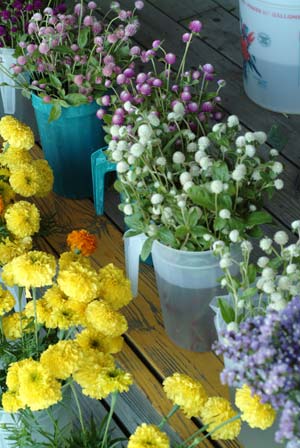
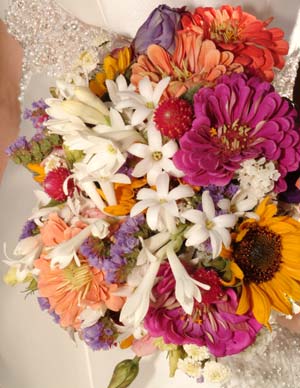
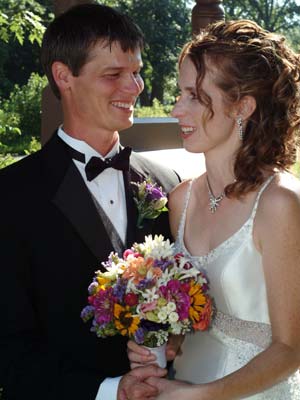
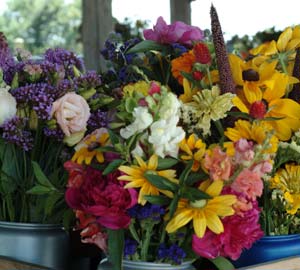
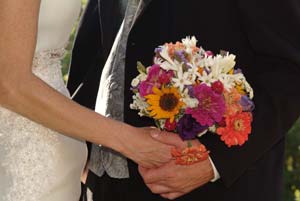
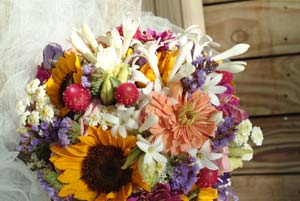
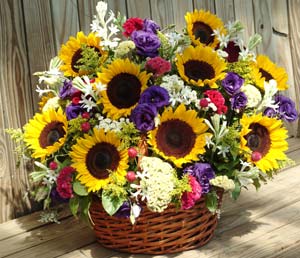
Giant sunflowers tango with tangerine zinnias on the gate of a tiny stone chapel in Baldwin, Kansas, welcoming guests to the wedding of Darci Mathison and Patrick Wedel. Nearby, the bride checks her bouquet: lisianthus, zinnias, gomphena, tuberoses, statice, feverfew, sunflowers, all freshly plucked from nearby Pendleton Farms. “Perfect,” she declares.
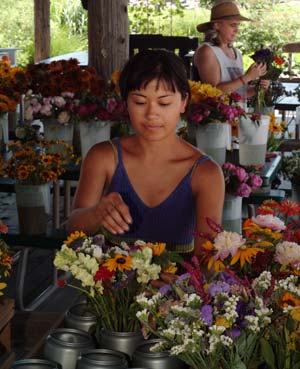
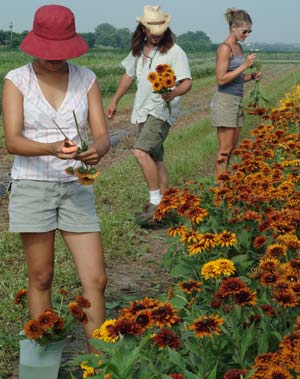
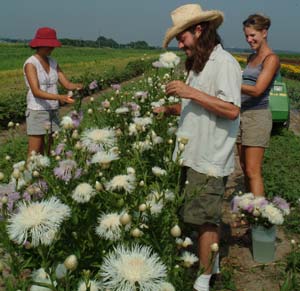
Mathison’s casual, herb-scented, pesticide-free bouquet is much different from those found at a floral shop, says Karen Pendleton, co-owner of Pendleton Farms near Lawrence, Kansas. “Many brides walk the garden to see the flowers and pick them out themselves,” Pendleton says.
Locally grown foods and flowers are gaining favor everywhere as couples become more conscious of earth-friendly options, says Carley Roney, editor-in-chief and cofounder of The Knot, a popular online website. More brides want their flowers to be seasonal, she notes. “Part is style; part is consciousness. A lot of couples use flowers as a way to express their interest in the environment and their love of gardening.”
Pick an earth-friendly bouquet
Supporting local, organic farms is a great idea, but–just like a marriage–it requires flexibility. While conventional florists reach globally to provide flowers on demand, weather and soil conditions constrain local growers. Summer options at Pendleton’s, for instance, include celosia, cosmos, rudbeckia and playful butterfly weed. A fall wedding might feature apples, gourds and pumpkins; a winter event, evergreen boughs and berries.
Local flowers often cost less than bouquets purchased from a conventional florist. While costs vary by region, brides typically spend 8 to 10 percent of their wedding budget on flowers. (For a $25,000 wedding, flowers generally average $2,000 to $2,500.) Pendleton’s weddings have ranged from $35 to $6,000 and average about $1,000. To cut costs even further, consider using single stems or potted plants.
To find earth-friendly blooms, check local farmer’s markets first. Visit vendors early to make arrangements. Look for a local grower, or ask local florists if they buy regionally from earth-friendly farms.
If those options fail, try Internet companies such as Organic Bouquet, which supplies certified blooms to local florists and sends unarranged flowers direct to a wedding party. Or, ask your area florist if he or she sells VeriFlora flowers. The VeriFlora Certified Sustainably Grown label is a guarantee that flowers and potted plants have been produced in an environmentally and socially responsible manner and meet the highest standards for freshness and quality.
How to Harvest Beautiful Bouquets
Karen Pendleton, of Pendleton Farms, has these tips for do-it-yourself fresh blooms.
• Pick flowers in early morning when stems are filled with water.
• Place flowers in clean, warm water; they drink warm water more readily than cold.
• Pick sunflowers as they start to open, before bugs knick their petals.
• Strip foliage below the water line; slimy leaves cause bacteria.
• Cut stems with a sharp knife or scissors and plunge immediately into water.
• Place your bucket in a cool, dark place and let flowers take a long drink before being arranged.
• Hold flowers with milky stems over a flame to seal in liquid and make the blooms last.
• To save peonies for a summer event, cut flowers when the bud feels like a marshmallow. Remove half the leaves and bunch buds together. Wrap in dry newspaper or cellophane and store dry in the refrigerator. (The colder the temperature, without freezing, the longer the peonies will store.) When ready to use, cut two inches off the stem bottom and place in warm water containing flower food. Flowers will open in just a few hours.
Flowering Traditions
Add a personal, and botanical, touch to your wedding with these ideas from Carley Roney, editor of TheKnot.com.
• Grow your own blooms and invite the bridal party to help make bouquets.
• Decorate with potted mums and give them as favors.
• Plant a ceremonial tree.
• Stage the ceremony in your home garden.