



As a New York City architect, I’ve designed many apartment buildings, and I’ve been continuously intrigued, inspired and challenged in my attempts to create eco-friendly, livable small spaces. Smaller living spaces, population density and mass transit options mean city dwellers often have smaller carbon footprints, yet it’s still a challenge to find comfort in small spaces. In 1996, when I started my practice, I made a commitment to creating restorative spaces, where people would feel better leaving than they did when they arrived. This requires considering a complex palette of qualities: delight, peace, contrast, control, comfort, stimulation, health, economy, safety, security, privacy, individuality and community. I also want to help my clients reduce fossil fuel use and water consumption, which in turn reduces foreign oil dependence, war, pollution and global warming, and saves my clients money. Good design can bring all of this together. Jill Carlen lives with her partner, Eddie Torres, and her dog, Annabelle, in a 740-square-foot apartment in a large complex in upper Manhattan. Though the space is small, it is nicely planned. They have a modest budget to update the apartment and plan to have child within the next few years.
The basics: comfort and energy
Jill and Eddie’s home has problems typical to New York City apartments. Some can be solved within the unit; some can be solved if the building’s community is willing to take action; some are beyond our control.
1. Sounds and odors
Apartment dwellers often hear their neighbors and may need to tone down their self expression to maintain privacy. It’s also difficult to control incoming odors and cigarette smoke.
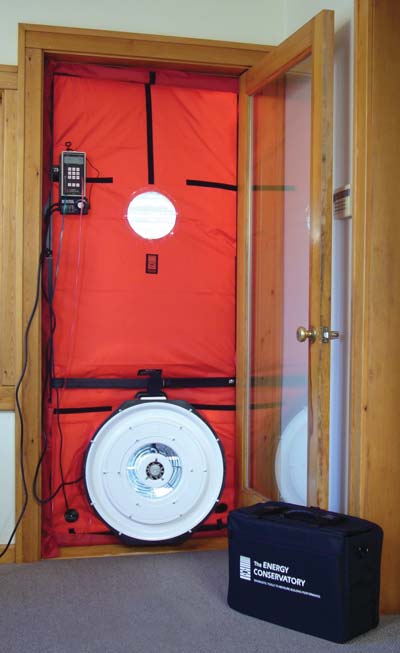
Solution: An ideal apartment is built with an air barrier–a solid material surrounding the apartment–which allows for ventilation control, reduces air leaks and smells from other parts of the building, improves fire safety, increases soundproofing, and discourages rodents and vermin. Jill’s apartment does not have an air barrier, but she should attempt to tighten its envelope by sealing leaks. During her renovation, Jill should hire a professional to locate her apartment’s leaks with a blower-door test, then seal holes. It will be difficult to get her apartment as tight as new construction, but she will reap benefits from any air tightening she does.
Cost: $500 for testing; $1,000 to seal holes
2. Stuffiness and temperature
The apartment has no mechanical ventilation and, because Jill can’t control the heat in her unit, is often overheated in winter by the energy-guzzling, one-pipe steam heat. Jill’s uninsulated building is overheated in summer as well.
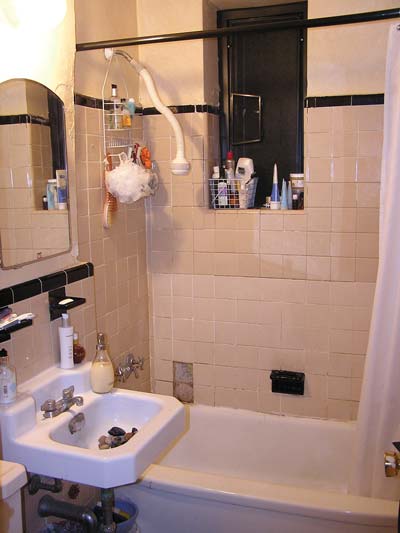
Solution: When Jill’s building was built in the early 1950s, building codes did not require ventilation if bathrooms and kitchens had windows. Retrofitting a controlled ventilation system would be difficult, but an exhaust fan installed in the small bathroom window would help dry the room and prevent potential mold growth. While it would be possible to insulate Jill’s apartment, it’s not practical unless everyone in the building insulates and the one-pipe steam system is replaced. Insulating only Jill’s apartment would cause further overheating. Jill may need to open her windows for comfort, but this dries the air. I suggest using a humidifier to keep her comfortable and healthy. Unfortunately, these issues increase energy use and cannot be solved inexpensively.
Cost: Bathroom exhaust fan: about $200. New heating system with room-by-room thermostatic control: $12,000 per unit, minimum. Controlled ventilation system: $4,000 per unit, minimum
3. Old appliances
Jill’s conventional appliances and bathroom and kitchen fixtures increase her carbon footprint, as well as her bills.
Solution: Jill can reduce her energy and water use by selecting energy-efficient lights and water-saving devices. To save energy while enhancing light quality, I recommend fluorescent bulbs with a heat index of 5,000 to 6,000 degrees Kelvin. The light is close to daylight and makes colors look fantastic.
During the bathroom renovation, Jill could install a low-flush or dual-flush toilet. She can install low-flow showerheads and faucet aerators in the kitchen
and bathroom.
Cost: Faucet aerators, $5 to $10 each; Low-flow showerhead, $10 to $50; Dual-flush toilet, around $250
Meeting the small challenge
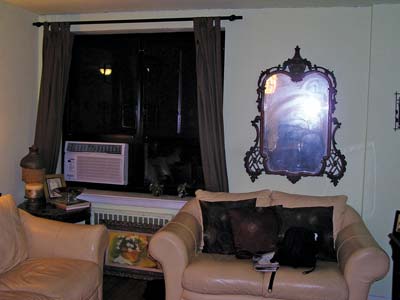
Interior designer and psychotherapist Aniik Libby convinced Jill to keep only her strongest living room items: paintings by Jill and her mother, a golden shell lamp and an antique leather chair. Jill’s donating everything else to charity.
4. Tiny living area
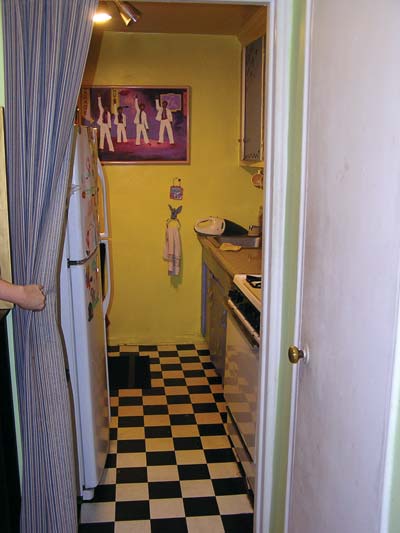
A cramped kitchen doesn’t allow much space to work and restricts the flow of space in the small apartment.
Solution: Jill should redesign the kitchen to open onto the living room, which would add light to the kitchen and spaciousness to the living room. Libby
recommends installing a stone counter to act as a dining room table and a window seat in the kitchen that would double as an informal work area. To keep the apartment looking spare and organized, Libby recommends installing a 12-foot wall of closets opposite the living room windows. If finished with a combination of silver leaf and plaster with crushed straw, the closet doors would reflect light from the living room windows, brightening the room. Libby’s suggested color scheme for Jill’s living room is based on the creamy, golden color of her dog; light colors brighten rooms. The floor should be sanded and refinished with a water-based polyurethane and covered with a thick sea grass rug. Artistic Jill will be able to do many of these things herself.
Cost: Demolition and new kitchen, $20,000; New closet, $3,000; Sanded and coated floor, $3,500; Sea grass rug, $500
5. A boring bedroom
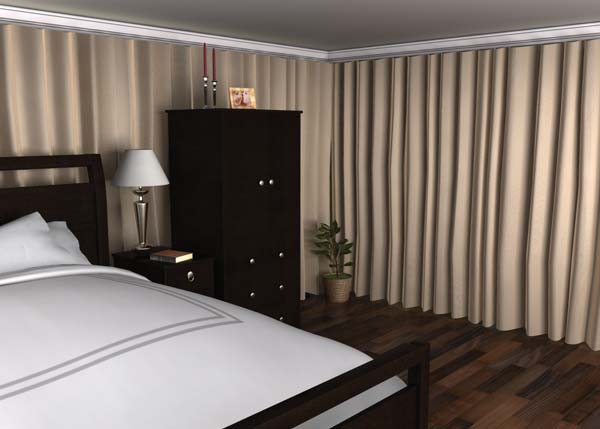
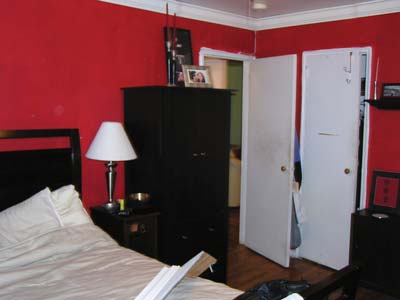
The most important room in the apartment is Jill and Eddie’s bedroom. Libby and I suggested that they differentiate the bedroom from the rest of the apartment, making it a retreat into another world.
Solution: To capture the qualities of sensuality and rest, we suggest converting the bedroom and closet doors to sliding doors and installing floor-to-ceiling silk or velvet curtains around the entire room. At Libby’s suggestion, the curtains would be the color of “the back of a vole,” a luscious
warm gray that contrasts beautifully with skin tone but never feels too hot or cool. The curtains, which would pull away at the windows to reveal white cotton sheers, would soften sound in the room and create an intimate space.
Cost: Demolition and carpentry, $2,000; curtains and sheers, $600
6. A tiny bathroom and unused bedroom
Jill’s small bathroom is incredibly cramped. And, despite the fact that she’s low on space, she’s using the second bedroom as storage space.
Solution: Jill’s bathroom could be expanded by demolishing a small closet. Jill’s second bedroom could be cleared and minimally furnished for use as a meditation room. A curved, opaque curtain can create a focal point for an altar, and the space behind the curtain can be used for storage.
Cost: Demolition and new bathroom, $6,000; Curtains and sheers, $600
Go green team!
Some eco-building issues can be handled on an apartment-by-apartment basis, but many are difficult or impossible to control without building-wide work and an active, educated building community with the power to make improvements. The community in Jill’s building has formed a “green committee.” My partner, mechanical system designer Henry Gifford, took a look at the boiler and found small changes–such as installing a better domestic hot water valve to avoid overheating water–that could improve the heating and hot water systems’ energy consumption, but few minor steps can improve upon the antiquated system. The building could reap larger energy savings by replacing the steam heat and distribution system throughout, which would cost around $15,000 per unit; the committee should approach their building owners to campaign for these large-scale improvements.
Resources
Energy Federation Incorporated
(800) 379-4121
light bulbs, ventilation fans, humidifiers, sealants, water-saving fixtures
Shelter Supply
(800) 762-8399
ventilation fans, humidifiers and dehumidifiers, sealants
Natural Area Rugs
(800) 661-7847
sea grass rugs made to order
Vermont Natural Coatings
(802) 472-8700
whey-based “polyurethane” for wood floors and furniture
Chris Benedict is an architect whose firm specializes in holistic solutions for building systems, creating buildings that are healthy, durable and energy-efficient. Benedict was named Environmental Professional of the Year in 1999 by The Association of Energy Engineers International.





