

A house filled with sunlight is cheery, warm and inviting. Throughout the day, the sun marks time, subtly changing the color and shape of rooms. Like water and fire, sunlight is an elemental part of our existence–and a fundamental component of green design. Buildings with abundant daylight help keep us physically and emotionally healthy. They also reduce the need to turn on electric lights during the day, cutting lighting energy consumption by 50 to 80 percent, according to the U.S. Green Building Council.
Generous use of glass is the most obvious way to get light into a home, but a good daylighting strategy is just that–a strategy. Rather than simply cramming in as many windows and skylights as possible, it’s important to balance light’s benefits with its side effects: heat gain/loss and glare. We can control these elements with proper window placement and orientation, shading techniques and energy-efficient glass.
Orientation matters
If you’re designing or renovating, think about how the windows relate to the sun’s movement. South-facing windows supply steady, even daytime light and warmth, and they let in the most winter sunlight. “A south-facing window is always a net energy gainer,” Minneapolis building scientist Mark LaLiberte says. “Whatever heat is lost through the glass during the evening is balanced by gains during the day.”
North-facing windows admit soft, indirect light with little glare or summer heat gain, but they’re most affected by cold. East- and west-facing windows funnel in light in the morning and afternoon, respectively, but can cause glare. The western sun’s angle makes light hard to control, and its heat is weak in winter.
Balancing act
Balancing light is as important as orienting properly. If you’re splurging on a wall of windows, ensure sunlight enters from at least one other direction, LaLiberte says. Light coming from only one side creates glare and casts shadows, darkening the back of the room.
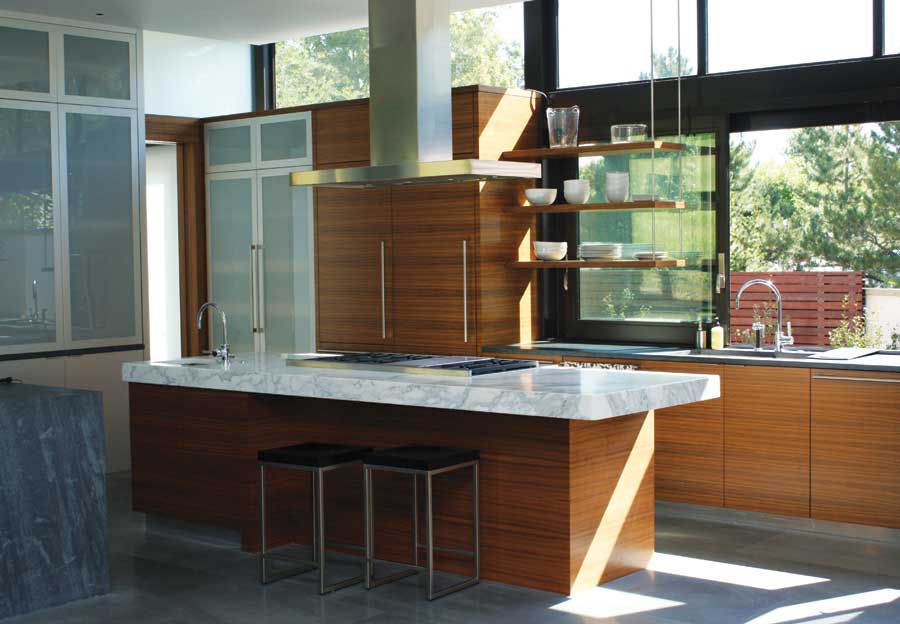
To ensure even light, Boulder, Colorado, architect E.J. Meade places light sources as high up as possible; higher light reaches deeper into interior spaces. He extends windows to the ceiling to bounce light around the room.
Light shelves–soffits that project into the room from beneath high windows–also reflect sunlight off the ceiling. “We’ll have a 12-inch projection into the room, simply framed and covered in drywall,” Meade says. “We’ll often double up the role and put a hidden cove light in the soffit so at night it’s a source of light. We had a client who painted the top of the light shelf red so it bounced a warm light into the room.”
Interior solutions
The Romans used sunlight as a material, like brick or stone, to define and enhance space. “In Pompeii, courtyards brought daylight and fresh air into the center of the home so light became internal and no longer focused on the periphery,” Pittsburgh architect Gerard Damiani says. “It becomes a private thing the homeowner can share with guests, like a piece of furniture.”
In new homes and major renovations, Damiani often designs light monitors (raised roof sections with windows on both sides) or clerestories (bands of windows along an upper wall) that scoop light deep into the house, and open-tread stairwells with an operable window or skylight at the top that also exhausts hot air. “If you can use daylighting and natural ventilation together, you’re doing well,” he says. “You’re bringing in light to create an emotionally great place and pulling air through to keep the house comfortable.”
Working on renovations of Chicago’s traditional older homes, architect Julie Hacker adds dormers in one- or two-story spaces with high ceilings. The ceiling folds up into the dormer and breaks down the scale of the room in a way a skylight can’t, she says. Another trick: Use interior windows, or framed glass in an interior wall, to share light and views. They work well in small rooms, such as a bath or study, where you want to transmit light but not sound.
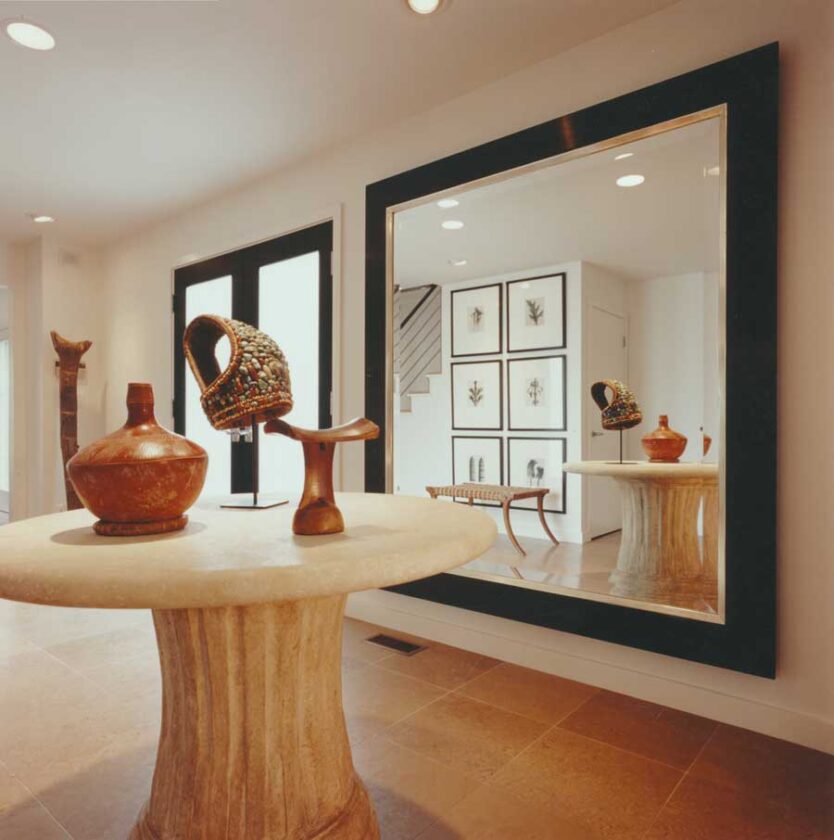
Even minor interior design changes can add light. To brighten dark hallways, Chicago interior designer Shelly Handman uses translucent glass doors to borrow light from exterior rooms. Well-placed mirrors also scatter sunlight. “I use them to open up space or bounce light from a single window,” Handman says. “Pick a frame and ask the framer to make a 6-foot-by-8-foot mirror. It adds tremendous drama and is about one-fifth the cost of good art.”
Controlling light
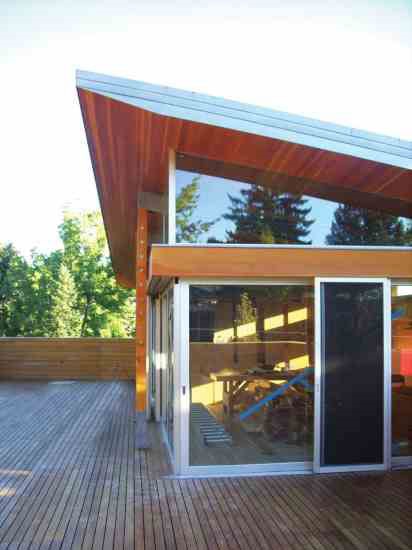
A house with lots of windows presents the challenge of controlling powerful sunlight, especially in warm climates. If you’re building a new house or addition, incorporate deep roof overhangs or a second story that protects first-floor windows. For existing homes, install louvers and trellises outside, blinds and shades inside. Light-colored, open-weave shades create pleasant diffused light, while blinds let you control the light’s angle. “Horizontal blinds with their edges tilted upward will block heat while allowing light in,” says interior designer Stephanie Wohlner of Highland Park, Illinois. “And the closer window coverings are to the windows, the better they’ll insulate.”
Practicing in sunny San Diego, architect Jennifer Luce often uses shades on the inside and outside of glass. “We use a series of translucent shades, such as MechoShade or Lutron, on the inside and outside faces so we can control the light with a double or single layer,” she says. Installed outside sliding glass doors, the shades create dappled light and allow breezes to pass through. She also stretches fabric across skylights to disperse light.
Controlled light enhances people’s mood and productivity, Luce says. “It’s one of the most powerful tools we can use to establish a strong living and working environment,” she says.
Window terminology 101
New technologies are increasing windows’ thermal performance, and manufacturers now provide glazing efficiency results from third-party testing of their products. Here are some terms you might come across while window shopping.
Visible light transmittance: The amount of light passing through a window, compared with the amount of sunlight striking its surface. The higher the value, the more light gets through.
Solar heat gain coefficient (SHGC): The standard indicator of a window’s shading ability, referring to the amount of solar heat admitted through a window or skylight and released into the room. The lower the SHGC, the fewer ultraviolet rays are coming through the glass and causing heat gain.
Low-emissivity: A low-E window has a special coating that keeps radiant heat on the same side of the glass from which it originated. Heat originating from indoors is reflected back inside, keeping heat inside in winter. Infrared radiation from the sun is reflected away, keeping the interior cooler in summer. Lower emissivity ratings
signify better insulation values.
Window-to-floor area ratio: Area of windows to area of floor. To guard against heat gain and loss, building scientist Mark LaLiberte recommends that windows represent no more than 25 percent of a room’s floor area.
Got sun? Make the most of it.
• Track the sun in your home. A simple diary can reveal the quality, timing and direction of sunlight in your home. Capitalize on opportunities to increase sun exposure.
• Orient living spaces toward the southeast. Scientific evidence suggests early morning sunlight is particularly beneficial, especially in winter.
• Place mirrors to bounce light into dark spaces.
• Use bright interior finishes and colors that reflect the sunlight.
• Install solar tubes to bring light into dark and cramped spaces.
• Follow the sun. Start your day in an east-facing room and move to a west-facing one in the afternoon.
• Create a sheltered, private space where you can go outside year-round.
Daylighting checklist
• Balanced natural light, from at least two exposures if possible
• Windows high on the wall
• Light shelves: soffits under high windows that reflect light and prevent glare
• Glass block or sandblasted glass, especially between a master bedroom and bath, to admit light but block sound
• A mirror hung opposite a window
• Strategically placed skylights, north-facing if possible
• Interior windows
• Full-light or sandblasted glass doors
• Solar tubes
• Clerestories
• Open-tread stairs
• Light-colored walls and ceilings
• Curtains that pull back beyond the window
Cheryl Weber writes about environmental design from the sunny, south-facing office of her house in Pennsylvania.





