

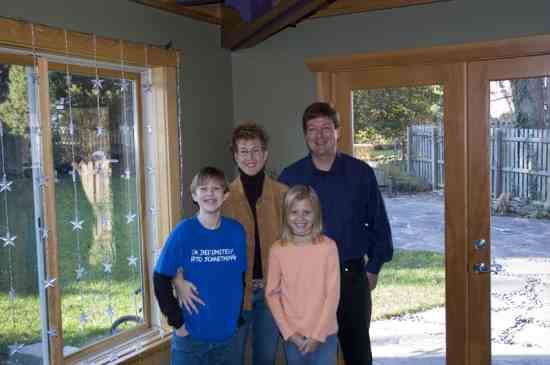
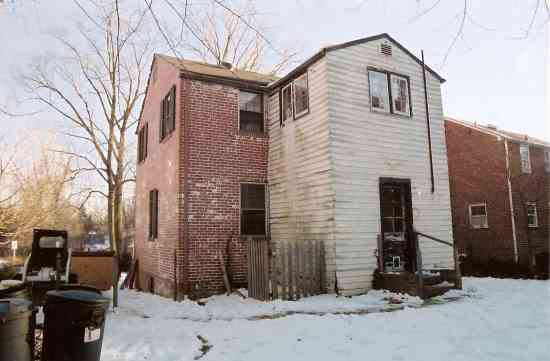
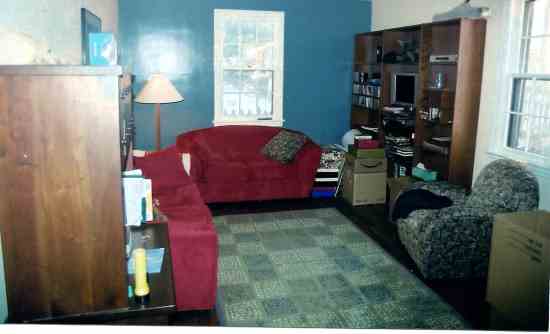
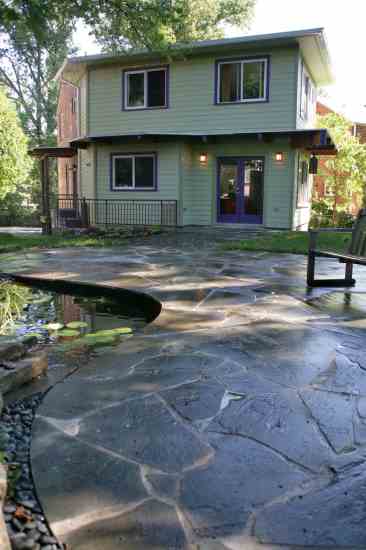
When William and Kate Flint bought their first home in 1990, they settled on a World War II-era brick Colonial with a small, wood addition in Silver Spring, Maryland. “The house was a cheap dump with real potential,” Kate says. Initially the couple planned to do some basic renovations and sell the home within a few years. In the meantime, however, they fell in love with the neighborhood and decided to stay.
For years the Flints made the cramped house livable, if only marginally, by finishing and refinishing floors, and painting and repainting walls. By 2003, however, they were desperate to remodel and build an addition. Their two children were growing out of their bunk beds, and a leaky basement was causing moisture problems. Friends recommended Alan Abrams, CPBD (Certified Public Building Designer), of Abrams Design Build, a Washington, D.C., sustainable building firm, and their adventure began.
The Flints wanted their “new” house to be everything the old one wasn’t–without compromising the Colonial’s integrity. “We didn’t want to McMansion-ize the place and make it look as though we’d completely destroyed the original,” William says. Eight houses on the block share identical building plans, so the couple had seen huge additions that had become out of scale with their lots.
Initially, the Flints weren’t seeking a green approach to their project–they just wanted something that looked good. Abrams introduced them to sustainable strategies, including building orientation and efficient use of energy and materials, which meant that even though the house is now almost double its former size, its utility bills have stayed the same.
1. Make Space for the Family
Problem: The Flints were no longer comfortable in their cramped space. The kids were getting too old to share a room, the kitchen was the size of a closet and the basement was unlivable.
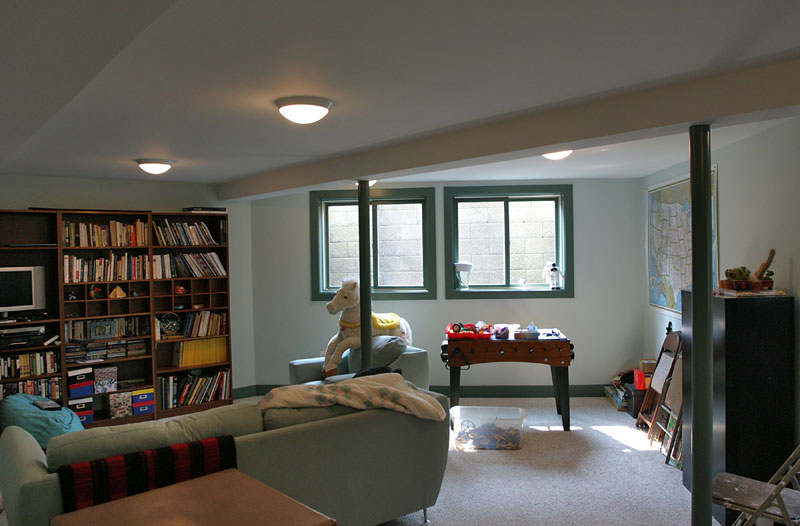
Solutions: Kate and William replaced the existing, rickety addition (built around 1950)–which they not-so- lovingly referred to as the “subtraction”–with a modestly scaled, two-story addition. They also reconfigured the existing floor plan and finished the basement–now a comfortable rec room for the children to enjoy after their homework and chores.
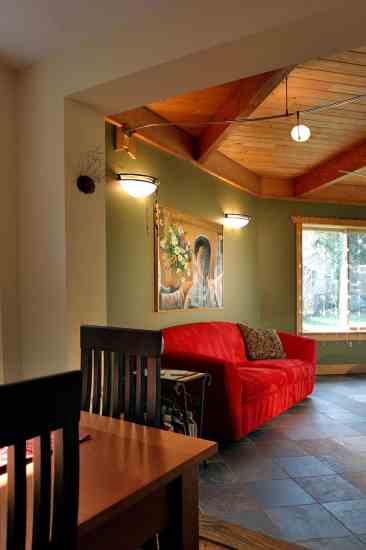
On the first floor, Abrams created one large space that incorporates a kitchen, living room, dining room and sitting area. The Flints use furniture and room dividers to delineate the areas without compromising the open feeling.
Structural ceiling elements made of parallel strand lumber, called Parallam, were left exposed, which reduced material costs and raised the ceiling height without increasing the addition’s size. (Parallam is made from the wood fiber often wasted during lumber milling.)
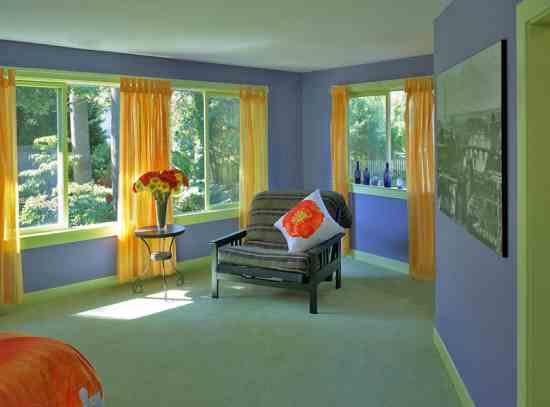
The second floor now houses the master bedroom/bath with an attached work studio–freeing up the couple’s old bedroom for one of the kids.
The Flints also utilized rapidly renewable and thermally efficient materials in the addition, including floor underlayment made from wheatboard (“wood” made from agricultural byproducts). They sided the addition with Hardieboard, a long-lasting, weather-resistant cement board.
Cost: for the addition: $225 per square foot (2004 prices).
2. Illuminate the Living Quarters
Problem: The house was dark. Much of the sunlight that struck the back of the structure never made it through the tiny windows. To make things worse, the “subtraction” blocked most light. The Flints also wanted their basement to have as much natural light as possible.
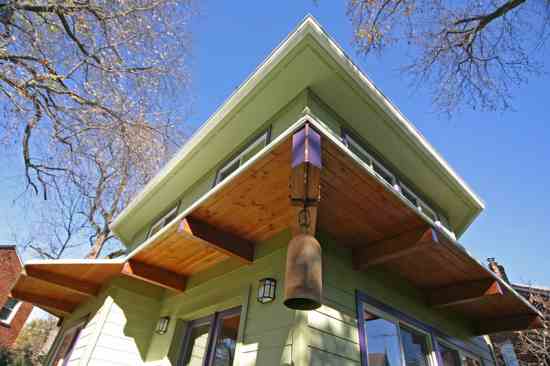
Solutions: Abrams designed the addition to work optimally with the sun. Instead of the typical rectangular structure, the Flint addition is triangular, with one side facing southwest and the other west. This shape creates abundant solar exposure throughout the day. Also, Abrams installed Sun Tunnels, which bring natural light into the upstairs hall and bathroom. In the basement, oversized window wells allow direct and indirect light to shine into the space.
Cost: Two Velux Sun Tunnels: $440 each (installed).
3. Insulate the House
Problem: Leaky windows and poor insulation made energy bills expensive and rooms drafty.
Solutions: Because there wasn’t space in the existing exterior walls to add insulation, Abrams shifted his focus to the attic. Icynene spray-foam insulation now fills the walls of the addition and the attics of both the addition and the existing house. Besides having good insulating properties, Icynene seals gaps and cracks in the building envelope, which helps prevent mold growth and energy loss.
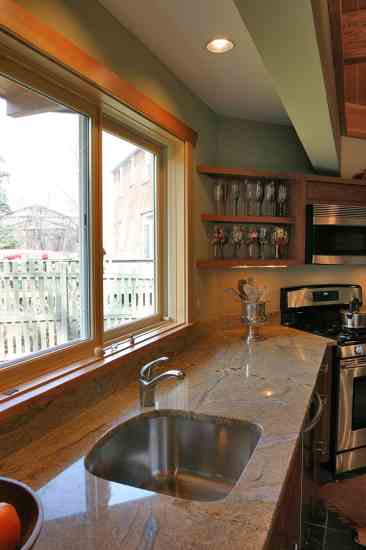
The Flints also replaced all existing window sashes with Energy Star, low-E, argon-filled, fiberglass sash replacement kits. Instead of removing the entire window, sashes were custom built to fit the existing window frames. (Sash replacement kits offer a less expensive, less involved alternative to replacing the entire window.) Fiberglass windows are stronger, longer lasting, and won’t outgas as vinyl windows do.
Cost: Icynene spray foam insulation in limited areas: $7,000. Nine replacement sash kits from Weather Shield: $5,800 (installed)
4. Lower the Power Bills
Problem: Heating and cooling in the old house relied on a gas-powered air conditioner and an undersize furnace.
Solutions: Passive solar design helps keep the home comfortable year-round. Sunshades over the addition’s first- and second-story windows block sun in the summer but permit light to shine on the floors in the winter. Stone tiles in the first-floor addition absorb the sun’s heat during the day and radiate it throughout the room after dark.
In addition, a heat pump in the attic provides second-floor heating and cooling. Abrams installed insulation on the underside of the roof and located registers in the attic, making it a conditioned space. These measures improve the heat pump’s efficiency and mitigate moisture issues. A high-efficiency furnace and high-efficiency air conditioning unit control temperature on the first floor and basement.
Cost: Carrier HVAC system (includes a 93 percent efficiency furnace; a two-ton, 14 SEER A/C unit; a two-ton, 14.5 SEER heat pump; ductwork; two thermostats; plus installation): $22,800.NH
RX at Your House
1.Do it right the first time. Home renovations are costly and demand huge investments in material, energy and time. Jumping into a renovation or addition before you’re ready can be wasteful. Wait until you know how you’re going to use your house. Consider how lifestyle changes related to children or your career might affect your needs before investing in something you could soon outgrow.
2.Find the right designer and builder. These people can make or break your project. When choosing a designer, make sure he or she knows what you want–and can give it to you. Green design solutions require a different way of thinking, and a green design won’t be effective unless a competent builder uses good construction practices.
3.Address moisture issues. Moisture in walls or attics can lead to mold, reduced thermal efficiency and wood rot. Taking steps to flash and seal exterior walls and roofs properly can save energy and increase your house’s lifespan.
4.Keep it small. Large homes demand more energy and have a larger environmental impact than modestly sized homes. Find ways to use spaces for more than one purpose; if you need to add on, don’t build more than is necessary. Certain design techniques give the impression of space without increasing the actual house size.
Resources
Carrier Corporation
HVAC systems
Icynene
spray-foam insulation
James Hardie
cement-fiber siding
Velux
Sun Tunnel skylights
Weather Shield
windows and doors






