

When architect Rick Harlan Schneider and his wife, Julie, set out to find their first home in Washington, D.C., they had several criteria in mind. “We wanted to find an older house that we could renovate, in an urban environment, with lots of transportation options,” says Rick. “It’s often more sustainable to renovate an existing structure, rather than build new. If we’re going to save our planet, we have to save our cities first. Living in urban areas is a very efficient lifestyle; it makes good use of what we have already developed.”
They selected a townhome built in 1929 in Glover Park, a tree-lined enclave not far from Georgetown. Rick’s company, Inscape Studio, an architecture and sustainable design firm, is in nearby Dupont Circle, easily accessible by bike, bus, or foot. Julie’s environmental policy consulting business often takes her to Dupont Circle as well. “We love that we can both get to work so easily,” he says. “Just a ten-minute bike ride, and I’m there.” Other neighborhood amenities such as shopping and schools for their twin daughters are close by as well.
Once they had settled into their house, the couple set about turning it into a home. Rick, a LEED (Leadership in Energy and Environmental Design)-accredited designer, used the U.S. Green Building Council’s national standards for energy use, materials, and water use as guidelines. “If this is the kind of work I’m going to do,” he says, “the place to start is at home.”
Respecting the environment
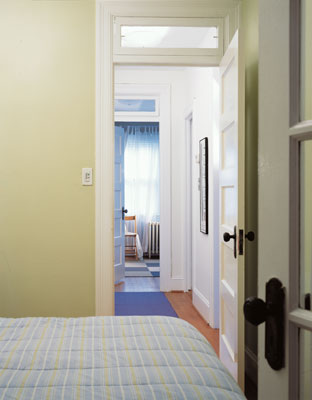
The place had “good bones,” so Rick had a lot to work with. The house was structurally sound, aesthetically pleasing, and with its longest wall facing east, it had an abundance of natural light. Working within the original footprint, they removed some interior walls, including one between the kitchen and an adjacent den, adding considerable light to both rooms. Throughout the home, energy efficiency, sustainability, and respect for the environment were key elements of the process.
In the kitchen, the couple resealed the existing oak floors and installed sustainably harvested birchwood cabinets. Granite counters and stainless steel appliances complete the room. The existing refrigerator was reframed in stainless steel to match the other appliances. The dishwasher is lined with steel rather than the customary plastic, allowing the water to heat more efficiently. Just outside, an organic kitchen garden provides fresh herbs and vegetables. Upstairs, the bathroom was expanded and redesigned, with the sink and shower trading places to allow more sunlight into the sink area. New tile and fixtures refresh the room.
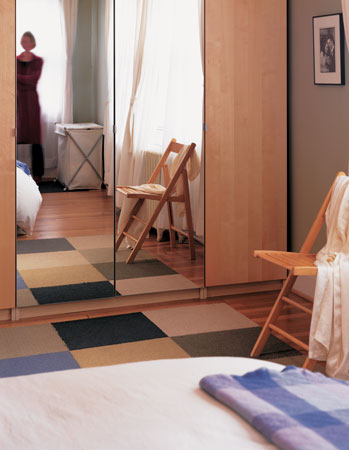
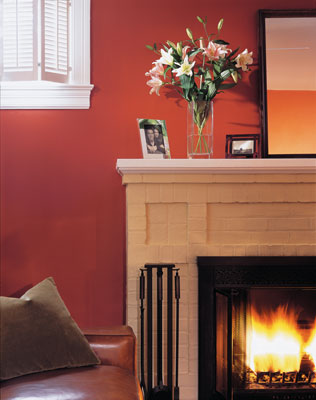
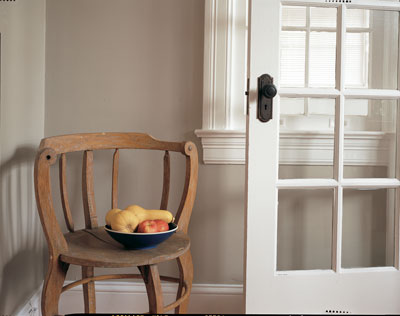
The interior was painted using low-VOC paint, and wool and sisal carpets warm the wood floors. The home is furnished simply, in keeping with its era. In the master bedroom, Rick made a patchwork area rug from carpet tile samples that he’d accumulated over the years. A nearby bed and chair were rescued from salvage, refinished, and given new life. “Effectively using resources isn’t about dumpster diving, but about being a good steward of the materials we use,” he explains. “The question is, do you add more value to the materials, or devalue them?”
Throughout the house, compact fluorescent light bulbs reduce energy consumption, and ceiling fans facilitate ventilation. “This is Washington, D.C.,” laughs Rick. “So we will use the air conditioning, but first we’ll open windows and use the fans.” Conversely, when the weather cools, family members wear warm clothes rather than firing up the furnace. “There’s something nice about paying attention to the weather rather than artificially controlling it with heating and cooling,” says Rick. “We live a little closer to the seasons.”
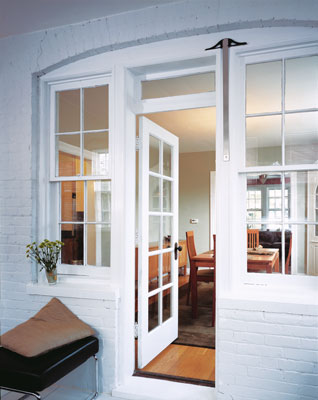
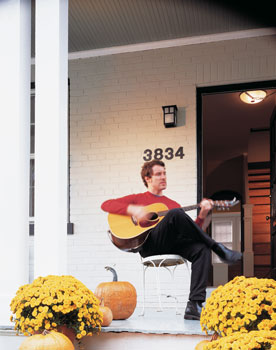
The home’s dark brick exterior was painted white to reduce the urban “heat island” effect, which occurs when the sun beats down on a heavy concentration of dark surfaces such as buildings and roads, and raises the temperature. “The heat island effect is why the temperature is always higher in the city than the suburbs,” says Rick.
Other energy-conscious changes include installing canopies and window treatments to control solar heat gain and the installation of a “green roof” on a shed behind the house. Part of the roof is planted with a thin layer of vegetation, in this case succulents. The plants are chosen for their ability to store moisture in their leaves rather than roots. The end result: a roof that conserves energy, cools the air, and extends the life of the conventional roof membrane underneath. “We have neighbors walk by who stop to check out the roof,” says Rick. “Then we start talking about how they can do this with their own house.”
Old-fashioned common sense
Throughout the planning and construction process, one of the biggest lessons Rick and Julie learned was the importance of communication. “The architect, owner, and contractor really have to talk when using green design,” explains Rick. “It’s difficult to make changes once you’ve begun the construction process, and if, for instance, a material is unavailable, you may end up with something installed that you really didn’t want.” The time and thought paid off: Rick says there’s not a single thing he would change if he had the chance to do it over.
He dismisses the idea that choosing green products cost him more, pointing out that it’s a matter of exploring what coin you’re really paying with. Just looking at the dollars is not enough–it’s important to consider the long-term impact and health implications of your choices.
It was easier to make these choices because of where the home is located, Rick says. “The presence of government agencies and environmental groups in the D.C. area has created a big knowledge base in green design as well as informed clients,” he explains. “The EPA, the Department of Energy, the Navy–they’re all out in front on sustainable design issues such as energy efficiency and healthy buildings.
“Green design is not in opposition to traditional design–you have to explore what those terms mean,” adds Rick, who serves as co-chair of the American Institute of Architects Commission on the Environment. “Green often means using ancient methods, in tune with nature, like good lighting and proper ventilation.”






