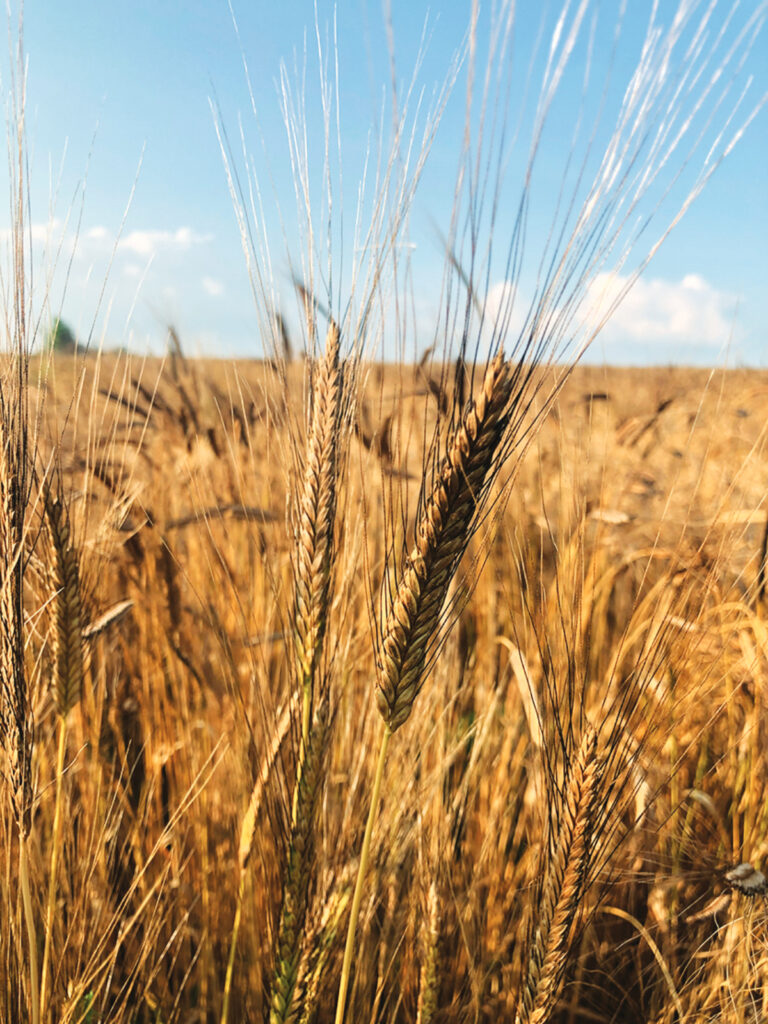
What is einkorn flour, and is einkorn gluten-free? Learn about the world’s oldest cultivated wheat and the einkorn nutrition it brings to the table.
What is Einkorn flour?
Can I use it the same way I would use standard store-bought wheat flour?
Imagine baking bread from a wheat that has remained virtually unchanged for over 10,000 years. That’s einkorn (Triticum monococcum), the world’s oldest cultivated wheat and the foundation of early agriculture in the Fertile Crescent.
Among its rare varieties, black einkorn (“bleinkorn”) stands out for its striking dark hulls and awns, which are packed with anthocyanins – the same powerful antioxidants found in blueberries. As someone growing black einkorn, I’m excited to share why this ancient grain deserves a place in every homestead kitchen. It offers superior nutrition, gentler digestion for many people, and a nutty, deeply satisfying flavor.
From the Cradle of Civilization to Your Table
Einkorn was domesticated around 10,000 to 12,000 years ago in the Karacadag mountains of southeastern Turkey, right in the heart of the Fertile Crescent. Unlike today’s bread wheat – a hexaploid with 42 chromosomes bred for massive yields – einkorn is diploid, with just 14 chromosomes. It was never hybridized or genetically altered for industrial farming. This genetic simplicity is key to its appeal.
Black einkorn is a rare pigmented landrace of the same species. The dark coloration of the awns and hull comes from natural anthocyanin accumulation in the outer layers (pericarp and aleurone). While the exact origins of the black variant are less documented than the species as a whole, it likely emerged as a natural genetic variant or selected landrace among early farmers – much like other ancient colored grains prized for both nutrition and visual appeal. Early humans valued diversity; today, we’re rediscovering it for health and resilience.
Einkorn Nutrition
Modern wheat was bred for high yields, strong gluten, flavor, consistency, and machine processing. Where einkorn stands out is in nutrition. Studies show that einkorn wholemeal is richer in protein (often 25 to 40 percent higher), lipids (mostly healthy unsaturated fatty acids), fructans, and trace minerals, such as zinc, iron, magnesium, and manganese. It also delivers more lutein (for eye health), beta-carotene, and overall antioxidant activity – up to twice that of modern bread wheat in some comparisons.
Einkorn also has lower starch and a more favorable glycemic response, making it a steadier fuel for the body. While it’s poor in dietary fiber relative to some modern wheats, it compensates with micronutrient density and bioactive compounds, such as tocols (vitamin E forms), alkylresorcinols, and phytosterols. Black einkorn takes this further with its anthocyanins. These flavonoids act as potent antioxidants and anti-inflammatories, potentially supporting heart health, reducing oxidative stress, and offering metabolic benefits – much like the pigments in berries. That’s why we focus on it: It preserves ancient biodiversity while delivering an extra nutritional punch in every kernel.

Is Einkorn Gluten-Free?
Einkorn contains gluten – proteins gliadin and glutenin – so it isn’t for people with celiac disease. However, its simpler diploid structure means a weaker, more water-soluble gluten network with a different gliadin-to-glutenin ratio (often higher gliadins but fewer complex types). Modern wheat’s complex genome produces stronger, more elastic gluten and higher levels of certain amylase-trypsin inhibitors (ATIs), which can trigger inflammation in sensitive individuals. Einkorn typically has lower ATIs and lacks some of the immunogenic peptides (such as 33-mer) that trouble non-celiac people with gluten sensitivity. In vitro and clinical observations suggest that many with gluten or wheat sensitivities digest and tolerate einkorn more comfortably, with fewer digestive issues.

Sourdough fermentation or sprouting further improves digestibility by breaking down proteins and reducing anti-nutrients.
Grow Black Einkorn with Natural Farming Practices
I grow bleinkorn at Earth Touch Farms, where we use regenerative methods. We never use glyphosate or harsh chemical sprays. Instead, we rely on mechanical weed control – camera- or GPS-guided cultivation, tine weeding, and timely physical management – to keep fields clean while protecting the living biology of the soil.
We consider soil biology the foundation, using diverse cover crops that fix atmospheric nitrogen, scavenge residual nutrients, and build organic matter. These cover crops are incorporated as green manure to increase soil organic matter, improve soil structure and water retention, and feed the underground network of microbes, fungi, and earthworms that drive nutrient cycling. Where soil and tissue tests document a gap that biology alone can’t fill, we apply targeted fertilizers only at rates guided by those tests. This measured supplementation supports higher and more consistent protein and mineral density in the harvested grain.
Success is measured by soil-health data, tissue tests, and the actual nutrient profile of the einkorn itself, not by compliance with any fixed materials list. The result is nutrient-dense grain produced on living soil.
Einkorn works beautifully in recipes, but its weaker gluten means doughs are stickier and less elastic – perfect for no-knead methods. To try an einkorn recipe in this issue, see “Overnight Pancakes for Happy Guts.
Jon Thomas is the president of EarthTouch, a provider of organic and sustainable agricultural products in Gallatin, Missouri. EarthTouch is widely known for its signature Black Einkorn Wheat, a non-GMO ancient grain grown without synthetic herbicides or glyphosate.
Originally published in the October/November 2026 issue of MOTHER EARTH NEWS and regularly vetted for accuracy.
Frequently Asked Questions
Is einkorn gluten-free?
No, einkorn contains gluten — proteins gliadin and glutenin — so it isn’t for people with celiac disease. However, its simpler diploid structure means a weaker, more water-soluble gluten network with a different gliadin-to-glutenin ratio. Einkorn typically has lower amylase-trypsin inhibitors (ATIs) and lacks some of the immunogenic peptides (such as 33-mer) that trouble non-celiac people with gluten sensitivity. In vitro and clinical observations suggest that many with gluten or wheat sensitivities digest and tolerate einkorn more comfortably, with fewer digestive issues.
Is einkorn flour healthy?
Yes, where einkorn stands out is in nutrition. Studies show that einkorn wholemeal is richer in protein (often 25 to 40 percent higher), lipids (mostly healthy unsaturated fatty acids), fructans, and trace minerals, such as zinc, iron, magnesium, and manganese. It also delivers more lutein (for eye health), beta-carotene, and overall antioxidant activity — up to twice that of modern bread wheat in some comparisons.
Is einkorn wheat low glycemic?
Yes, einkorn also has lower starch and a more favorable glycemic response, making it a steadier fuel for the body. While it’s poor in dietary fiber relative to some modern wheats, it compensates with micronutrient density and bioactive compounds, such as tocols (vitamin E forms), alkylresorcinols, and phytosterols.