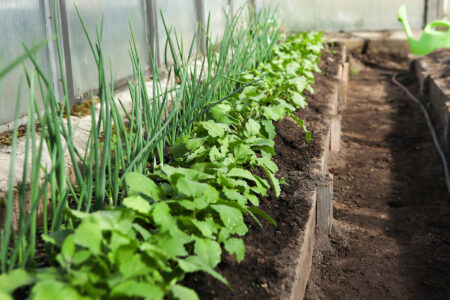
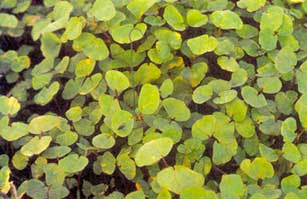
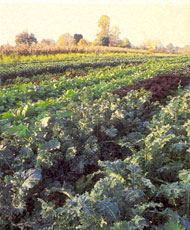
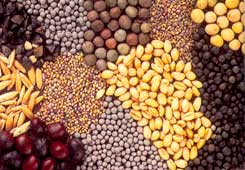
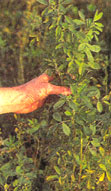
Learn about growing your own green manure cover crop for your homestead. Improve your soil and increase vegetable yields with easy-to-grow cover crops.
Whether you garden in raised beds, a small backyard or on
acres of land, cover crops can provide a wealth of benefits
to the garden. For one, a green manure cover crop often grow fast and develop in
thick stands. Plus, they provide nutrients to turn a cover
crop hack into the garden while the plant is still green
and it’s called “green manure.”
If you have a weed problem, fast-growing cover crops like
buckwheat, red clover or Austrian peas can outcompete and
smother unwanted invaders. Even closely planted sunflowers,
with their allelopathic tendencies, are a good
weed-suppressing crop. While a sunflower grows, it
temporarily inhibits nitrogen-fixing bacteria in the soil
. . . bad news for the germination and growth of any plant
needing nitrogen. And few plants need nitrogen more to
germinate and grow than do the weed grasses.
Is your garden crawling with pest insects? Cover crops are
a boon to beneficial life — providing food and shelter for
both soil-dwelling creatures and aboveground insects that
pollinate and help control garden pests. Countless
beneficial insects thrive on the pollen or nectar of cover
crops in bloom. (Pest insects, conversely, feast not ran
pollen but on plants, choosing their targets by the gaseous
odors they emit. In my experience, cover crops have far
less trouble with pest insects than do vegetable crops.)
If you’re looking to lure welcome guests to your garden,
look no further: alfalfa attracts a host of parasitic
wasps, lady beetles, damsel bugs, big-eyed bugs and
assassin bugs. White clover attracts tachinid flies, ground
beetles and parasitic wasps that prey on aphids, scales,
caterpillars and whiteflies. Most grains attract lady
beetles. Clovers and vetches attract minute pirate bugs.
Fava beans attract predatory and parasitic wasps, as does
buckwheat, which has the added benefit of luring syrphid
flies (also called hover flies) and bumblebees.
Cover crops are good for the environment, too. Established
legumes or fall sown, grains and grasses that quickly cover
the ground protect the most fertile part of your soil from
erosion caused by assailing winds and pounding storms.
Likewise, grasses, grains and brassicas that grow quickly
in the fall help capture easily leached nutrients like
nitrogen and calcium before they wash away with winter
rains. When you turn these crops under in spring, the
needed nutrients are released back into the soil.
Cover crops also regulate soil temperature, keeping the
earth cooler in summer and warmer in winter. By providing
an insulating blanket, they allow important soil life to
thrive, especially earthworms. The more worms in your
garden, the more effective they’ll be at creating channels
to break up and aerate the soil. And, once that blanket of
green is turned under, it returns to the earth an abundance
of organic matter essential to earthworms and other soil
creatures, which in turn are at the very heart of healthy
soil.
Finally, if you want to fertilize your garden naturally,
grow cover crops. Legumes such as vetches, alfalfas and
clovers can actually transport nitrogen right out of the
air we breathe and into the soil, where bacteria can then
convert it into a plant-friendly form. Grains and other
cover crops also work to replenish the soil, by recycling
nutrients normally beyond the reach of other plants. Their
roots reach deeply into the subsoil, drawing up valuable
minerals and nutrients that are then stored in the plants’
tissues. Once the cover crop is turned back into the soil
and allowed to decompose, those nutrients gradually become
available to future plants.
Choosing Your Green Manure Cover Crop
Which are the best cover crops to grow? Your choices are
limited only by your needs. Do you want cover in the
spring, summer, fall or winter? Is your goal to add the
most abundant organic matter, tremendous amounts of
nitrogen, bring up valuable nutrients from the subsoil or
grow a killer crop that suppresses the nastiest of weeds?
Where you live, along with your soil and climate
conditions, can also play a factor. Ultimately, you’ll want
a crop that works for you — not one that’s going to become
a nuisance.
Suggestions for which crops to grow are listed in this article,
“At A Glance: Best Crops for Special Conditions” (see end of article).
There are, however, some generalities that can help you
decide which covers to grow. First, decide whether you want
an annual or perennial. Annuals usually grow fast, are
quick to establish, last a season and won’t resprout from
their roots. Perennials tend to be deep-rooting (though some
annuals are as well), slow to establish and are great for
areas, like orchards and vineyards, where you want a
long-term cover.
Second, consider which of the two basic groups of covers
you’d like to grow: legumes or grasses and grains. All add
a certain amount of organic matter (though grasses and
grains tend to add more). Legumes decompose rapidly when
turned under and are unsurpassed as nitrogen-catchers,
securing more of this important element in the soil than
any other cover crop.
Grasses and grains, on the other hand, often germinate and
grow quicker than legumes, making them the first-choice for
fast, effective ground covers. They are also especially
valued for the bulky organic matter they add to soil, as
well as for reducing nematodes in the garden.
But why not grow a mix so you can have the best of both
worlds? Your fast-growing grains will act as a nurse crop
to help sustain and provide support for your slower-growing
vining legumes. Plus, the legume-grass/grain combination
holds nitrogen in the soil better than either grown alone.
When to Plant Cover Crops
Depending on where you live, you can plant cover crops
anytime from early spring through late fall. Spring or
summer planted covers can be used as part of your rotation,
grown between rows or underneath established vegetables.
Frost-tolerant covers like bell bean, Austrian peas and
oats can be planted as soon as your soil can be worked. For
others, like cowpeas, buckwheat and soybeans, wait until
all danger of frost has passed.
Fall and winter covers are sown as early as August in cold
climates and as late as November in the deep South.
Since I sow a variety of cover crops, I’m usually planting
throughout the year. In the spring I might sow
nitro-alfalfa and spring oats, which are turned under in
midsummer, before I plant my fall crops. Buckwheat is an
excellent green manure for summer (I plant in May or June,
tilling under six to ten weeks later). Fava beans, Austrian
peas, crimson clover and vetch are my favorites for
planting in the fall (September or early October here in
our mild zone 8 Oregon climate) and then tilling under in
spring.
Together, these crops provide erosion protection against
our considerable winter rains, organic matter to loosen our
heavy clay soil, plus nutrients — specifically nitrogen,
but also phosphorus (supplied by buckwheat) — in which our
soil tends to be lacking.
Every year I also plant my previously weediest bed with
sunflowers — the lazy gardener’s way to control wild
growth.
How to Plant Cover Crops
Planting your cover crop is easy you don’t have to worry
about tilling the soil first. Just clear the bed of weeds
and spent vegetables, then rake the soil free of clumps.
You’ll need an average of one and a half cups of seed to
sow a 100-square-foot area.
Use a broadcaster or throw your seeds on by hand, then work
in with a rake or cover with additional soil. A good rule
of thumb is to cover the seed to a depth three times its
diameter. Water thoroughly and be sure to keep watering in
summer or during dry weather.
It’s important to remember to use an inoculant on any
legume seed before you plant. These commercially available
powdered substances contain live rhizobia bacteria. While
different legume crops are naturally host to different
types of rhizobia bacteria, inoculants ensure that
sufficient populations of the right rhizobia are present at
the right time (the inoculant’s packaging should tell you
which crop it’s intended for). Rhizobia bacteria colonize
the roots of legumes and feed from their carbohydrates. In
return, the bacteria take gaseous nitrogen from the air and
change it to a form that plants (both legumes and their
neighbors) can use. This symbiotic process, commonly known
as nitrogen-fixation, is one you’ll want to encourage to
ensure that your legumes absorb the maximum amount of
nitrogen.
Turning The Cover Crop Back In
Cover crops can be worked back into the soil at anytime
before they set seed. For legumes, the prebloom stage is
ideal. Grasses and grains should be turned under when they
start to form grain heads (though most can be turned under
sooner, this is when they are at their nutritional peak).
Exceptions to these rules are legume or grass/grain crops
planted in fall, which are then turned under in spring
(usually May or June), and, in my experience, cereal rye
and ryegrass, both of which can get quite vigorous and
should be cut, then turned under before grain heads form.
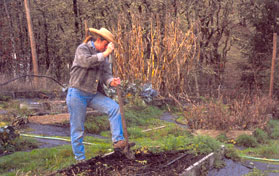
If a crop is tall, you should first mow it, weed-whack it
or use a scythe. Compost the tops or till, hoe or dig them
in along with the remaining stubble. After digging your
cover in, wait at least two to three weeks before planting
again. This allows the soil microbes and organisms to begin
breaking down the plant material into valuable nutrients,
bringing rich rewards to your soil – and your harvest.
Related info:
Choosing Cover Crops for the Homestead
At a Glance: Best Crops for Special Conditions
Tolerates Acidic Soil: bell beans, most clovers, most vetches, buckwheat
Tolerates Alkaline Soil: alfalfa, barley, ryegrass, Sudan grass
Tolerates Drought Conditions: alfalfa, hairy vetch, barley, cereal rye, ryegrass, Sudan grass
Tolerates Wet Conditions: bell beans, subterranean clover, Austrian peas, mustard, oats, ryegrass
Tolerates Shade: most clovers, hairy vetch, cereal rye, ryegrass
Tolerates or Enjoys Heat: cowpeas, soybeans, buckwheat, Sudan grass
Breaks Up Compacted Soil/Deep Roots: alfalfa, bell beans, most clovers, barley, buckwheat, cereal rye, kale, mustard, ryegrass
Suppresses Weeds: most clovers, Austrian peas, field peas, soybeans, vetches, barley, buckwheat, cereal rye, oats, ryegrass, Sudan grass
Seed Sources
Fedco Seeds
Waterville, ME
Peaceful Valley Farm Supply
Grass Valley, CA
Johnny’s Selected Seeds
Albion, ME
Territorial Seed Company
Cottage Grove, OR
Read more gardening tips at www.motherearthnews.com