

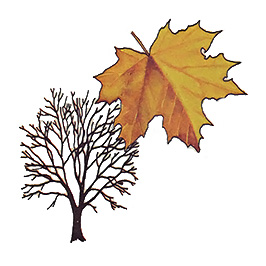
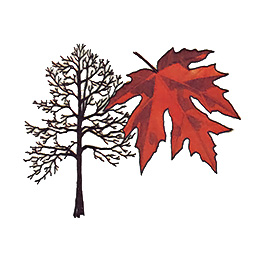
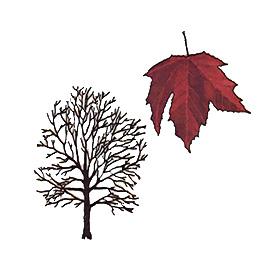
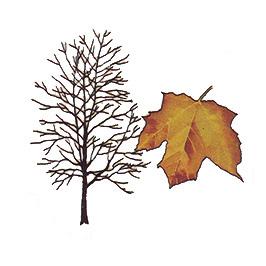
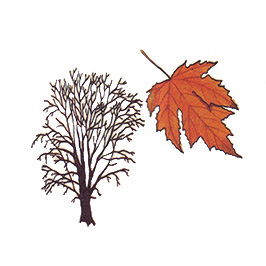
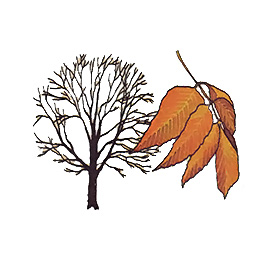
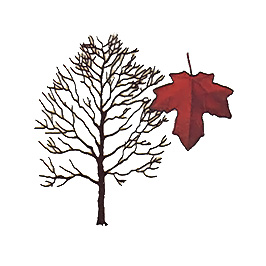
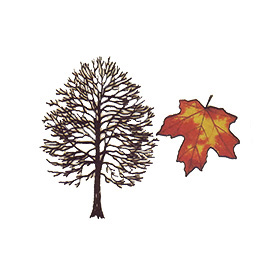
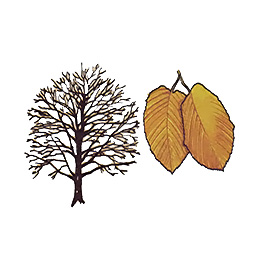
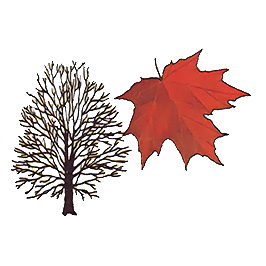
Though the sugar maple is the only tree tapped for commercial syrup-making, almost all maples (members of the genus Acer)-as well as birches, butternuts, alders, hickories, and black walnuts-can turn out some mighty tasty natural sweeteners. The amount of sap and its sugar content will vary from tree to tree even within a species, but the following hardwoods (at least one of which can be found just about anywhere in the U.S. or Canada) have all proved to be reliable syrup trees.
NORWAY MAPLE (Acer platanoides). Height 60′, diameter 2′. Introduced from Europe as a roadside tree, widely planted across the United States.
BIGLEAF MAPLE (Acer macrophyllum), also called “broadleaf maple” or “Oregon maple.” Height 30′ to 70′, diameter 1′ to 2 1/2′. Found along stream banks and in moist canyon soil from southwestern British Columbia to southern California.
BLACK MAPLE (Acer nigrum), also called “hard maple” or “rock maple.” Height 80′, diameter 2′ to 3 ‘ . A close relative of the sugar maple. Found in mixed hardwood forests and in the moist soil of valleys and uplands from southern Ontario east to southern Quebec and Vermont, southwest to Tennessee and Missouri, and north to southeastern Minnesota … as well as locally in adjacent states.
RED MAPLE (Acer rubrum), also called “swamp maple” or “scarlet maple.” Height 60′ to 90′, diameter 2 1/2 ‘. Grows in wet or moist soils of stream banks and valleys, swamps and uplands-and sometimes on dry ridges-in mixed hardwood forests from southeast Manitoba, east to eastern Newfoundland, south to Florida, and west to east Texas.
BOXELDER(Acer negundo), also called “ashleaf maple” and “Manitoba maple.” Height 30′ to 60′, diameter 2 1/2 ‘. Found, with various other hardwoods, in wet or moist soils-often along stream banks in valleys-and naturalized in waste places and roadsides from southern Alberta to extreme southern Ontario and New York, south to central Florida, and west to southern Texas. Also scattered from New Mexico to California, and naturalized in New England.
CANYON MAPLE(Acer grandidentatum), also called “bigtooth maple” or “sugar maple.” Height 40′, diameter 8″ (this small tree should be drilled less deeply than are full-sized species). Found in the moist soils of mountain canyons and woodland plateaus from southeastern Idaho south to Arizona and east to southern New Mexico and TransPecos Texas.
FLORIDA MAPLE(Acer barbatum), also called “southern sugar maple” or “hammock maple.” Height 50′, diameter 2′. Grows in the moist soils of valleys, and along upland slopes, from southeastern Virginia south to central Florida, west to eastern Texas, and north to eastern Oklahoma.
SWEET BIRCH(Betula lenta), al so called “black birch” or “cherry birch.” Height 50′ to 80′, diameter 1′ to 2 1/2′. Usually found in cool, moist uplands-among hardwoods and conifers from southern Maine, southwest to northern Alabama, and north to Ohio. Also found locally in extreme southern Quebec and southeastern Ontario.
SUGAR MAPLE(Acer saccharum) also called “hard maple” or “cock maple.” Height 70′ to 100′, diameter 2 ‘ to 3 ‘. Located from extreme southeastern Manitoba, east to Nova Scotia, south to North Carolina, and west to eastern Kansas. Grows locally in both northwestern South Carolina and northern Georgia.
SILVER MAPLE (Acer saccharinum) also called “soft maple” or “white maple.” Height 50′ to 80′,diameter 3″. Generally located–among other hardwoods–in the wet soil of stream banks, flood plains, and swamps. It ranges from southern Ontario, east to New Brunswick, south to northwestern Florida, west to eastern Oklahoma, and north to Minnesota (it’s also sometimes cultivated in the West).





