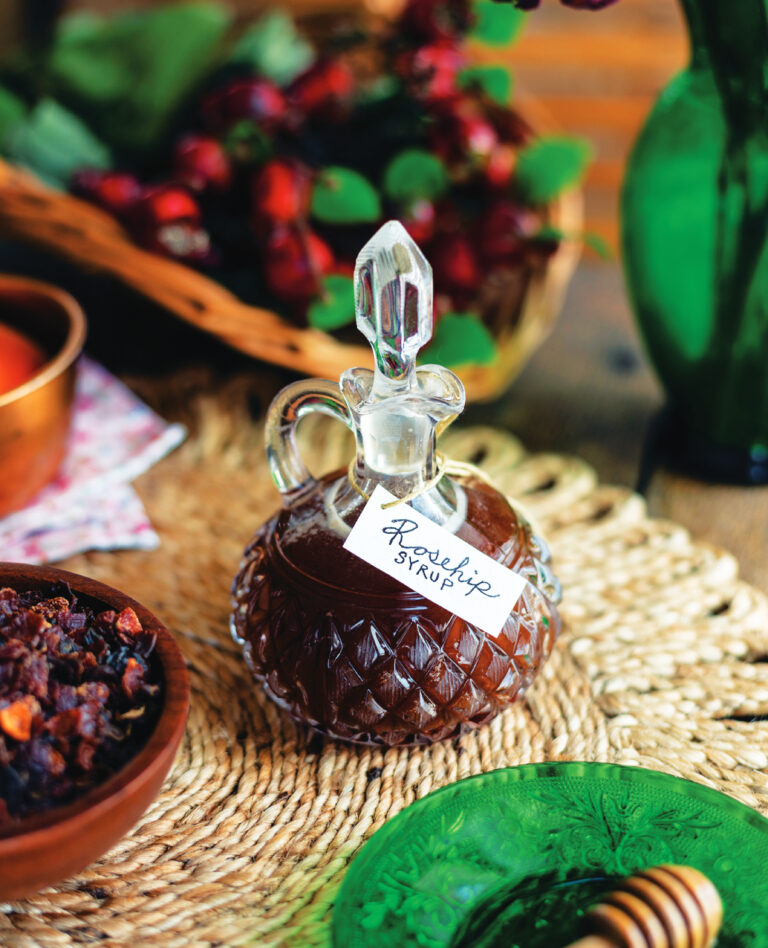
Create a rosehip syrup recipe with honey made from rose hips, a little fruit left behind after a rose blooms.
As their petal display wanes, many rose varieties leave behind little fruits called rose hips. You’ll start to see them show up in late summer and fall (red, orange, and sometimes deep purple), and they’re full of vitamin C, antioxidants, and minerals. I like to think of them as one of the garden’s final gifts before winter sets in.
They taste great too – tart, a touch sweet, and perfect for turning into a syrup you can drizzle over oatmeal or pancakes, stir into tea, and more.
Rose Cultivars to Consider
If you’re hoping to grow your own rose hips, choose your variety carefully, as roses can be invasive in some habitats. Check with local guidelines and consider native roses. Most roses will produce hips if you leave the flowers alone after they bloom, but some types are known for their big, flavorful fruit.
- Rosa rugosa: Hardy, easy to grow, with hips that are big, vivid, and effortless to pick.
- R. canina: Its small, oval-shaped hips are rich in vitamin C and have a long history of use in teas and syrups.
- R. moyesii: This variety has vase-shaped rose hips that stand out. The plant itself has a wild, arching look that’s beautiful in the garden.
- R. glauca: You’ll know this one by its smoky blue leaves and striking red hips. It’s as pretty as it is useful.
The truth is, any true rose will do. Whichever type you go with, don’t deadhead every bloom; rose hips only form if you let the flowers do their thing and fade naturally. And if you’re planting roses specifically for harvesting rose hips, choose organic or untreated rose varieties, since you’ll be using the hips in food or medicine.
Harvest and Dry Rose Hips
Once you’ve got a rose bush that’s producing hips, the next step is knowing when and how to pick them. Wait until after the first light frost, which sweetens the hips just a bit and softens them. Look for hips that are intact, brightly colored, and slightly soft to the touch, similar to a ripe cherry tomato.
Use garden snips to cut the hips from the stem. If you’re harvesting a lot, wear gloves so the rose thorns don’t get you!
Rose hips contain fine, hair-like fibers inside that can irritate your throat if ingested. If you’re working with fresh rose hips, slice them in half, scoop out the seeds and the fuzzy insides, and give the remainder a rinse. It’s a bit of extra effort, but you don’t want the seeds or fuzz in your syrup. Avoid using copper or aluminum tools while you’re prepping, because rose hips are acidic and can react with those metals.
If you’re using your rose hips right away for syrup, you’re ready to go once they’re cleaned. But if you want to dry them for later, lay the halved and cleaned hips on a screen or dehydrator tray and dry them until they’re leathery or crisp. Store them in an airtight glass jar out of direct light and heat, and they’ll keep for up to a year.
Rose Hip Syrup
I enjoy making this syrup in fall, when rose hips are fresh and plentiful. It’s a simple, delectable way to get vitamin C and antioxidants into your day.
- 4 cups water
- 2 cups fresh (or 1 cup dried) cleaned, chopped rose hips (Rosa spp.)
- 1 cup organic, local honey
- Clean and chop the rose hips, removing the seeds from the middle before adding them to a stockpot.
- Cover the rose hips with water and bring to a boil.
- Turn off the heat and let it steep for 45 minutes.
- Strain the rose hip tea through a cotton muslin cloth into a large measuring cup or heat-safe bowl.
- Wash your cooking pot so no rose hips remain, and then add the rose hip tea back into the pot, bringing it to a boil.
- Once at a boil, turn heat to a low simmer until reduced by half.
- Let cool, then add honey and mix well until dissolved (you should have approximately equal parts honey-to-rose-hip decoction).
- Add syrup to your sanitized glass bottle of choice, label it, and refrigerate it for up to 3 months.
However you enjoy it, rose hip syrup is one of those basic things that feels both nourishing and medicinal. It’s a seasonal way to bring the heart of the rose into your everyday life.