

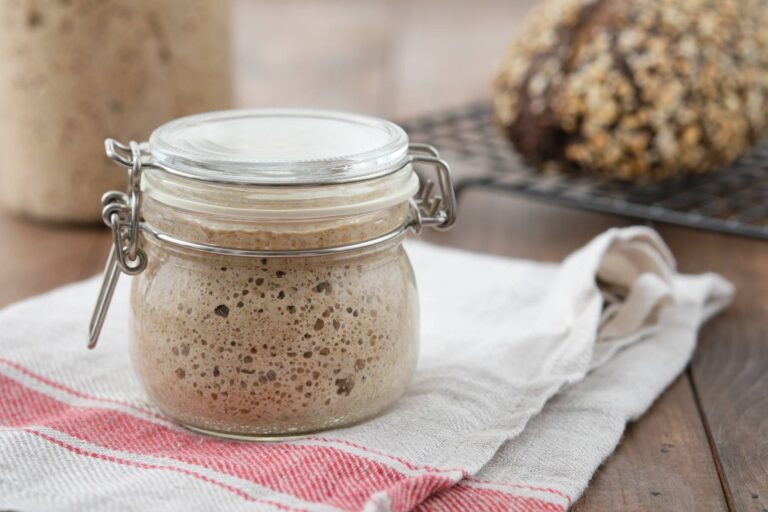
How is yeast made? Learn how to make your own yeast starter with fermented dough to produce bread with a lower glycemic index and kinder to gluten sensitivities. Understanding how to make your own yeast and where yeast comes from helps you bake healthier and more naturally.
Creating your own yeast to fulfill your baking desires will empower you and your community with self-sufficiency skills. Not only will making your own yeast cut costs, but your homemade yeast will also be acclimated for your climate, temperature, and environmental conditions. Yeast is artistry in motion, as each mixture will be a compilation of unique traits in your home and surroundings. If you’ve ever wondered how is yeast made or where does yeast come from, this natural fermentation process gives you the answer.
Plus, yeast has a long legacy and has been used for years in many cultures. By choosing to make your own yeast, we’re keeping foodways alive from generation to generation while embracing the tradition of homemade yeast.
Your yeast will break down, or “pre-digest,” starches in the grains, allowing your body to more easily digest the end products. Breads made of fermented dough have a lower glycemic index. And creating your own yeast allows for better digestion of gluten if you’re gluten-sensitive. The Lactobacillus bacteria in sourdough allows for higher levels of lactic acid, resulting in easier digestion and enabling the uptake of beneficial minerals from the dough. This is why many bakers prefer homemade yeast when learning how to make your own yeast for bread.
Now that we’ve established the benefits, here’s how to make your own yeast at home.
How is Yeast Made?
- Day 1: Mix 1 cup flour and 1 cup filtered water in a bowl. Stir to incorporate fully, scraping down the sides of the bowl. This is the first step in how to make your own yeast. Take a small towel and place it over the bowl, and set it aside for 24 hours.
- Day 2: Take away and discard half the mixture and repeat the same process of adding 1 cup flour and 1 cup water, incorporating fully, then covering. This ongoing feeding process is essential when learning how is yeast made naturally.
- Day 3 through 5: Repeat Day 2 instructions. As your homemade yeast develops, you’ll begin to notice bubbling and a slight sour smell, which indicates fermentation and shows where yeast comes from in natural environments.
- Day 6 and 7: Repeat Day 2 instructions, but feed your starter every 12 hours instead of every 24. On Day 7, you’ll have enough good bacteria and yeast to create your own delicious breads, pancakes, muffins, and other creative goodies.
At this stage, you’ve successfully learned how to make your own yeast for bread using simple ingredients at home.
Frequently Asked Questions
How is yeast made naturally at home?
Yeast is made naturally through fermentation by combining flour and water and allowing wild yeast from the environment to grow. This process creates homemade yeast that develops over several days through regular feeding and care.
Where does yeast come from?
Yeast comes from naturally occurring microorganisms found in the air, on grains, and on surfaces around us. When you mix flour and water, these wild yeasts activate and begin fermentation.
How to make your own yeast for bread?
To make your own yeast for bread, mix equal parts flour and water daily, discard half, and feed it over 5–7 days. This creates a strong sourdough starter that can be used as a natural leavening agent.
What is homemade yeast and how is it different?
Homemade yeast is a natural starter made without commercial yeast packets. It contains wild yeast and beneficial bacteria, making it more flavorful and easier to digest.
How long does it take to make your own yeast?
It typically takes about 5 to 7 days to make your own yeast. During this time, the mixture ferments and develops enough strength to be used in baking.
Is homemade yeast better than store-bought yeast?
Homemade yeast can be better for digestion and flavor because it contains natural bacteria and develops unique characteristics based on your environment.
Can beginners learn how to make your own yeast easily?
Yes, beginners can easily learn how to make your own yeast using just flour and water. The process is simple but requires consistency and patience.
Why is sourdough considered a natural yeast method?
Sourdough uses wild yeast and bacteria instead of commercial yeast, making it a natural method of fermentation and a traditional way of baking bread.





