
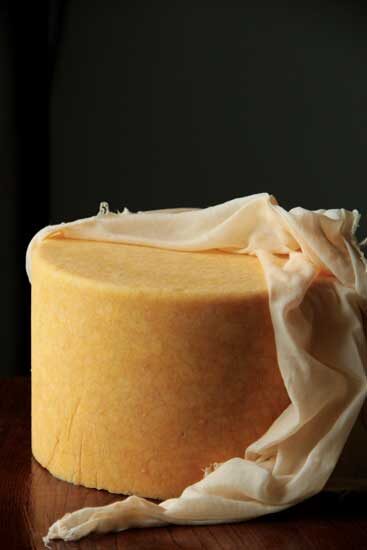
You don’t need a science lab to learn how to make aged cheese at home, only an affection for the craft and a few tools.
Nothing is quite so wonderful, so luxurious, and so palate-pleasing as a well-aged cheese. As with wine, it takes time and proper care to mature a young cheese into the ultimate epicurean experience — but you don’t have to be a skilled affineur (the French term for a professional cheese ager) or have access to a high-tech aging room or traditional cheese cave to create superior aged cheeses at home!
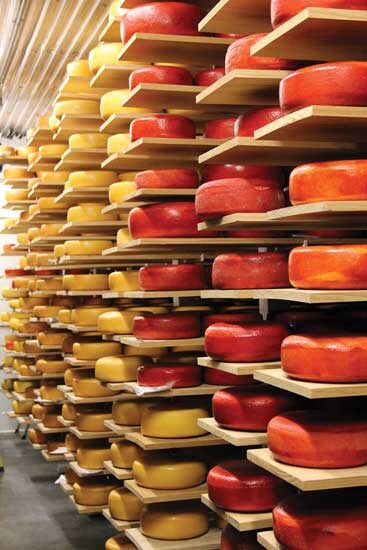
The French call the process of aging cheese affinage, which at its core is simply the preservation of milk. Our forebears lacked both refrigeration and a year-round supply of fresh milk. Aged cheeses concentrate and preserve the nutrients in milk in a longer-lasting form. Different styles of aged cheeses evolved depending on the natural conditions — weather, microbes, and more — of the place the cheese was being made. We modern cheesemakers have the luxury of recreating the conditions fit to make the types of cheese we most enjoy, no matter what the outside climate is like.
My, How You’ve Changed
Aging changes a cheese. Fresh cheeses retain much of the character of the milk that made them — aged cheeses, on the other hand, have new depths of flavor and a wider range of textures.
There are three basic approaches to making cheese: adding acid when the milk is hot, as for ricotta and paneer; adding bacteria that produce acid, as for fromage blanc and chèvre; and adding bacteria and coagulant, as for cheddar and gouda. The last category produces the most-complex cheese, and the only type with the potential to age. These cheeses have a low moisture content and a varied supply of enzymes provided by the culture bacteria; the milk; and rennet, the coagulant.
Making a cheese for aging starts with bacteria that ferment lactose (milk sugar) into lactic acid and a few other products. Next, rennet (an enzyme traditionally derived from calves’ stomachs, but now available in vegetarian and synthetic forms) is added to coagulate the cheese. The cheese is then drained and pressed to remove excess water. After these relatively quick stages, the enzymatic process really kicks in. During aging, enzymes from the bacteria, the milk, and the rennet work their magic on milk proteins and, to a lesser degree, milk fat. Slowly, they break down these compounds, creating flavor and changing the texture of the cheese.
An Affinity for Affinage
You’ll need to provide your cheese with the proper environment and care for it to thrive during the aging process. The aging environment requires a delicate balance — one that encourages beneficial microbes and enzymes to continue breaking down the proteins and fats, but also discourages spoilage microbes from rotting or disfiguring the cheese. The first step in setting up this scenario is to create a low-moisture cheese with just the right amount of salt. The second step is to create an affinage environment that provides the right temperature, humidity, airflow, and air exchange for desirable processes to occur. I know that sounds complex, but it can be done with relative ease and simplicity at home. Let’s go over the elements that produce fantastic fromage.
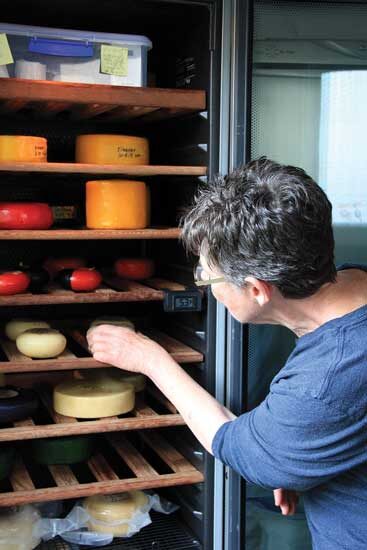
My first “cheese cave” was a small wine cooler. (We actually still have it, although now it holds wine.) Wine and beverage coolers are basically small, stand-alone refrigerators designed to hold temperatures from about 40 degrees Fahrenheit to about 60 degrees. Most cheeses do best at 55 degrees, so this range works quite well. The slide-out racks designed for bottles that come with wine coolers don’t work well for cheese, but you can easily remove them and fit hardwood boards into the same slots, creating an ideal (and traditional-looking) surface for aging cheese.
The second option is to buy a refrigerator without a freezer compartment, and an external thermostat into which you’ll plug the refrigerator. (The integrated refrigerator thermostat can’t be set high enough for aging cheese.) External thermostats include a probe you’ll insert into the fridge. The thermostat will turn the fridge on and off as necessary to maintain your cheese-aging temperature. Why avoid fridges with freezer compartments? When a freezer compartment is present, the unit blows freezer air into the fridge to cool it. Not only does this use more power than needed, but it also dries out the cheeses — and dehydration is fatal to aging cheeses. If you can’t find an appropriate fridge, a chest freezer with an external thermostat will also work, though cheeses will be hard to stack for easy access. Avoid upright freezers. Most have cooling coils in the shelves; when these units are set at warmer-than-freezing temperatures, moisture will condense on the shelves and drip onto the cheeses below. Another death sentence for your beautiful cheese!
The last option is to utilize space in a basement or cellar. A few lucky folks will have access to a mostly or partially underground space. If you’re one of these, you’ll need to determine if the space will keep your cheeses at or near the goal temperature throughout the year. If not, can you build a more insulated space that will remain steady in temperature? I’ve found that the biggest drawback to having cheeses aging in a basement, however, is remembering that they’re there! Affinage is a daily task, and, often, out of sight is out of mind.
Not Too Dry, Not Too Damp
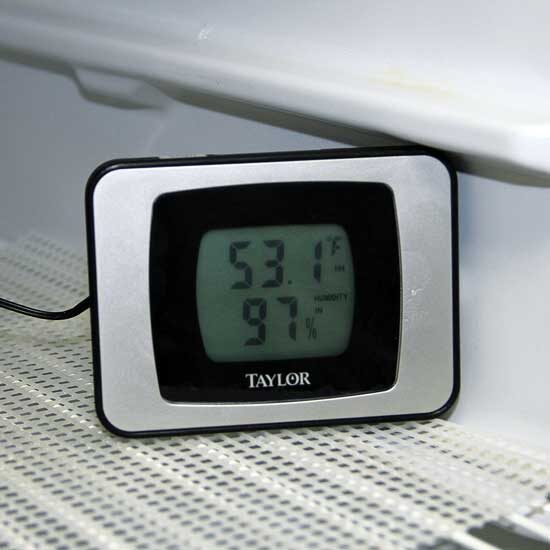
Once you have your space and temperature control figured out, you’ll have to address humidity — often the most difficult requirement for home cheesemakers. Most naturally aged cheeses require 85 to 95 percent relative humidity (RH). Relative humidity is the amount of moisture the air can hold at any given room temperature. At 100 percent RH, moisture condenses into precipitation or mist. There’s no one-size-fits-all solution, thanks to the huge variability in weather and ambient room conditions encountered by each cheesemaker.
Before you worry about altering the humidity, find a reliable humidity gauge. I like to have two and place them in different locations in the cheese cave so I can compare numbers. It’s good to have a backup in case one breaks or you’re concerned about its reliability. Digital gauges are great; metal dial gauges tend to rust in high humidity.
In areas with naturally high humidity, it’s relatively easy to provide enough moisture for aged cheese, but for most people, it’s a big challenge. I start by draping a moist, but not dripping wet, terry towel over the bottom wire rack of my cheese-aging unit. You’ll have to check the cloth daily, but you should be checking your cheese and opening the door daily anyway! The towel shouldn’t dry between checks; if it does, try putting a small pan of water under it and extending one end of the towel into the water to wick up. This method works well for me.
Instead of a damp towel, you could run a small, portable humidifier at the bottom of the unit. This can sometimes cause condensation wherever it’s blowing, so you’ll have to play around until you find the best solution for your cheese cave. Bottom line, though, keep the humidity at the ideal level or you’ll kill your cheese.
A Breath of Fresh Air
Cheese almost literally breathes. The microbes on the surface of naturally aged cheese produce gases, such as ammonia and sulfur, that need to be removed from the environment. This is an easy one: Simply open and close your cheese-aging unit daily. This will allow old air to flow out and new air to flow in. If you’re using a chest freezer, you might need to leave the lid open a bit for enough air exchange to occur.
You must turn the cheese over to help it age evenly. Turn newly made cheese every day for 4 to 6 weeks, and then every few days for the rest of its aging time. Vacuum-sealed cheeses don’t require such assiduous care, but turning them won’t hurt the process at all.
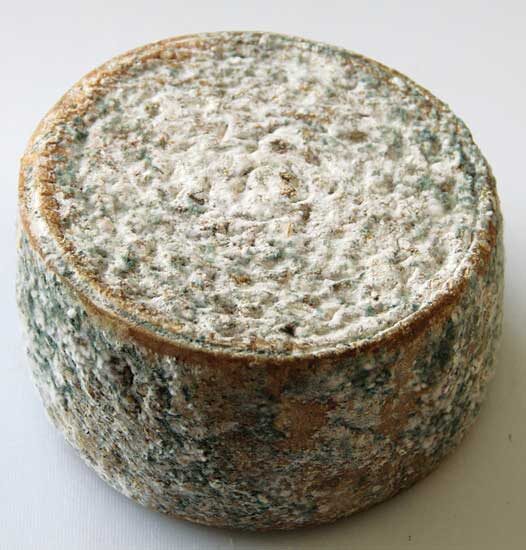
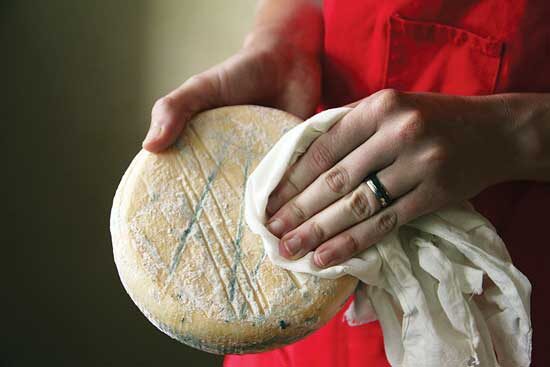
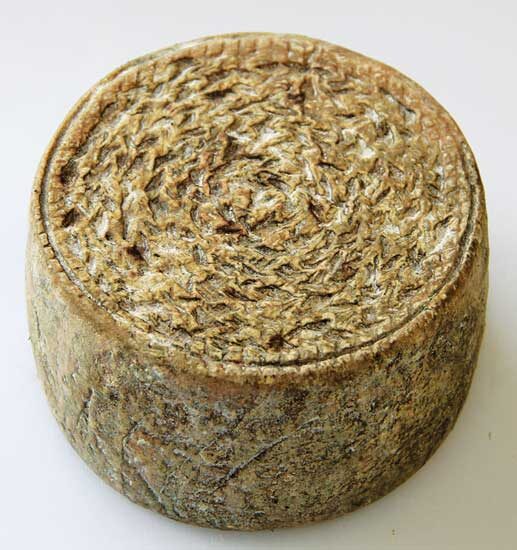
As your creations sit in the humid, cool environment of your home cheese cave, many different microbes will want to join the party. The surface of the cheese will slowly become more and more mottled, possibly fuzzy, and, in general, look quite a mess. These molds aren’t to be feared. Don’t try scrubbing them off or restoring the rind to its former pristine self — simply keep them under control. Use a cloth, paper towel, or soft brush to gently and lightly work the surface of the cheese. This will limit the extent to which the molds will grow in height, and therefore the depth they’ll reach inside the cheese. As time passes, most of these fungi will die off or at least slow down. Eventually, they’ll have helped you create a beautiful rind with a rich patina. Think of the moldy stage as the cheese’s gawky teenage years; it’ll mature into a delicious wheel in time.
Home Cheesemaking Protection
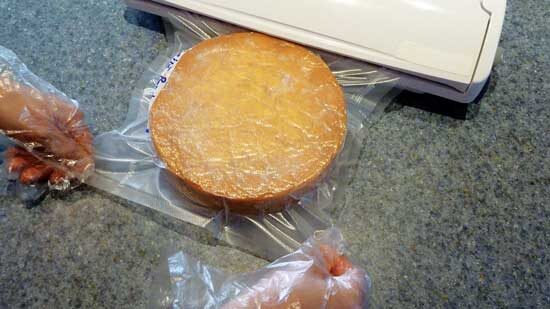
There’s no sense trying to age a cheese with a natural rind if you can’t guarantee the right humidity. The best you can hope for is a hard lump of dull, waxy grating cheese or, at worst, some sort of deadly projectile. To avoid this tragic loss of cheese, apply a coat of food-grade cheese wax or paracoat (cream wax), or vacuum-seal the cheese in plastic — then you won’t have to worry about managing humidity in your cheese cave, or air exchange inside it, because your cheese will have an impervious, artificial “rind.” Of these, I prefer vacuum sealing for its ease; the visibility of the cheese during aging (wax is usually opaque); and the fact that you can easily open the bag, check the cheese, and reseal it.
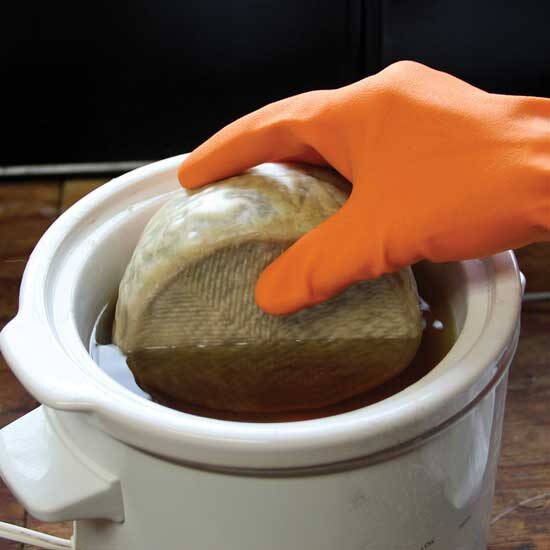
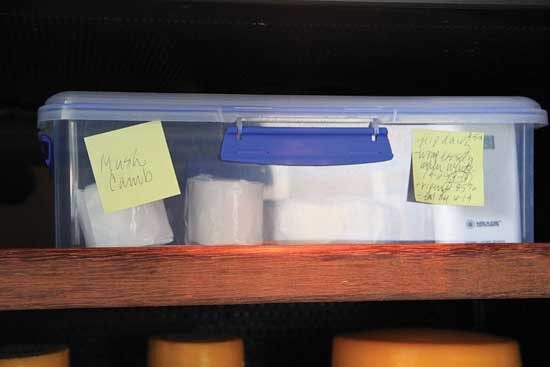
To prepare a cheese for vacuum sealing, you must first stabilize its moisture content; otherwise, liquid will leak from the cheese and pool in the bag. Most cheeses will need to sit for several days of “air drying” while their moisture content stabilizes. I recommend using a lidded tub large enough to comfortably hold the cheese without touching it. Set the cheese on a mat on top of a rack at the bottom of the tub, close the lid, and set the tub in a cool place (between 40 and 50 degrees). Flip the cheese daily, and use a clean towel to wipe away any humidity that collects on the tub’s lid or sides. If a lot of moisture is on the lid, place a second mat over the cheese and a towel over that; change the towel under the mat if it feels moist. After about 5 to 10 days, the cheese should be ready to vacuum-seal.
Place the sealed cheese in your aging space and check it daily. Flipping the cheese every few days is also a good idea, but not as critical as it is for a cheese aged without sealing. If any moisture does collect, open the bag, dry the cheese with a towel, and reseal.
The recipes in this article are from my book Mastering Basic Cheesemaking. The recipes are written for folks who are new to making cheese, but you’ll still need to buy some supplies from a cheese-making supply company. For more recipes, you can refer to that book or to my more advanced, scientific book Mastering Artisan Cheesemaking, published by Chelsea Green Publishing.
Ready to make cheese? Try one of these recipes:
• Farmhouse Wheel Cheese Recipe
• Mild Colby Cheese Recipe
Gianaclis Caldwell is the author of four books on cheese and small dairying, including the award-winning Mastering Artisan Cheesemaking. Along with her husband, she milks goats and makes cheese at Pholia Farm Creamery in southern Oregon. Mastering Artisan Cheesemaking is the book every cheesemaker will want as their guide, taking them from creating their first, simple cheeses to producing unique, masterpiece cheeses. The book contains extensive recipes that include hard numbers, as well as the concepts behind each style of cheese. There are beautiful photographs, profiles of other cheesemakers, a detailed troubleshooting guide, and an extensive appendix for quick reference in the preparation and aging rooms.






