
Sheldon Krimsky and Jeremy Gruber have compiled the best, most thought-provoking essays on genetically modified food by leading scientists, science writers and public health advocates in The GMO Deception (Skyhorse Publishing, 2014), offering a comprehensive look at the social, political and ethical implications of food-based biotechnology. This excerpt from “GMOs in the Developing World,” contributed by Bill Freese, deals with the actual performance of GM crops as it compares to the claims made by biotech companies.
You can purchase this book from the MOTHER EARTH NEWS store: The GMO Deception.
Why GM Crops Will Not Feed the World
Last spring marked a tipping point for rising global food prices. Haiti’s primeminister was ousted amid rice riots; Mexican tortillas have quadrupled inprice. African countries were hit especially hard. According to the World Bank,global food prices have risen a shocking 83 percent from 2005 to 2008. Andfor the world’s poor, high prices mean hunger. In fact, the food crisis recentlyprompted University of Minnesota food experts to double their projection of thenumber of the world’s hungry by the year 2025—from 625 million to 1.2 billion.
Many in the biotechnology industry seem to believe there’s a simple solution to the global food crisis: genetically modified (GM or biotech) crops. Biotech multinationals have been in media blitz mode ever since the food crisis first made headlines, touting miracle crops that will purportedly increase yields, tolerate drought, and cure all manner of ills.
Not everyone is convinced. The UN and World Bank recently completed an unprecedentedly broad scientific assessment of world agriculture, the International Assessment of Agricultural Knowledge, Science and Technology for Development, which concluded that biotech crops have very little potential to alleviate poverty and hunger. This four-year effort, which engaged some 400 experts from multiple disciplines, originally included industry representatives. Just three months before the final report was released, however, agrichemical seed giants Monsanto, Syngenta and BASF pulled out of the process, miffed by the poor marks given their favorite technology. This withdrawal upset even the industry-friendly journal Nature, which chided the companies in an editorial entitled “Deserting the Hungry?”
GM Crops: The Facts on the Ground
GM crops are heavily concentrated in a handful of countries with industrialized, export-oriented agricultural sectors. Nearly 90 percent of the world’s biotech acres in 2007 were found in just six countries of North and South America, with the US, Argentina and Brazil accounting for 80 percent. GM soybeans rule in South America, and Argentina and Brazil are known for some of the largest soybean plantations in the world. In most other countries, including India and China, biotech crops (mainly GM cotton) account for 3 percent or less of total harvested crop area.
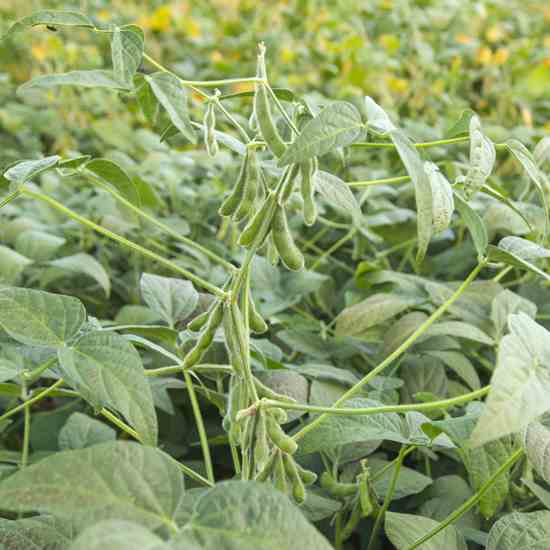
GM soybeans, corn, cotton and canola, the same four GM crops that were grown a decade ago, comprise virtually 100 percent of world biotech crop acreage. Soybeans and corn predominate and are used mainly to feed animals or fuel cars in rich nations. Argentina, Brazil and Paraguay export the great majority of their soybeans as livestock feed, while more than three-fourths of the US corn crop is either fed to animals or used to generate ethanol for automobiles. Expanding GM soybean monocultures in South America are displacing small farmers who grow food crops for local consumption, and thus contribute to food insecurity. In Argentina, production of potatoes, beans, beef, poultry, pork and milk have all fallen with rising GM soybean production, while hunger and poverty have increased. In Paraguay, the poverty rate increased from 33 percent to 39 percent of the population from 2000 to 2005, the years in which huge soybean plantations (about 90 percent of them now GM soybeans) expanded to cover over half of Paraguay’s total cropland. The only other commercial GM crops are papaya, squash and beets, all grown on miniscule acreage, and only in the US.
Most revealing, however, is what the biotech companies have engineered these crops for. Hype notwithstanding, there is not a single GM crop on the market engineered for increased yield, drought-tolerance, salt-tolerance, enhanced nutrition or other attractive-sounding traits touted by the industry. Disease-resistant GM crops are practically non-existent.
In fact, commercialized GM crops incorporate just two “traits”—herbicide tolerance and/or insect resistance. Insect-resistant or Bt cotton and corn produce their own built-in insecticide(s) derived from a soil bacterium, Bacillus thuringiensis (Bt), to protect against certain insect pests. Herbicide-tolerant crops are engineered to withstand direct application of an herbicide to more conveniently kill nearby weeds. Crops with herbicide tolerance predominate, occupying 82 percent of global biotech crop acreage in 2007.
Herbicide-tolerant crops (mainly soybeans) are popular with larger growers because they simplify and reduce labor needs for weed control. They have thus facilitated the worldwide trend to concentration of farmland in fewer, ever bigger, farms. Gustavo Grobocopatel, who farms 200,000 acres of soybeans in Argentina (an area the size of New York City), prefers to plant Monsanto’s GM herbicide-tolerant variety (Roundup Ready) for the sake of simplified weed control, even though he obtains consistently higher yields with conventional soybeans. According to the Argentine Sub-Secretary of Agriculture, this labor-saving effect means that only one new job is created for every 1,235 acres of land converted to GM soybeans. This same amount of land, devoted to conventional food crops on moderate-size family farms, supports four to five families and employs at least half a dozen. Small wonder that family farmers are disappearing and food security declining. The rapid expansion of “laborsaving” GM soybeans in South America has led to “agricultura sin agricultores” (“farming without farmers”).
GM Crops Lead to Increased Pesticide Use, Resistant Weeds and Lower Yields
According to the most authoritative independent study to date, adoption of herbicide-tolerant GM crops in the US increased the overall amount of weedkillers applied by 138 million lbs. in the nine years from 1996 to 2004, while Bt corn and cotton reduced insecticide use by just 16 million lbs. Thus, GM crops have increased overall use of pesticides (herbicides and insecticides) in the US by 122 million lbs. in less than a decade.
The vast majority of herbicide-tolerant crop acres are planted to Monsanto’s “Roundup Ready” varieties, tolerant to the herbicide glyphosate (aka Roundup). The excessive use of glyphosate associated with continuous planting of Roundup Ready crops is responsible for a growing worldwide epidemic of weeds that have evolved resistance to this chemical, alarming the world’s agronomists. Millions of acres of cropland have become infested with glyphosate-resistant weeds in the US, Argentina and Brazil, precisely those countries that rely most heavily on Roundup Ready crops, leading to a vicious cycle of increasing pesticide use and evolution of still greater levels of weed resistance. Hence a technology often fraudulently promoted as moving agriculture beyond the era of chemicals has in fact increased chemical dependency. And of course, expensive inputs like herbicides (the price of glyphosate has more than doubled over the past two years) are beyond the means of most poor farmers, especially in combination with more expensive GM seeds.
What about yield? The most widely cultivated biotech crop, Roundup Ready soybeans, suffers from a 5 to 10 percent “yield drag” versus conventional varieties, due to both adverse effects of glyphosate on plant health as well as unintended effects of the genetic engineering process used to create the plant. Unintended, yield-lowering effects are a serious though little-acknowledged technical obstacle of genetic engineering, and are one of several factors foiling efforts to develop viable GM crops with drought tolerance. While insect-resistant crops can reduce yield losses under conditions of heavy pest infestation, such conditions are relatively infrequent with corn. And because cotton is afflicted with so many pests not killed by the built-in insecticide, biotech cotton farmers in India, China and elsewhere often apply as much chemical insecticide as growers of conventional cotton. Only because they have paid up to four times as much for the biotech seed, they end up falling into debt. Each year, hundreds of Indian cotton farmers commit suicide from despair over insurmountable debts.
Biotechnology = Patented Seeds + Chemicals
If biotech crops are not about feeding the world, what is the point? The agricultural biotechnology industry represents an historic merger of two distinct sectors—agrichemicals and seeds. In the 1990s, the world’s largest pesticide makers—companies like Monsanto, DuPont, Syngenta and Bayer— began buying up the world’s seed firms. These four biotech giants now control a substantial 41 percent of the world’s commercial seed supply. The motivations for this buying spree were two-fold: the new technology of genetic engineering, and the issuance of the first patents on seeds in the 1980s. As we have seen, biotech firms employ genetic engineering chiefly to develop herbicide-tolerant crops to exploit “synergies” between their seed and pesticide divisions. Seed patents ensure greater control of and higher profits from seeds, in part by allowing biotech firms to outlaw seed-saving.
While patents on biotech seeds normally apply to inserted genes (or methods for introducing the gene), courts have perversely interpreted these “gene patents” as granting biotech/seed firms comprehensive rights to the seeds that contain them. One consequence is that a farmer can be held liable for patent infringement even if the patented gene/plant appears in his fields through no fault of his own (e.g. cross-pollination or seed dispersal), as happened most famously to Canadian canola farmer Percy Schmeiser. Another consequence is that farmers can be sued for patent infringement if they engage in the millennia-old practice of seed-saving—that is, replanting seeds saved from their harvest.
In the US, industry leader Monsanto has pursued thousands of farmers for allegedly saving and replanting its patented Roundup Ready soybean seeds. An analysis by Center for Food Safety has documented court-imposed payments of more than $21 million from farmers to Monsanto for alleged patent infringement. However, when one includes the much greater number of pretrial settlements, the total jumps to over $85 million dollars, collected from several thousand farmers.
Spurred on by the biotech multinationals, the US and European governments are pressuring developing nations to adopt similar gene and seed patenting laws. This is being pursued through the World Trade Organization, which requires member nations to establish intellectual property regimes for plants, as well as through bilateral trade agreements. Since an estimated 80 to 90 percent of seeds planted in poorer nations are produced on-farm (i.e. saved seed), the revenue to be gained from elimination of seed-saving is considerable—conservatively estimated at $7 billion dollars. If biotech/seed firms have their way, the “seed servitude” of US farmers could soon become a global reality.
Biotech firms also have Terminator technology waiting in the wings. Terminator is a genetic manipulation that renders harvested seed sterile, and represents a biological means to achieve the same end as patents: elimination of seed-saving. While international protests have thus far blocked deployment of Terminator, Monsanto recently purchased the seed company (Delta and Pine Land) that holds several major patents on the technology (together with USDA). And while Monsanto has “pledged” not to deploy Terminator, the company has clearly stated that this “pledge” is revocable at any time.
Private Profit from GM Crops Replaces Public Interest
The rise of GM crops has been accompanied by a massive shift in plant breeding from the public to the private sector. Breeders at universities and non-profit agricultural research institutes once played a major role in delivering useful new crop varieties, guided at least in part by the interests of farmers. Today, public sector breeding is fast dying, the victim of dramatic cutbacks in funding from rich nations and the World Bank. Organizations like the International Rice Research Institute and Center for Improvement of Maize and Wheat lack funds to even distribute useful new crop varieties they have already developed to farmers who need them—including conventionally-bred wheat and rice with high yield, disease- and/or insect-resistance. In contrast, GM crop development is overwhelmingly dominated by profit-seeking biotech firms. In the US, 96 percent of approved GM crop varieties were developed by private firms, 88 percent by the “big five” biotech companies. Monsanto alone is responsible for the traits in at least 87 percent of GM crops worldwide. Public relations aside, biotech firms continue to devote the bulk of their research efforts to develop new herbicide-tolerant crops for use with their proprietary chemicals, labor-saving crops best-suited to larger farmers.
Fewer Seed Choices, Higher Seed Prices
To make matters worse, high-quality conventional seeds are rapidly disappearing, thanks to the biotech multinationals’ tightening stranglehold on the world’s seed supply. Biotech seeds presently cost two to more than four times as much as conventional varieties. The price ratchets up with each new “trait” that is introduced. Seeds with one trait were once the norm, but are rapidly being replaced with two- and three-trait versions. As Monsanto put it in a presentation to investors, its overriding goals are “acceleration of biotech trait penetration” and “to invest in “penetration of higher-[profit-]margin traits . . . ” Monsanto and Dow recently announced plans to introduce GM corn with 8 different traits (6 insecticides and tolerance to 2 different herbicides). Farmers who want more affordable conventional seed, or even biotech seed with just one or two traits, may soon be out of luck. As University of Kentucky agronomist Chad Lee put it: “The cost of corn seed keeps getting higher and there doesn’t appear to be a stopping point in sight.” The biotech industry’s growing control of the world’s seed supply ensures that farmers in developing countries that accept GM crops will face dramatically rising seed prices from “trait penetration.”
True Solutions
The authors of the UN-World Bank-sponsored IAASTD report mentioned above recommend agroecological farming techniques as the most promising path forward for the world’s small farmers. Ever since the Green Revolution, the agricultural development establishment has focused primarily on crop breeding and expensive inputs (e.g. fertilizers, pesticides and “improved seeds”), not least because input-centered schemes offer potential market opportunities to multinational agribusinesses. In contrast, agroecology minimizes inputs, and relies instead on innovative cultivation and pest control practices to increase food production. A 2001 review of 200 developing country agricultural projects involving a switch to agroecological techniques conducted by University of Essex researchers found an average yield gain of 93 percent.
One strikingly successful example is the push-pull system, practiced by 10,000 farmers in East Africa. Push-pull involves intercropping maize with plants that naturally exude chemicals to control insect and weed pests, which increases yields while also enhancing soil fertility and providing a new source of fodder for livestock. A new dryland rice farming technique called the System of Rice Intensification substantially increases yield, and is spreading rapidly in rice-growing nations despite dismissal by the agricultural development establishment. Small farmers like agroecological techniques because they foster independence and reduce expenditures on inputs.
Genetically Modified Crops Don’t Live Up to the Hype
The tremendous hype surrounding biotechnology has obscured some basic facts. Most GM crops feed animals or fuel cars in rich nations, are engineered for use with expensive weed killers to save labor, often have reduced yields, and are grown by larger farmers in industrial monocultures for export. The technology is dominated by multinational firms intent on controlling the world’s seed supply, raising seed prices, and eliminating farmer seed-saving.
Real solutions will require radical changes. Rich nations must stop dumping their agricultural surpluses in the global South, respect the right of developing countries to support their farmers, and fund agroecological techniques to enhance small farmers’ ability to feed their families and their nations’ citizens.
More from The GMO Deception:
• Genetically Engineered Food Labeling
• Resources for Taking Action on GMO Foods
Bill Freeseis science policy analyst at the Center for Food Safety, a nonprofit group that supports sustainable agriculture. This article originally appeared in GeneWatch, volume 22, number 1, January–February 2009.
Reprinted with permission from The GMO Deception: What You Need to Know about the Food, Corporations, and Government Agencies Putting Our Families and Our Environment at Risk, edited by Sheldon Krimsky and Jeremy Gruber and published by Skyhorse Publishing, 2014. Buy this book in our store: The GMO Deception.