We live in a world of sound bites. The in-depth discourse that dominated pre-television days is in short supply in our impatient, hurried-up world. If you disagree with someone, that person frequently pays attention for about one minute before dismissing your argument. If you can’t score your point in that time, the conversation moves on.
Those of us who care about the food system have plenty of wrong-headed thinking to counter these days — and we need to be able to present our arguments quickly. One common and extremely frustrating misconception I encounter is that my approach to sustenance makes me a food snob. I’m viewed as some sort of elitist if I spend my food dollars on local, compost-fertilized produce and pasture-based meats. But spending $20 or $30 on a meal of low quality and lousy nutrition is somehow seen as normal.
An egregious example of this way of thinking appears in the blockbuster documentary Food, Inc. when a family of four — husband, wife and two teenagers — stops at Burger King for super-sized dinners and then laments their inability to afford fresh produce at the supermarket. Although I haven’t been to Burger King in 35 years, a quick online search reveals roughly how much that meal would have cost. With the super-duper soft drinks, fries and deluxe burgers, each of those meals would have cost at least $8, or a minimum of $32 for the family.
For that amount of money, that family could have purchased a pound of our farm’s grass-fed beef — a premium, world-class ground meat — plus buns, the fixin’s and potatoes for some french fries, and everyone could still have enjoyed a great-tasting quarter-pounder and fries. I guarantee you that a pound of our ground beef contains more good nutrition than that family’s Burger King meal. This is not to pick on Burger King nor its customers. I don’t begrudge people eating there; what I begrudge is people eating there because they think it’s cheap and convenient, and then telling me they can’t afford my product because it’s expensive and inconvenient.
The result is a victim mentality that permeates every food discussion. The idea that people can’t afford good food is practically axiomatic in our collective thinking. Because the sticker price of my food — which I’m calling “integrity food” — is often more than the sticker price of industrial fare, I’m tempted to react apologetically, head down, guilty as charged. I define integrity food as food that’s raised in a way that heals the environment and builds the soil, creating sustenance that’s nutrient-dense and life-affirming — including for the lives of the humans who raise, process and consume it. And even though we know that’s a worthy context for our farming and market gardening, a lot of us in this integrity-food movement are sometimes apologetic and even allow ourselves deep down to be swayed by that “I can’t afford good food” mentality.
So I’ve been thinking: Can we of the integrity-food persuasion sound-bite our way into altering the conversation about the price of food? Can we articulate a charitable, inoffensive answer that challenges this allegation of elitism? I don’t know whether I have an answer, but I have some proposals I’d like to try on for size. Each sound bite is meant as an inquiry, not an assault, intended to invite deeper thinking whenever we’re faced with the accusation of food snobbery or the automatic assumption that quality food is expensive food and therefore out of reach for ordinary people.
Can You Separate Your Needs From Your Wants?
Most people think their purchases are wise and necessary, but I’ve found that nearly everyone makes routine purchases that are actually choices rather than necessities. In no particular order, here are some I’ve observed:
• Starbucks (one $5 coffee drink or latte each work day adds up to about $1,255 annually)
• Alcohol
• Designer jeans
• Tobacco
• Lottery tickets
We can stop the list there, but you get the idea. People are far quicker to assume they have no choice than they are to examine their spending and discover what’s discretionary — an amount that is usually significant.
I’ve often found the discussion about integrity-food prices derailed immediately because we don’t have an answer that addresses the fraction of our population living in hardship. We should instead focus the discussion on the majority of people who routinely buy unnecessary things and then claim good food is too expensive.
The saying “Pick the low-hanging fruit first” applies here. Certainly hardship does exist, but let’s deal with the discretionary stuff — the easy picking — first. Letting the discussion veer to the most dire cases of hardship without appreciating how many people actually can choose to change is like refusing to pick apples from a tree until we’ve figured out how to pick all the apples at the tippy-top. We need to keep the conversation targeted to the doable first.
Are You Regularly Cooking From Scratch?
The notion that processed food is cheap and integrity foods are prohibitively expensive is simply not true. I was at the Greenmarket in New York City a couple of years ago, one of the most elite artisanal food markets in the U.S. I asked my host to show me the most expensive potatoes there.
She took me to a potato vendor whose display looked like it should have been in the Museum of Modern Art. Roughly 1-foot-square, partitioned wooden boxes held some 20 varieties of potatoes. Round, long, gnarly, red, yellow, white, blue — the colorful arrangement was truly a masterpiece of bounty and variety. I looked over the display and found the most expensive potato, a blue fingerling for $2 a pound. Follow me here — this was the most expensive organic heirloom potato in one of the most expensive food markets in the United States. How many potatoes in your neighborhood supermarket sell for at least twice that price — as potato chips? For example, a 5-pound bag of organic ‘Yukon Gold’ potatoes sells for about $5.50, or $1.10 per pound; a 10-ounce bag of Lay’s potato chips costs about $3.50, which is $5.60 per pound.
Processed food is expensive. If you price microwaveable boxes of frozen chicken nuggets or whatever, you’ll find that they’re much more expensive per pound than pastured, local whole chicken. And that’s before we even begin the nutrition discussion.
Ah, but to have potato chips at half the price of store-bought, you have to prepare that potato in your kitchen. I can hear the protests from here: “But I don’t want to cook a chicken or a potato.” That’s what I mean by personal discretion. If you don’t want to cook, fine. Just don’t confuse not wanting to with not being able to.
The key to affordable food is to reclaim domestic culinary arts. Getting into your kitchen to prepare, process and preserve food is not being sentenced to the Dark Ages of hoop skirts, washboards and open-hearth cooking. Today’s kitchens are not like your great-grandma’s. We have hot and cold running water that we don’t even have to haul up from the creek. We have stainless steel, refrigeration, electric skillets and ovens that turn on faster than woodstoves. We have Cuisinarts, timed-bake ovens, bread machines, slow cookers and ice cream makers. Our modern kitchens are gadgetized up the wazoo. All of these conveniences are begging to be used — do you hear them chirping from the cupboards?
Is ‘Cheap Food’ Worth Its Food System Cost?
Time and money have always gone hand in hand, and the advice to cook at home gets into the “time” part of food’s cost. My challenge for people to get into the kitchen usually results in an argument about not having enough time to prepare food. Often the protests come from parents who cart their children three hours each way to a sports tournament, stopping for Happy Meals because they don’t have time to cook.
Again, let’s separate choice from not being capable. We all make choices. The notion that we can build integrity into our food system without a cultural shift in behavior is fundamentally flawed. The choices are not really complicated, but quite worthwhile. Preparing a home-cooked meal with your family might allow you to get acquainted with each other in new ways. “Cheap food” might be the beans you bought in bulk, prepared ahead of time and froze as individual lunches. You might end up waiting to take your vacation until after the tomatoes have frosted — you’ll still get the trip, plus bounty in the larder and food that won’t go to waste.
Many modern, sophisticated Americans have abdicated their hands-on participation with food. The inevitable and obvious result is “foodstuff” that your great-grandma would not recognize. Another result of this abdication is ignorance about food — and we all know that ignorance breeds fear. Many people these days know nothing about where their food comes from and actually fear food: They’re afraid to thaw a chicken and they’re suspicious of butternut squash with a few dirt particles on the outside. When you start working with food, knowledge will replace ignorance and fear.
Are You Growing Vegetables and Fruits or Raising Animals?
Certainly some folks have a hard time growing vegetables and fruits, but most places have room for some kind of garden. Thinking of getting a pet? Opt for two chickens to eat kitchen scraps and lay eggs in return — the cheapest and best food you can imagine.
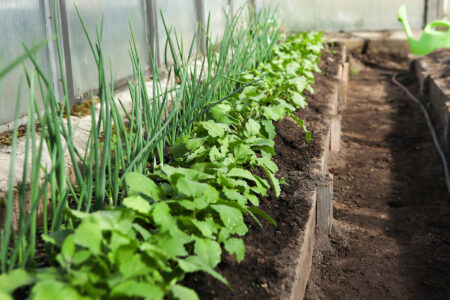
Container gardening is handy and cool, as are stackable containers. Raised beds in the backyard with floating row covers over hoops that allow unprecedented season extension and on-site food integrity? Cooler still. How about selling your gigantic flat-screen TV and using the money to install a solarium on the south side of the house? Passive solar heat and hardy greens all winter instead of a steady stream of televised mayhem? A good trade.
Compost and perlite to grow veggies on the roof? Honeybees in the backyard? Gardens in every vacant urban lot? Edible landscaping? The solutions are endless. It doesn’t take any more work to grow an apple tree than a flowering ornamental. Replace the roses with tomatoes. A do-it-yourself dinner can be the cheapest you’ll ever have, and if it costs a few couch-potato hours, you’ve replaced a health liability with a health-giving asset.
Asking to-the-point, sound-bite questions can help all of us engage constructively with opposing views. These are some that I’ve found helpful in the food-snob debate. I hope you can adapt them to focus your discussions about rebuilding integrity in our food system, to alter the conversation about affordable food, and to empower some of those “victims” who just can’t.
Beloved “lunatic farmer” Joel Salatin is leading the charge for a sane food system. His most recent books areFields of Farmers: Interning, Mentoring, Partnering, Germinating;Folks, This Ain’t Normal; and The Sheer Ecstasy of Being a Lunatic Farmer.