

Perfectly tart and delightfully abundant, sour cherry tree varieties will be your new summer favorite.
Over 50 years ago, my friend Bob and I tried to convince his mother to bake us a pie using sweet cherries that we’d gathered from his family’s tree. His mom patiently explained over and over that sour cherries were meant for baking and the sweet versions were grown for eating out-of-hand. But to our sweetener-addled minds, sweet cherries partnered with sugar would be our version of ambrosia for the gods.
Finally, Bob’s mom grew tired of arguing with us and ended the debate with the phrase that parents have uttered for millennia: “Okay, but you’ll be sorry.” And, my, were we wretchedly disappointed, as neither of us was able to choke down more than a few bites of a soft, syrupy, runny wreck of a pie. Ever since, I’ve appreciated the complex flavors that sour cherries bring to baking.
Globe-Trotting Trees
Interestingly, although the U.S. hosts a number of native wild cherry species, the sour cherry (Prunus cerasus) didn’t originate in North America, but is generally thought to have come from Iran and Eastern Europe. In America, sour cherries grow mostly in Michigan, New York, and Wisconsin, as well as Washington, Utah, and Oregon, although they’ve been planted widely, well outside that range. They grow best in Zones 4 through 8 in sunny, well-drained areas.
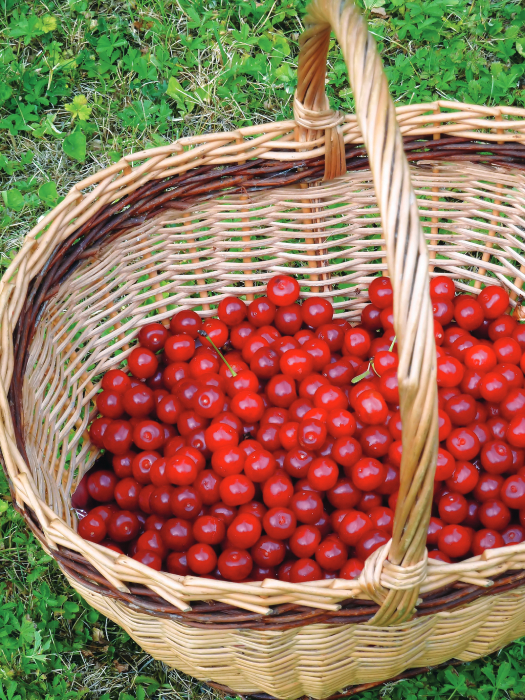
Frank Levering, whose family has operated Levering Orchard in Ararat, Virginia, since 1908, gives an overview of the premier sour cherry cultivars. He starts with the ‘Montmorency,’ which is perhaps the most popular cherry cultivar in the United States. “‘Montmorency’ is a heritage variety that originated in France,” he says. “I planted 500 of them the spring of 2025 because they’re the most consistent cropper year after year, even if there’s an April freeze. They’re tart but not super tart, and the [drupes] themselves offer eye appeal. Plus, the ‘Montmorency’ excels in pies.”
“One more point,” he adds. “If you go to Michigan, specifically the Traverse City area, which is the cherry capital of the world, you’ll see miles and miles of ‘Montmorency’ trees. That’s a testament to what a superior cherry this variety is.”
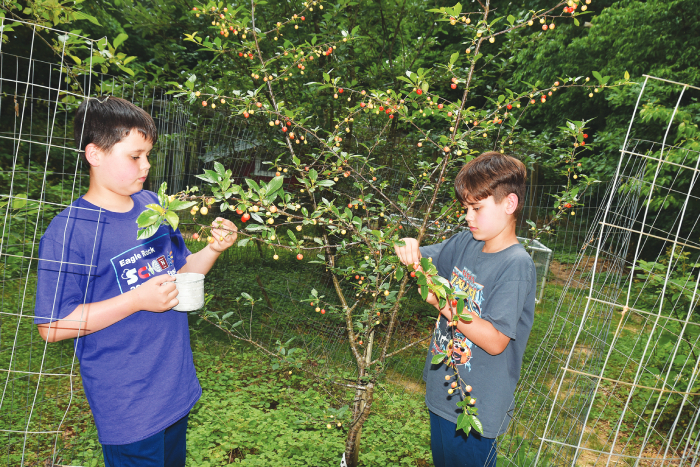
Another cultivar is the ‘North Star,’ which originated in Minnesota in 1950 and is known for its cold resistance. For about 20 years, we’ve enjoyed the fruits from our ‘North Star’ trees. “The ‘North Star’ [cherry] is a darker red and offers a different kind of tart than the ‘Montmorency,'” Levering says. “There’s also a little hint of sweetness in a ‘North Star’ cherry. It’s definitely a high-quality tart cherry, but it has two flaws: more susceptibility to freezes and not as consistent a producer compared to a ‘Montmorency.'”
Some of Levering’s customers come to his orchard just for the ‘Balaton’ cherry tree, which hails from Hungary. “The ‘Balaton’ is a wonderful variety that features a rich mixture of sweet and sour and is also kind of crunchy,” Levering says. “Even though it’s a tart cherry, it’s delightful to eat right off the tree.” He notes that ‘Balaton’ cherry trees “don’t bear as well as many varieties, even when there’s not a freeze. So, many people are reluctant to grow them in large numbers.”
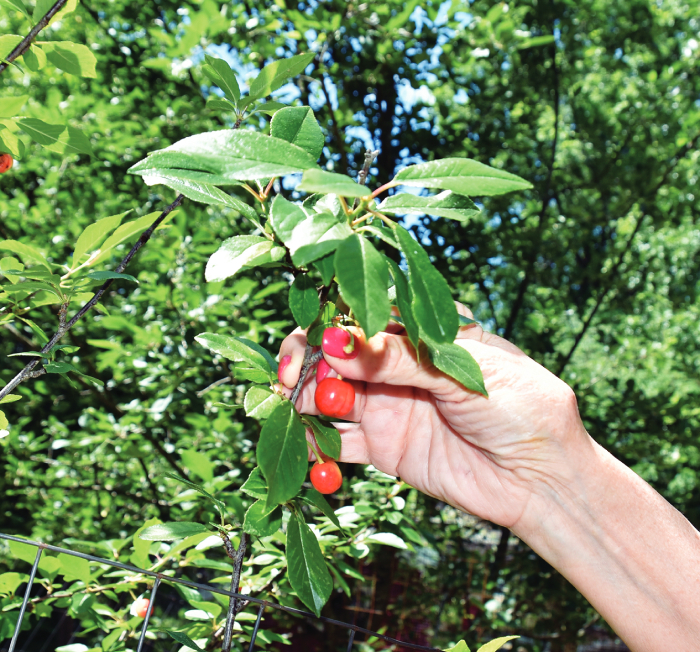
Levering also grows the ‘Jubileum,’ which is another Hungarian variety. “One of its biggest charms is that it ripens early, sometimes 10 days to two weeks earlier than others. The [cultivar’s] sweet-tart combination is appealing, and it’s good for eating out-of-hand, as well as being a good choice for the backyard grower.”
Deliciously Versatile
While you’re deciding on the best sour cherry tree for your location, don’t forget to check out Elaine’s recipes for a classic cherry pie (Page 39), a cherry cobbler, and a delectable jam (both below).
Wild Cherry Trees
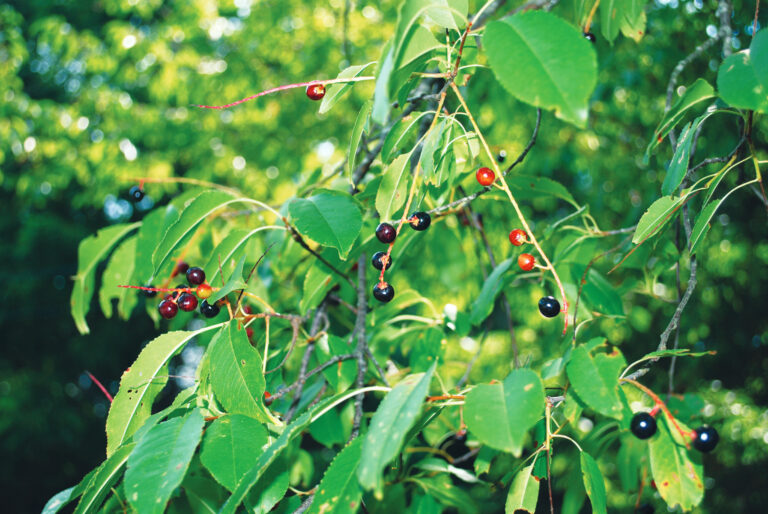
A number of native wild cherry trees also grow in North America. For example, in southwest Virginia where we live, the most common indigenous variety is the black cherry (P. serotina). Black cherry trees dwell across most of eastern America and as far west as Arizona. This variety features pea-sized or smaller blackish drupes that are quite tart. Its diminutive size and popularity as food for wildlife make gathering enough for anything more than a snack impossible.
Black cherry trees feature thin, dark, scaly bark, and they’re often an understory tree, though they can grow much taller. The 2-to-6-inch-or-so-long alternate lance-like leaves with tiny, toothed margins are another trait. Other important natives are the chokecherry (P. virginiana) and the pin cherry (P. pensylvanica).
Cherry Pie Recipe
No article on sour cherries would be complete without a pie recipe. Indeed, even if the weather conditions have conspired against our two ‘North Star’ trees producing a bumper crop, we’ll still count the season a success as long as we’ve gathered enough fruit for one glorious pie. The year that one of our trees alone produced 6 gallons was one when we relished a gluttonous number of pies, many of which were consumed in fall and winter. Sour cherries freeze well and will retain their taste and texture. Yield: 5 servings.
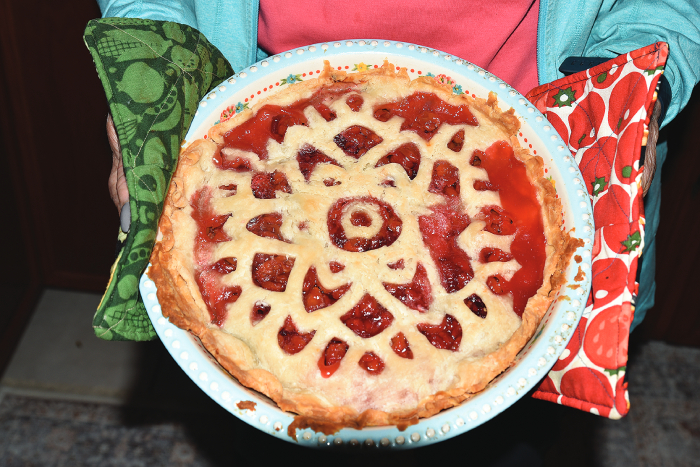
Ingredients
- 2 pie crusts
- 4 cups pitted tart cherries
- 3/4 cup sugar
- 1/2 cup pie thickener, such as King Arthur’s pie-filling enhancer or 2 to 3 tablespoons tapioca or cornstarch
- 1 teaspoon almond extract
- 2 tablespoons butter, chopped into pea-sized bits
- Line a pie pan with 1 crust. In a bowl, combine the cherries, sugar, pie thickener, and almond extract. Stir and pour into the pie crust.
- Dot the fruit mixture with the butter. Put the second pie crust on top, sealing the edges well. Cut several slits in the top of the crust for the steam to escape.
- Bake at 425 F for 10 minutes, then at 375 F for approximately 40 more minutes, until the crust is golden-brown and the fruit is bubbling. If you can wait long enough to eat it, allowing the pie to cool makes for prettier slices.
Note: I bake my pies on a thin, round metal plate to prevent spillovers in the oven. I also use a pie ring on top of the crust while it’s baking so the outer edges of the pie don’t become overly brown.
For recipes with sour cherry trees, visit Tart Cherry Cobbler Recipe and Easy Sour Cherry Jam Recipe.
Bruce and Elaine Ingram are the authors of Living the Locavore Lifestyle, now in its second edition, which explains how to live off the land by hunting, fishing, gathering wild edibles, and raising chickens.
Originally published in the June/July 2026 issue of MOTHER EARTH NEWS and regularly vetted for accuracy.






