
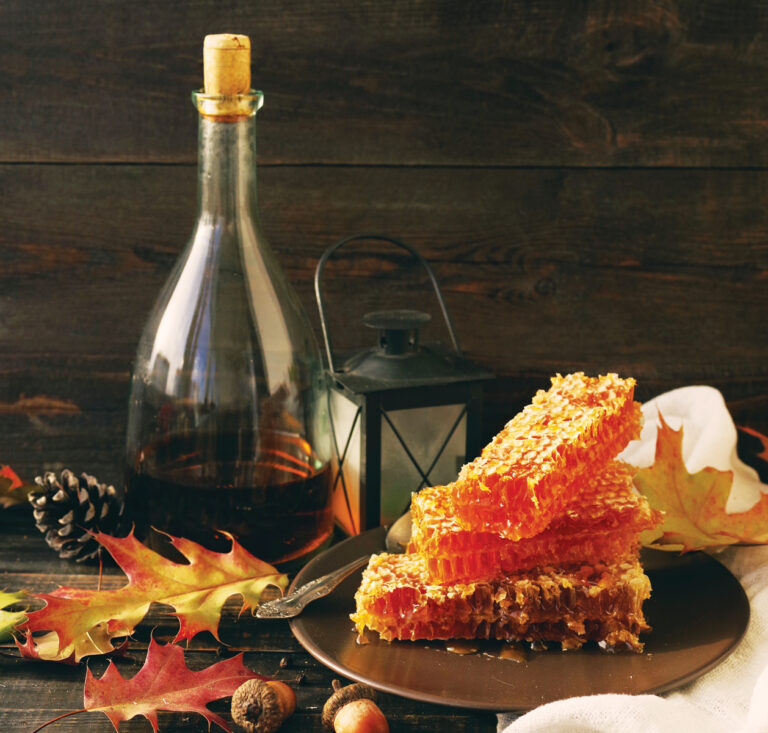
How is mead made? Enjoy an in-depth look at the components and creation of this versatile, honey-based beverage — a hearty addition to any homebrewing arsenal.
How is Mead Made?
When people ask me what mead is, I usually respond with something along the lines of, “Well, it’s not beer, it’s not wine, and it’s not cider. It’s mead!” Admittedly, that’s not a very helpful answer. But as mead earns recognition as a new contender in the craft beverage market, it’s important that it be accepted as its own entity. Mead can have similarities to all of the above beverages, depending on how it’s made, but the thing that sets it apart is its honey base.
To produce alcohol, brewers follow a simple equation: sugar plus water plus yeast plus time. Making mead involves many more subtleties, but it all comes down to blending a sugar source with water, adding yeast, and allowing time for fermentation. Beer gets its sugar and flavor profile primarily from malted grains; cider from apples; wine from grapes and other fruits and vegetables (usually with sugar added); and mead from honey. Historically, the lines were much more blurred than this; ancient peoples would often combine whatever kinds of sugars and botanicals they could find to make “grog.” In modern times, commercial alcohol producers must follow strict rules about the primary fermentable sugar and flavoring ingredients, and are required to name the resulting products appropriately.
Homebrewers can flavor mead with a wide range of ingredients. Each ingredient added will give the finished product a different name per homebrewing competitions, commercial sales, and mead nerds. The list is rather long, but these are the main contenders:
- Traditional or “show” mead: mead made with honey, water, yeast, and minimal flavor-balancing ingredients.
- Melomel: mead made with honey and any kind of fruit.
- Metheglin: mead made with honey and herbs or spices.
- Cyser: mead made with honey and apple cider.
Like wine and beer, mead can have varying alcohol levels (anywhere from 4 percent to 18 percent) and can range from very dry to very sweet. The key factors in determining the alcohol and sweetness levels are the amount of honey and the type of yeast used. When enough honey is paired with a yeast that has a specified alcohol tolerance, the yeast will ferment the sugars in the honey until it’s had enough, either leaving residual sweetness or fermenting fully to dryness.

Many mead-makers use potassium sorbate to make sure the mead stops fermenting at the appropriate sweetness level, but others (such as myself) prefer a more natural approach. This is a matter of debate to be sure, but it’s worth knowing what potassium sorbate is and what it does. Potassium sorbate is a potassium salt version of the natural sorbic acid that occurs as a polyunsaturated fat in some fruits; it was first isolated from the fruit of the mountain ash tree. Any potassium sorbate you purchase at a homebrew store is synthetically produced from chemicals identical to those found in nature. It’s generally recognized as safe by the U.S. Food and Drug Administration.
What is Mead Made From
Honey. First and foremost, the core of mead is the honey you use. Look for the words “raw,” “local,” “unfiltered,” and “natural.” Keep in mind that none of these labels are regulated. The best way to know you’re getting truly raw, pure honey is to produce it yourself, get to know a local beekeeper, or ask the retailer about how the honey was sourced.
For most meads, any kind of light wildflower honey is ideal. Honey from basswood, sourwood, or poplar trees also works well. Darker honeys, such as buckwheat or baker’s honey, will work, but they can result in a very strong flavor. Dark honeys are best blended with lighter honeys to ensure the robust flavor isn’t overpowering.
In determining the level of sweetness, the yeast used will have a strong effect on the amount of sugars fermented, but the honey-to-water ratio also plays a large role. While amounts vary by mead-maker, my general rule is that 1 quart of honey (about 2-1/2 pounds) to 1 gallon of water will yield a mead that finishes between dry and semisweet. Three pounds of honey per 1 gallon of water will land somewhere between semisweet and sweet, while 4 pounds will yield a very sweet, dessert-style mead. When you’re using larger amounts of honey, don’t add all the honey at once, as it will stress the yeast, which then may underferment the mead or produce off flavors. For sweet meads, I recommend initially adding half to three-quarters of the total amount of honey you plan on using, and the rest a couple of weeks into the primary fermentation process.
Yeast. Any yeast will ferment honey and water into mead, but each strain has its own unique flavor profile, alcohol tolerance, and temperature preference. Although a few mead yeasts are sold commercially, most mead-makers use wine yeast. You can also use brewer’s yeast, ale yeast, or even bread yeast. In my experience, wine and champagne yeasts tend to have the highest alcohol preferences and therefore should be used with large amounts of honey. The others can be used when making lower-alcohol meads, usually referred to as “small mead” or “session mead.”
While many mead-makers shun the use of wild yeast, I’ve made it my specialty. The process is simple: I fill a quart jar with 1 part raw honey and 3 parts spring water, and shake it with the lid on to dissolve the honey. Then, I add 4 to 5 organic raisins and, depending on the season, go outside to forage for some wild edibles to add, such as dandelion petals, violets, or berries. Next, I place cheesecloth or another porous cloth over the opening, fasten it with a string or rubber band, and set the jar somewhere warm to allow the wild yeast on the fruit, in the raw honey, and in the air to propagate. It’s extremely important to give the mixture lots of aeration, so I stir or swirl the jar vigorously at least two or three times a day. In about five days (longer during cold seasons), I have a fizzy, active ferment. I use about 1/2 cup of this as a yeast starter in place of dried commercial yeast in new batches of mead.
Water. Water is needed to dilute honey and make it fermentable. I use spring water when making mead, because it has the right amount of minerals to provide a well-rounded flavor. Tap water can be used if it’s filtered, or dechlorinated by boiling for 20 minutes or by evaporation (setting out in an open container for about 24 hours). Distilled water should be avoided, as it’s been stripped of all minerals.

Flavoring and Balancing Components
Since many flavoring components can be used for making mead, I’ll provide the basic techniques for the most common ingredients here.
- To make a melomel, simply add about 1/4 of the total amount of fruit you plan to use during primary fermentation, and then add the remaining 3/4 when it’s further along — usually about a month into fermentation. If you add it all at the forefront, you’ll get a much more subtle fruit flavor. Fruit should be as fresh and whole as possible and shouldn’t be over-processed. Remove any leaves or stems, and chop larger fruits into chunks.
- Cysers are best made from juice; blend and taste juices from various apples to reach your preferred flavor.
- Metheglins can be made with any herb or spice. When using herbs, use twice as many fresh as dried, and either add them whole or make a tea to add to the mead. Herbs and spices can easily be overdone. Follow a recipe closely, or start with small amounts when building your own recipe. You can always make a tea and flavor the mead to your taste when you’re preparing to bottle.

Most mead- and winemakers add fermentation enhancements to the “must” (unfermented mead or wine). These include tannins, acids, and nutrients added in very small amounts to help provide a well-rounded flavor. You can purchase these pre-made in powdered form at a homebrew store, but natural, unprocessed ingredients can be used as well. Tannins, which provide astringency, can be obtained from oak and walnut leaves, grape leaves, grape pips and skins, and many other botanicals. For acid, a squeeze of any citrus fruit will do. Nutrients provide additional nutrition for the yeast to feed on, so that they don’t stress themselves and produce off flavors. Unfiltered honey with large amounts of hive residue works well for this, as does bee pollen. Meads with fruits or other botanicals will need little to no additional nutrients, but to be on the safe side, you can always purchase a wine nutrient, such as Fermaid K or Fermaid O (the latter is Certified Organic).
Basic 1 Gallon Mead Recipe
You can make mead in any volume you desire, but most homebrewers make 1- or 5-gallon batches. I recommend starting with 1-gallon batches. They’re more affordable, ferment quicker, and allow for greater experimentation. For the most part, you can make 1-gallon batches using standard kitchen equipment. For 5-gallon batches, you’ll need to source some specialized equipment. You can take the following recipe for semisweet traditional mead and flavor it with fruits or herbs if you desire. For a 5-gallon batch, simply scale up the amount of ingredients and use appropriate-sized equipment.

Yield: 1 gallon.
Equipment
- One 2- to 3-gallon cooking pot
- Stirring spoon
- Large funnel
- Two 1-gallon glass jugs
- Air lock with bung
- One 2- to 3-foot siphon tube
- One 1- to 2-gallon container with spigot, for bottling
- Bottles with corks or caps (swing-top or screw-on bottles will suffice)
- Bottle corker or capper (if not using swing-tops or screw-ons)
Ingredients
- 1 gallon spring water or dechlorinated tap water
- 2 to 4 pounds raw wildflower or tree-blossom honey
- 10 to 12 organic raisins, 1 teaspoon bee pollen, or 1 teaspoon yeast nutrient
- 1/2 teaspoon lemon juice
- Alternative fruits, herbs, or spices of your choice
- 1 packet yeast, such as Lalvin ICV-D47 (or 1/2 cup wild yeast starter)
Directions
-
- Gather ingredients, and clean all equipment with hot water and a natural cleanser, such as One Step No Rinse Cleanser.
- Add 2/3 of a gallon of water to the cooking pot, bring the water just to a boil, and then turn off the heat. In about 15 minutes, stir in all the honey until it’s fully dissolved (in mead- and winemaking terms, this is your “must”).
- Add nutrients of your choice, lemon juice, and optional fruits, herbs, or spices.
- Let mixture cool to room temperature (60 to 70 degrees Fahrenheit) for 30 minutes, and then pour through a funnel into a glass jug, leaving 4 to 5 inches of headspace. Swirl the jug to aerate the must.
- Cut open the yeast packet with clean scissors, sprinkle yeast on the must (alternatively, use 1/2 cup of wild yeast starter), and put an air lock on the jug. Place the jug in a warm, dark corner (about 70 degrees) to store.
- In 2 weeks, add more spring water to 1 to 2 inches below the jug’s opening. In another 2 weeks, “rack” (the homebrew term for transferring) to another jug using a clean siphoning tube positioned just above the yeast sediment (or “lees”) to clarify the mead. Store at 60 to 70 degrees for 4 to 6 months.
- Rack the mead into a vessel with a spigot in preparation to bottle it. Use wine bottles with a corker (the mead should reach 1/2 to 3/4 inch below the cork’s bottom), beer bottles with a capper, or swing-top bottles (for the latter two, fill to about 1/2 inch below the opening). Like wine, mead improves with age. While some meads will be flavorful shortly after bottling, most should be given at least 4 to 6 months before opening, preferably stored at cellar or basement temperature.

- When your patience runs out, open a bottle, pour, and enjoy. If it still tastes a bit rough, the rest of the bottles probably need a few more months.

Congratulations! You’re a mead-maker.
Jereme Zimmerman is a traditional brewing revivalist, homesteader, and speaker at nationwide natural living events, including the Mother Earth News videos. He lives in Kentucky with his wife and daughters.
Frequently Asked Questions
How much honey to make mead?
In determining the level of sweetness, the yeast used will have a strong effect on the amount of sugars fermented, but the honey-to-water ratio also plays a large role. While amounts vary by mead-maker, my general rule is that 1 quart of honey (about 2-1/2 pounds) to 1 gallon of water will yield a mead that finishes between dry and semisweet. Three pounds of honey per 1 gallon of water will land somewhere between semisweet and sweet, while 4 pounds will yield a very sweet, dessert-style mead. When you’re using larger amounts of honey, don’t add all the honey at once, as it will stress the yeast, which then may underferment the mead or produce off flavors. For sweet meads, I recommend initially adding half to three-quarters of the total amount of honey you plan on using, and the rest a couple of weeks into the primary fermentation process.
What equipment do I need to make mead?
The equipment you will need to make mead is a 2- to 3-gallon cooking pot, stirring spoon, large funnel, two 1-gallon glass jugs, air lock with bung, a 2- to 3-foot siphon tube, a 1- to 2-gallon container with spigot, for bottling, bottles with corks or caps (swing-top or screw-on bottles will suffice), and a bottle corker or capper (if not using swing-tops or screw-ons).







