

Learn the benefits of soybeans, the worldwide super food. Planting, harvesting and harnessing soybeans.
To much of America, the word “soy” in front of anything food-related does not imply cool. It conjures health-nut enthusiasts who are also eating seaweed, smashed-up chickpeas and all manner of raw stuff that people normally cook. Add the words economical, nutritious and practical and most are left wondering: Could soy possibly be any fun at all?
At first glimpse, it appears to be such a boring little
lean, hard and flat and round. Even the short, nondescript
name “soy” belies the incredibly amazing properties hidden
within this unassuming yet extremely versatile legume. In
fact, the Chinese, who historically were the first to use
the soybean for food, have for centuries called it “Yellow
Jewel,” “Great Treasure” and “Brings Happiness.”
Soybeans, the worldwide super food, have always been a lucrative crop in the U.S.
(third in importance, after corn and wheat). We are the
world’s leading producer of soybean oil and meal, and the
leading exporter as well. Almost 40% of our soybean crop is
exported.
Here in farm country, most folks think of soybeans as
either an easy-to-grow market crop, or as an animal feed.
But with a protein content of 40%, soy can also be an
important part of a vegetarian diet if eaten along with
grains and nuts.
Historians think soybeans may have been domesticated as
early as the 11th century B.C. in Northwestern China.
Introduced in Europe in the 18th century and to America in
the early 19th century, the first soybeans to be grown in
the U.S. were grown in Pennsylvania — as a garden
ornamental. Soon the bean became a common forage crop, used
for hay, silage and pasture. But it was not until oil was
first commercially extracted from the seed in the early
1900s that the soybean became invaluable — almost
overnight. By 1929, a significant part of the soybean crop
was being crushed for oil, and processing plants were quickly established. From a staple food crop in Asia
to a multiple-use crop grown worldwide, the soybean’s
future continues to expand as a remarkable range of new and
improved products are formulated with the humble soybean as
the main ingredient.
First Plantings of Soybeans
The soybean (Glycine max) is an annual legume and
a member of the pea family. Unlike its wild ancestor, which
was a viney and rather floppy plant, the modern soybean has
been bred to stand erect; in a good year some varieties
reach a height of up to six feet. (Our farm beans are
usually waist high). Soybeans grow from a branched taproot
that exists in the top four to eight inches of soil. Its
self-pollinated flowers are small, blooming either purple
or white.
All soybean varieties are palatable, but the special
“edible” varieties are less oily and better for human
consumption. Popular edible varieties include Kanrich,
Frostbeater, Pickett, Prize, Kim, Disoy, Bansei, Fuji,
Verde, Seminole and Green Giant, all of which make good
green crops and produce many pods.
Few Americans consider soybeans when planning their
gardens. Still, they are gaining in popularity. Hundreds of
soybean varieties have been developed over the years,
exhibiting numerous plant characteristics and seed colors,
including the most common buff-colored type. The University
of Illinois has a collection of over 7,000 different beans,
showing the enormous genetic variation occurring within the
same species — red, green, mottled, speckled, round, oval,
lentil-like, striped, and so forth.
Get the Best Soybean Seed
We buy our farm seed from a certified seedsman. If you want
to know the exact variety and history of your seed,
including whether it was organically grown, if it has been
treated or if it is a genetically modified (GM) bean, you
should seek out a reputable seed dealer. (For more on GM
crops, see “The Dangers of Genetically Modified Crops” in the last issue of MOTHER.)
If you are not choosy, you may find a farmer willing to
sell you a bucket of beans from the combine hopper (which
is how we get our eating beans). These need only be stored
in a dry place until the following spring. (If you’ll be us
ing them as food right away, wash well just before cooking,
being careful to pick out any cockleburs, black beans or
grasshopper parts!) Expect to pay about $5 per bushel at an
elevator; cleaned seed from a dealer is about $16 per
bushel. Either way, that’s cheap eating, as one bushel of
beans weighs about 60 pounds. Finding mail-order edible
soybean seed for home planting is a bit difficult, but
Seeds of Change, located in Santa Fe, New Mexico, offers
these two varieties:
•Agate (certified organic): Introduced from Japan in 1929, this “edamame” variety is eaten primarily in the fresh-shell stage. A unique bicolored bean with a yellow-gold ring and a brown center, it’s the earliest yielding soybean we’ve seen. (90-95 days)
•Lammer’s Black (certified organic): The best black soybean for short-season areas we’ve found, this prolific two-foot plant produces thin-skinned beans with good flavor. It’s semi-drought tolerant and makes delicious black beans. (104 days)
Also, Thompson & Morgan, another interesting mail-order
seed seller from Europe (www.thompson-morgan.com), includes the following in its offerings:
•Envy: Very much like lima beans in flavor, this soybean hits maturity up to two weeks ahead of other varieties, yielding heavily nutritious beans that are buttery, sweet and delicious. For a quick snack, steam pods in boiling water for five minutes, allow to cool, and the beans will pop right out with the slightest pressure. The Japanese like to squirt the beans into their mouths as a snack while watching TV — a healthy alternative to peanuts. (100 seeds, 75 days)
Growing and Harvesting Soybeans
Temperature
To grow soybeans, which will succeed in almost any climate,
wait until the soil has warmed in the spring . . . usually a
week after optimum corn-planting time in your area, when
soil has reached a minimum temperature of 60 degrees Fahrenheit (that
means May or June in most of the U.S.). Minimum temperature
for seed germination is 43 degrees Fahrenheit, and minimum temperature
for actual crop growth is 50 degrees Fahrenheit. Optimum temperatures,
however, are from 68 degrees Fahrenheit to 77 degrees Fahrenheit. Beans can be planted
through June and even into July, but the earlier you plant,
the better crop you will harvest. (A lack of moisture later
in the summer can greatly affect bean formation.)
Soil for Soybean Seeds
Soybeans prefer a loamy soil, but will also tolerate poor
drainage. They will grow in all types of soils, but a pH
range from 5.5 to 6.5 (slightly acidic) is considered
optimal. Phosphorus, potassium and nitrogen are major
nutrients required for good plant growth.
Spacing
Plant the seeds 1 1/2 inches deep, unless you are planting them
late. (In that case, since the ground will be much drier,
push them to twice that depth.) Garden books suggest that
you plant eight seeds per foot of garden row. This may
sound a bit close, as the soybean plants are quite large;
but this close spacing allows the floppy plants to hold
each other up, and the beans will produce excellently.
Choosing a Soybean Fertilizer
Fertilizing soybeans is not a common practice, unless the
soil is known to be deficient in phosphorus and potassium.
(In some ways soybeans actually replenish the soil.) On the
farm, our cooperative comes out and spreads phosphate and
potash granules over the fields before planting begins. But
this is mainly because we reuse the soil repeatedly for the
same crop, which slowly depletes the ground of needed
nutrients. Sometimes we rotate and plant corn instead.
Nitrogen is important to soybean culture. But soybeans,
like other legume crops (peas, alfalfa, clover), have the
capacity to “fix” nitrogen in the soil, thanks to certain
bacteria contained in the nodules that form their roots.
These bacteria convert nitrogen from the air into such
compounds as ammonia and nitrate (which green plants need
to live and grow), thus reducing soy’s need for a nitrogen
fertilizer.
But as with any bean, adding innoculants to your soy crop
will both allow plants to better fix nitrogen in the soil
and improve the yield. Inexpensive innoculants
may be purchased from seed catalogs and in hardware stores.
Cultivation of Soybeans
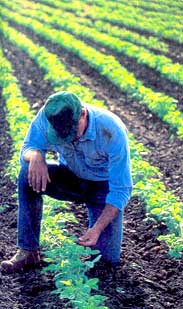
If you plant soybeans in rows, they can be better
cultivated. Weeds will reduce yields. As soon as possible
after planting, begin working between the rows with a
tractor or tiller if you’ve planted a big plot. Hoeing
between the plants is also worthwhile, since clean
cultivation will ensure more beans. As the beans grow,
adjust the tiller shields so that dirt rolls around the
base of the plants. Knee-high beans are too tall for
further cultivating, since this could seriously damage the
plants and the roots.
Most large-scale farmers are forced to use an herbicide.
Small-scale growers should be able to hand-check the weeds.
The beans can also be planted broadcast-style, then worked
into the ground with a tiller. But this stand will be much
weedier, as you will be unable to till it. If, however, the
last crop you grew on the same spot was weed-free, weed
control may not be such a problem.
Moisture for Soybeans
Keep soybeans watered as you would the rest of your garden.
Some moisture is necessary for germination, of course, and
during early development. Indeed, it’s most important that
the plants receive rainfall (or artificial watering) at the
time of their seed-filling period. Soybeans are, however,
tough little guys that can withstand some drought once they
are well established. We have seen them withstand week
after week of high temperatures, hot winds and no rainfall,
provided they got their early moisture.
Soybean Pests
These days there are few pest insects to bother soybeans,
although the number of Mexican bean beetles, velvet bean
caterpillars and Japanese beetles are on the rise. At
current levels, these pests can usually be controlled by
natural predators and viral diseases. There are also less
serious insects that may occasionally bother soybeans, such
as cutworms, grasshoppers and army worms.
As the beans mature, fungal diseases can become quite
destructive, making it difficult to save seed. But in
general, insects and disease pose a much greater threat to
soy crops in tropical environments than in our own
temperate climate .
Harvesting Soybeans
The length of the growing season varies from 50 to 200
days, depending on the variety, weather, latitude, etc. For
dry harvest, soybeans should be allowed to stand in the
field while the pods dry and mature, turning a huff to
yellow color. During this time, the leaves will first turn
yellow and then drop off. Not to worry, though: a good
frost will help to ripen the crop, quicken the leaf fall
and short en the waiting time until harvest — and it won’t
damage the beans.
The fully ripe beans are left to dry in the fields; the old
brown stems and pods are left standing until dry, with the
moisture content falling to about 13%.
On a good day here on the farm, we can combine 3,000
bushels of beans from 60 acres; this, despite the late
start we get, waiting almost till noon for the moisture to
burn off the fields. In the fall, the dust and chaff of
thousands of Midwest soybean fields fill the air, as
combines run day and night to bring in the harvest before
the fall rains. Harvesting a backyard crop of soybeans for
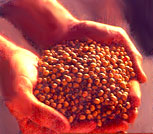
home use is a little more labor-intensive. A single soybean
plant may form as many as 40 hanging pods, each one
containing two or three round seeds (about 1/4 inch across) and
weighing about 120 to 200 milligrams.
If you are growing a small quantity of beans, you can cut
and thresh them by hand. Cut the stalks, stuff them in a
burlap bag, then trample them, beat them or run them over
with your pickup. The resulting tangle can be winnowed by
pouring the beans from one bucket to another, either
outdoors in a brisk breeze, or in front of a large fan.
Store the cleaned beans in containers in a dry, protected
area. Food moths, weevils, rodents, mildew — none of these
food-damaging agents seem to care enough to bother the
rock-hard shell of the uncooked soybean.
If you want to harvest the beans in the green stage, you
can gather, cook and freeze them as you would garden peas.
Steam the green, still-tender pods for about ten minutes,
pour off the water and remove the hull. This will be a slow
process. Some folks simply pull the green shell between
their teeth and pop out the green seeds that way. Green
soybean harvest may be stretched over several weeks, as the
beans at the base of the stalks dry first, then gradually
the ones higher up — very much like garden peas.
You may also choose to plow your soybean plants under as a
green manure before the seeds have formed far enough to
reseed. Or, bundled and hung to dry, the plants make
nutritious rabbit or chicken feed. Hay can even be made
from soybean stalks cut and dried during August, when the
chances of rain are small. Soy hay does, however, take good
deal longer to cure than other hays.
Eating Soybeans
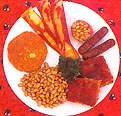
It was raised eating pressure-cooked soybeans and still
enjoy them, steaming hot and with a little salt. Whole
beans can be used in soups, made into “baked beans” and
ingeniously transformed into myriad protein-rich foods.
They can be ground coarsely for making roasts or burgers,
or used as a meat extender. Soaked briefly, drained and
deep-fried or baked, soybeans can be delicious snacks —
similar to but infinitely better for you than those sold at
the supermarket. Dig in!
Read more Gardening articles at
www.motherearthnews.com.
Why Eat Soybeans?
Soybeans are superior in protein to any other legume (35%
to 45%) and are even higher in protein than lean beef —
yet without cholesterol. Soy also has a good balance of
essential amino acids and naturally contains Omega-3
fatty acids. Furthermore, 25 grams of soy protein added
to the diet has been proven to lower LDL —- “bad”
cholesterol. Soybeans are easily digested, yet are high
in fiber. They contain vitamin E, calcium, potassium and
genistein, a cancer-fighting component. At least five
other anticarcinogens have been identified in the soybean
as well.
It’s too early to be sure, but there is hope that
soybeans in the diet may also reduce the risk of breast
cancer, prostate cancer, hot flashes and osteoporosis.