

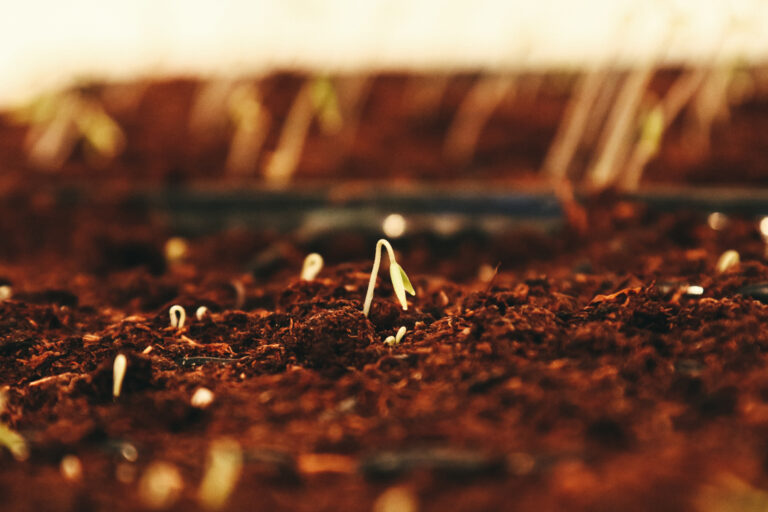
Plant problems can be prevented with appropriate preparation and attention. The American Horticultural Society’s The New Encyclopedia of Gardening Techniques (Mitchell Beazley, 2009) gives a detailed look into planting from preparation to harvest. This discussion of sowing seeds is excerpted from Chapter 4, “Growing Vegetables & Herbs.”
Sowing & Growing
Fresh, high-quality seeds are an absolute necessity. Seeds that are stale or have been exposed to heat, damp, or sunlight are less likely to make a worthwhile crop than fresh seeds from a reputable supplier or your own garden. The difference between the best varieties and ordinary ones is often great, and varieties that thrive in one climate may perform poorly elsewhere. Seek varieties known to thrive in your area. Some gardeners favor flavorful old heirloom varieties; others prefer modern hybrid varieties which often produce heavier crops. Do not save seed from hybrid varieties because the characteristics of the resulting plants will vary.
Sowing seeds
Seeds can be sown either directly into the soil or in containers. Direct sowing is much less time consuming, but in containers you have more control over the growing environment, where seedlings can be protected from pests, warmed for early crops, or given a head start if they need a long growing season.
Direct sowing into the ground
There are two methods: sowing into shallow grooves called drills (see below), or station sowing, also known as space sowing (see facing page). Always check the seed packet for sowing advice.
Sow as shallowly as possible; draw deeper drills for larger seeds with a hoe, and shallow drills of 1/2-3/4 inch for small seeds by pressing a length of broom handle into the soil. Stretch a string between two pegs to get a straight, easy-to-hoe drill. Ideally, run rows north-south to provide even light, but this is not essential.
A simple method of sowing fine seeds is to hold a little in the palm of one hand and then take pinches between thumb and forefinger of the other hand and gently trickle them into the drill. Sand sowing is another method for sowing small, hard-to-handle seeds.
In dry weather, water the bottom of the drill before sowing, and sow a little deeper than normal. Some soils form a crust after rain so that seedlings cannot break through. Where soil is prone to crusting, cover seeds with potting mix instead. Finally, firm down the soil with the head of a rake to keep the seeds and soil in close contact. A very shallow raking of the surface then conceals the drill from birds.
When seedlings emerge, thin them by removing surplus plants in stages. At first, leave four times the final number of seedlings, then half, and finally just those plants that are needed for the crop. This means that you must judge how many seeds to sow, which can be tricky. Sow too many and they may spoil from overcrowding before you can thin them, but sowing too few can result in gaps, wasting space and leading to shortages.
Thinning seedlings is very slow and tedious, so sowing sparsely is usually best. Sow a few extra seeds at the end of the row in order to give some spares in case any gaps need to be filled; mark the ends of the rows with short sticks to help avoid inadvertent damage later; bear in mind that some root crops do not transplant well.
Station sowing can speed up thinning and wastes fewer seeds. As it is impossible to be certain that each seed will germinate, place three to five seeds a finger-width apart wherever you want a single eventual plant.
If you only have a few, expensive seeds, you can pregerminate them (see below). Only those that germinate are sown, so the seed can be used more economically.
Growing from transplants
Transplanting–either from container-grown plants or those raised in a seedbed–is useful as plants can be raised in a small area before planting out. Transplants make efficient use of space and a small number of expensive seeds, but it is quite a lot of work to raise them, unless you buy them ready prepared from a nursery.
Bare-root transplants are the easiest to grow. These are plants raised in a seedbed outdoors in garden soil. They need to be carefully lifted with a fork and replanted with a trowel and plenty of water. This works well for cabbage family plants and for leeks. Most vegetable transplants, however, are raised in pots or cell packs just as ornamental plants often are; you will find that they are even easier to grow on than most ornamentals.
A paperback edition of The New Encyclopedia of Gardening Techniques will be released in April 2013.
This excerpt has been reprinted with permission from The New Encyclopedia of Gardening Techniques by the American Horticultural Society, published by Mitchell Beazley, 2009.






