The summer of 1980 provided nearly perfect growing
conditions here in Betsy Layne, deep in the Appalachian
Valley of eastern Kentucky, and I was able to proceed with seed testing for an
abundance of exciting new 1981 vegetable varieties. As you may remember from last year’s report, the summer of 1979 wasn’t especially
conducive to gardening, at least not in my area.
The cold, damp weather made it almost impossible
to grow many such warmth-loving crops as tomatoes, peppers,
and melons. Well, mercy, did 1979’s “failures” ever prosper
in 1980!
Get Growing While It’s Snowing
Things started to look up in the early spring when we had a
spell of fine, settled weather. I eagerly tilled the
still-chilly earth so that cool-season crops could get an
early start. Peas are usually the first vegetables to go
into my spring garden. And while I didn’t find an
outstanding variety of snow peas this
season–such as last year’s Sugar Snap–there are
a couple that deserve mention. Johnny’s Selected Seeds
offers Snowbiz, a tasty “eat-it-all” variety that grows on
tall, rangy vines (which need support). In addition,
Norli–sold by William Dam Seeds–isn’t new, but
it’s practically unknown … and bears heavy crops of
succulent pods on plants about a foot high.
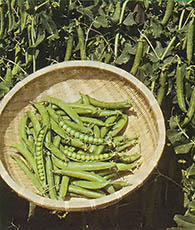
Without a doubt, the finest conventional pea
available this year is Maestro, the superb new legume from
Burpee Seed. The plant is just about immune to powdery mildew
and resistant to most other diseases as well, and the
compact vines are tremendously productive. Maestro
pods are very large–they contain up to 12
peas!–and the quality is so good that my children
love to eat the green nuggets raw from the garden. Other
noteworthy peas for 1981 include Knight (from Harris
Seeds), and Frostbite, a tough, disease-resistant variety
from Gurney.
The Planting of the Greens
Around these parts, lettuce is started about the same time
as peas, and the most notable variety that I tested was
Deepred (Harris). The lovely red-tipped bunches of this
“looseleaf” are tender and sweet , and they stay
that way well into summer. Montello, sold by the Jung Seed
Company, is similar to Deepred in flavor and heat
tolerance. Park’s choice new looseleaf cultivar–it’s
appropriately named Crispy Sweet–also has a fine
taste, and resists becoming bitter in hot weather. Folks
who prefer heading types should also try Vesey
Seeds’ Queen Crown, which will form solid two-pound
heads almost anywhere and exhibits superb quality.
Cabbage, Boiled Down
Cabbage is another crop that prospers in cold weather. As
usual, there are a number of fine new cultivars available.
Savoy Ace–the 1977 All-America gold medal
winner–has helped make the crinkled-leaf varieties
popular, and this type does have a taste that’s
somewhat different (and often better) than that of more
common cabbages. I found Savoy Emperor, brand-new from
Abbott & Cobb, to be as delicious as it is beautiful.
The Emperor is larger than Savoy Ace, and does particularly
well when planted later in the season for a fall harvest.
Another excellent “Savoy” variety is Novum, which is
available from William Dam Seeds.
Among the smooth -leaved cabbages, I found
Blueboy–a fine new introduction from Otis S.
Twilley–to be excellent. This main-season variety is
nearly perfect in all respects: quality,
disease-resistance, and productiveness! Johnny’s
offers Primax, which produces heads that average a little
larger than those of Blueboy, exhibits a bright green
color, and is of very good quality.
Vela (Unwin), Widi (Johnny’s), and Baby Head (Henry Field)
are three of the best small early cabbages to come
along in quite some time. Each weighs in at only a pound or
so … but they’re all perfect for both cooking
and slaw. Within about two months after setting out plants,
you can be harvesting good crops of each of these three
tender, tasty varieties.
Getting Ahead in the Garden
Of course, the cabbage family isn’t limited to “Irish
basketballs” alone. Broccoli, for example, is among the
most popular of the cole crops. This year, Burpee has
introduced Green Goliath, a giant broccoli that
combines size with fine eating quality. Cauliflower, too,
is closely related to its green cousin, and Twilley’s White
Contessa–one of the most outstanding introductions
for 1981–leads the field. The quality of this
heat-tolerant variety is equal to that of any cauliflower
on the market (try it smothered in a cheese sauce!), and
the plants grow with exceptional vigor.
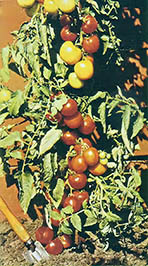
Tomatoes? Better, Boy!
Just about every gardener loves–and
grows–tomatoes, and 1981 offers lots of good news for
fans of the red fruit. The George Ball Seed Company brings
us Sweet-N-Early, a newcomer which should prove to be
strong competition for Better Boy and Early Girl in the
“super tomato” class. Plant Sweet-N-Early, give it loving
care, and stand back in awe as the plants cover themselves
with huge quantities of three-to four-ounce fruits in 60
days. You can’t do better for plain good eating, so look
for this seed at your garden center. Another tomato that
performed exceptionally well in my trials was Red Chief
VFN, from Hastings. This staking variety sets large numbers
of delicious 10- to 12-ounce fruits over an extended
season. I also favored Agway’s Roadside Red,
which–like Red Chief–matures in about 80 days
and produces an abundance of large, flavorful tomatoes on
big, sturdy plants.
Many gardeners prefer the milder flavor of pink tomatoes,
and–among those varieties–Park’s Pink
Beauty Number 14 is a sure winner. It produces huge fruits
(one to two pounds each!) on rugged plants … and the
harvest continues right up to the first frost. Other
interesting new tomatoes for 1981 are the easy-to-peel
Basket Vee and the pink-fruited Olympic, both from Stokes; Early Temptation (just great for growing in containers)
from Vesey; and Hastings’ Hasty Boy, the largest
high quality early tomato ever developed. For juice
fans, Stokes offers Veeroma, one of the very few
disease-resistant canning types. And if you like
yellow tomatoes, try Moonglow from Gleckers.
You’ll be rewarded with lots of eight-to ten-ounce fruits
of surprisingly good quality. In fact, they’re
far superior to the old standard, Jubilee.
Pepper Progress
Folks used to shy away from peppers because of problems
with fruit set, but the new varieties on the market seem to
have overcome that difficulty. I particularly
liked Burpee’s Tasty Hybrid, which has come to rival Bell
Boy–my old favorite–for the title of “King
Pepper.” If you live in an area with a short growing
season, look into Early Canada Bell from Stokes and the
same company’s Italian roasting type, Super Shepherd. Both
mature quantities of tasty fruit within about 65 days after
the plants are set out.
Henry Field sells the most unusual pepper this
year. It’s called Big Bertha, and the name is well-chosen:
Each plant bears several giant eight-inch fruits. That’s twice the normal size of sweet
peppers! Big Stutter, from Herbst, is a similar “giant
economy” variety. Among the other notable introductions, I
was pleased with Lady Bell (Harris), Delray (Abbott &
Cobb), and Grower’s Big Pack (Twilley).
Eggplant is enjoying a well-deserved popularity these days,
and the gardener can do no better than Imperial. This long,
shiny variety–reared by the Petoseed
wholesalers–is best when picked before it is fully
mature. Satin Beauty, from George Ball, is another lavender
lovely. You can obtain seed for both varieties from many
garden supply stores.
Amazing Grains
I’d hate to have to decide between tomatoes and corn in my
garden. Both are so darned good that I know I wouldn’t
be able to choose. Fortunately, I’ve got plenty of room in
my growing ground, and I was able to raise bumper crops of
both favorites last year. One variety of corn
stood head and shoulders above the rest in my trials:
Atlantic, which is offered through garden centers by the
Niagara Seed Operation of Moran Seeds. Atlantic sweet corn
exhibits every quality home gardeners look for: terrific
taste, vigorous plants, and large ears. Make sure that you
give this main-season variety (85 days) a try. You’ll be
delighted that you did! Two good early main-season
introductions (75 days) are Seneca Warrior from Letherman,
and Bellringer, from Harris, both of which approach
Atlantic in quality. Tendertreat (Wyatt-Quarles) is a good
choice for gardeners in hot, humid climes.
First Ears
Of course, many people like to grow an early corn
so that they can begin to savor the tender kernels long
before the big fellows like Atlantic are ready for the pot.
Such folks will be glad to know that Gurney offers a
quick-producing sweet corn called Mini-Max, which yields
five- to six-inch ears–of excellent
quality–on diminutive plants. Unwin’s Kelvedon
Sweetheart is also fully the equal of any other early
variety, and Seedway’s Early Sumay is very large (and
very tasty).
Other yellow hybrids worth checking into are Tri-Gold
(Stokes); Kandy Korn EH (widely available); Supergold
(Willhite); and Florida Staysgreen EH (Abbott &
Cobb). And among the white-kerneled varieties–which
have increased in popularity each year, following the great
success of Silver Queen–are Herbst’s Silver Dollar,
Abbott & Cobb’s Lightning, and Meyer’s Platinum Lady.
Sweet Sal (Harris) and BiLightning (Seedway) should be
popular among those who can’t make up their minds. Each has
some white kernels … and some yellow, too.
The Melonry Lingers On
Thanks to the dismal weather, my 1979 trials didn’t turn up
a single commendable melon. But last
summer–with sufficient rain and lots of sunny
days–the round fruits really flourished! And
none of them did better than Herbst’s Sweety Pie,
which had delicious flavor and a rich aroma that
perfumed the entire garden. It looks like Burpee’s famous
Ambrosia finally has a worthy competitor! Sundae (also from
Herbst) tastes just about as good as Sweety Pie and has
larger fruit, but the plants are not nearly so
productive. Folks who are looking for a quick
-fruiting variety should try Harris’s Early Dawn. The
melons are elongated, dark golden in color, tender, sweet,
and aromatic.
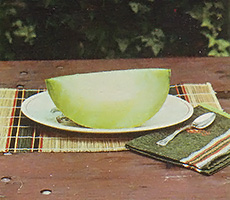
Probably the most unusual cantaloupe for 1981 is
Pineapple from Park Seeds, a melon that looks
like a ‘loupe but tastes like a honeydew! Burpee’s
Venus is a honeydew through and through, but it reaches
maturity in an amazingly short 90 days. Among the
nonhybrid cantaloupes, I found Burrell’s
Mainstream and Willhite’s Perfecto to be of especially high
quality.
On the watermelon front, Gurney’s Pineapple (yes, I know
it’s confusing!) is a delicious fruit with vivid
yellow flesh (see, there is an
explanation for the name). I rate this six- to eight-pound
melon a best bet for 1981.
Encumber Your Garden
Everybody loves cukes, and Agway’s Roadside Fancy is about
as good as cucumbers get. The same could be said of
Herbst’s Sugar Slice B, a “burpless” type with a sweet,
nutty taste. Two choice new compact “bush” slicers are
Streamliner (Burpee) and Bush Whopper (Park). They’re both
tops for small gardens or container growing. I’m always
glad to see a good new pickling variety, too, and
I found three premium preservers for 1981: Conde
(Unwin), County Fair (Stokes), and Explorer (Willhite).
Crooknecks and Butternuts
Squash provides more food for less effort than any other
vegetable I know, and the 1981 trial winners were
especially productive. I liked Gold Rush, the All-America
yellow zucchini; Harris’s Golden Girl, another fine
yellow variety; Market King, bred by Keystone and
available at many garden centers; and Agway’s Milano, a
fine green zucchini.
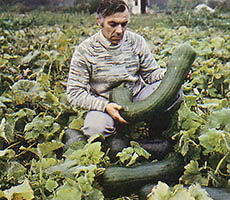
The winter squash that performed best for me is
called, strangely enough, Melon squash. The flavor of the
raw fruit does somewhat resemble that of a cantaloupe, but
it’s when the squash is cooked that the gloriously sweet
taste really comes through. And it won’t take many of these
three-foot, 20-to 30-pound fruits to last your family all
winter. [EDITOR’S NOTE: Thompson & Morgan had such
a small quantity of seed available this year that they were
forced to drop Melon squash from their catalog. As a
special favor to MOTHER EARTH NEWS’ readers, however, the company
will make up special packets while their small supply of
the winter squash seeds remains.]
The Best of the Rest
Well, you’re probably just about out of garden space by
now, but I’ve got a few final recommendations for
plants to tuck into those empty corners that always turn
up: Park’s Candelabra Branching okra; Darrow
strawberries from W.F. Allen, and Sequoia berries from Park; along with White Seeded Provider bush beans from
Twilley, and Seedway’s French Horticultural bean.
And, if you don’t have room for everything, here’s
my “must try” list, the cream of the crop: Sweet-N. Early, Red Chief, and Roadside
Red tomatoes; Sweety Pie and Pineapple cantaloupes;
Pineapple watermelon Savory Emperor cabbage; White
Contessa cauliflower; Roadside Fancy cuke; Maestro
peas; Atlantic sweet corn; and Melon squash. You’ll
have a superproductive garden and good eating all year
round!
EDITOR’S NOTE: Most of the varieties listed in here will be available through seed and
garden stores this spring.