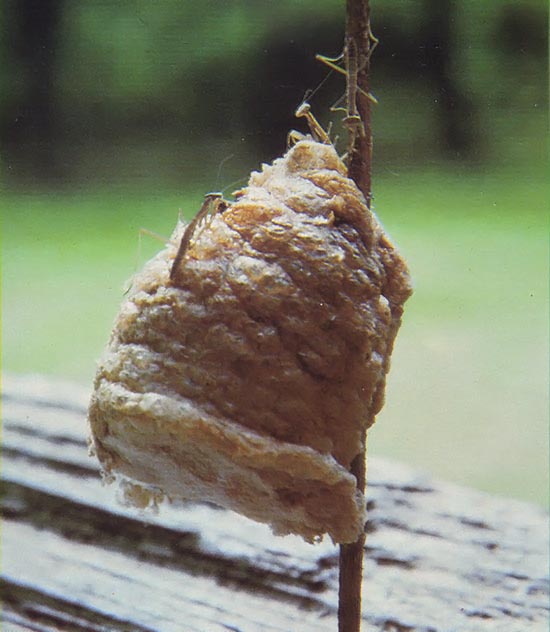

Handpicking is sometimes just too slow and time-consuming, and chemical pesticides are hazardous, of course , so what can the home gardener do to prevent hordes of voracious insects from descending upon the flowerbed or pea patch? Well, he or she can prepare for such an attack by marching right out and getting a biological control, that’s what — preferably one that’s just as voracious as the pests are! Something, in fact, like the remarkable praying mantis.
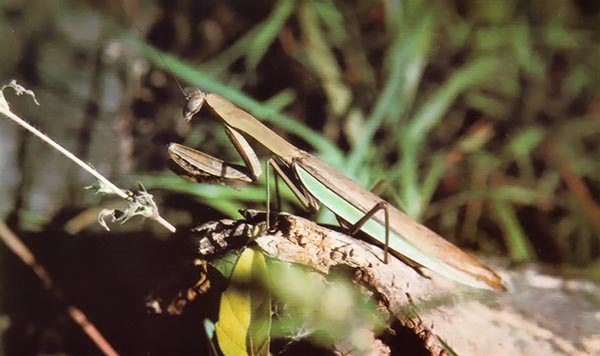
Ready, willing, and certainly able to eat its way through crowds of the plant- munching bugs that threaten your garden, this giant (up to five-inch-long) green predator can be brought directly to the site before birth and allowed to hatch right in the area it will call home. All you need to do is take a spring walk or a drive in the country, and collect some of the praying mantis eggs produced by mother mantises the previous year.
Check Out Briars and Byroads
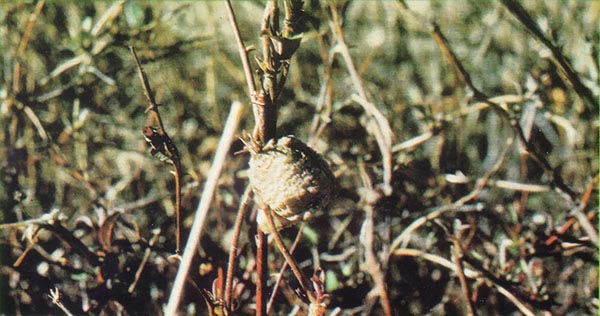
Mantis egg cases, or castings, are quite distinctive. Gray, with a sort of foam/paper exterior, and shaped like a broad cone with a flattened bottom, they’re usually found attached to twigs, branches, or briars. Sometimes the mother insect will even glue a casting to the side of a barn or shed where she has found plenty of food. Roadside thickets, pasture shrubs, and fence-row tangles on farms where no chemical pesticides have been used are also good bets for the casting collector. North Carolinian Darrell Dennis has found that riverside bushes are treasure-troves in his section of the country, while Georgia reader Roy Dycus had good luck in a farm blackberry patch.
The eggs swell in anticipation of spring during the months of January and February, making the cases easy to spot in March. When it’s time to gather castings, the whole Dycus family gets into the act: Roy drives slowly down a country road, while the children keep a lookout for the gray cones and call a halt when they spot some.
(The youngsters also keep their eyes peeled for returnable cans and bottles that people have thoughtlessly dumped by the road. Collecting these helps the family defray the cost of gasoline for their excursions.)
Relocate With Care
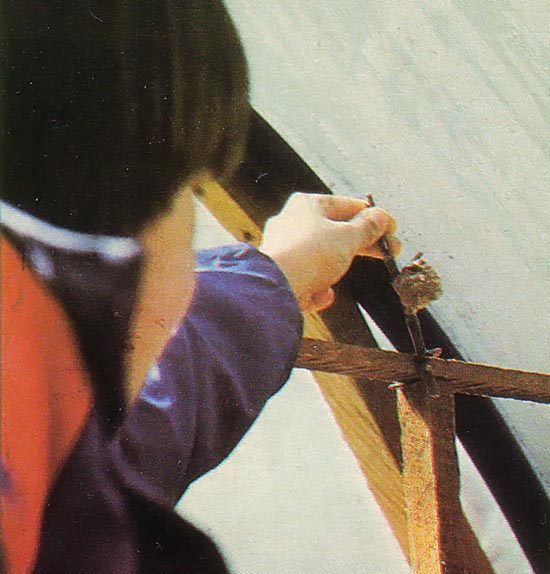
When you discover one of the little nests, cut the twig or branch to which it’s attached, leaving about three inches below the casting and one inch above. This stick handle can later be inserted in the ground or into a crack in a fencepost, or be tied to another twig. Be careful not to damage the egg mass when you cut it free, and be sure it doesn’t get crushed when you transport it to its new home.
To use your finds to best advantage, you’ll want to position the castings near your garden. Roy pokes the sticks into the earth, while Darrell ties or tapes the eggholders to posts or branches at a height of about two feet above the ground. Either way, you should choose a place where there’s some sort of cover nearby — such as leaves, straw, periwinkle, cornstalks, or other plant material — that the young bugs can hide in when they hatch. Otherwise, wild birds, chickens, and grown-up predatory insects are likely to find infant mantises delicious; you could lose most of your “litter” if you haven’t afforded the newborns some protection.
The actual hatching date will vary from one location to another and even from one season to the next in a given place. In the southeastern United States, it will be early in April if the weather’s warm.
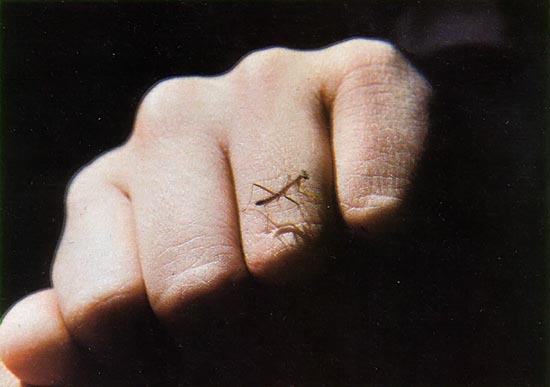
In fact, because warmth triggers the process, you should never bring the castings indoors —unless you want your home full of mantis babies with little to eat except each other! A greenhouse, however, can be a fine place to keep the egg cases, at least according to Darrell Dennis: He claims the little predators will emerge some two or three weeks before their relatives in the wild. After spending that “head start” time filling up on hothouse bugs, they’ll be larger than their later-hatching country cousins (and have correspondingly larger appetites) when it’s time to put them outside.
Make a Little Egg Money
Many individuals and some nurseries and seed companies are interested in buying mantis egg cases, so if you find a good number of the clusters, it might be worth your while to advertise. When Roy Dycus gathered a bumper crop, he stored the surplus castings in a mesh bag hung under the eaves on the north side of his house — where the outside temperature was exactly what the castings where meant to endure — and placed a simple ad in a local farmers’ market bulletin. He offered the clusters for 50¢ apiece and got more orders than he was able to fill.
The egg cases can be shipped in small manila envelopes or (better yet) cardboard tubes. A warning should be placed on the label, advising the recipient to open the package outdoors, as some of the baby mantises might be hatching by the time the package is delivered. Instructions for placing the castings in the garden should be enclosed too. To avoid having to deal with disgruntled customers, keep these clear and short — and simple, in case you can’t get access to a copying machine and must write them by hand.
Most important, whether you use the castings for your own garden or gather them to sell, please be sure to leave one or more in each of the areas where you find them, so that you won’t deplete the location’s native mantis population. Remember, the mother insect lays her eggs in a given spot because there seems to be enough food in the vicinity to insure her babies’ survival. You’ll want to insure that some of the cases will thrive and grow where they were originally placed; later, the insects that hatch from them will produce eggs for you to find next year!