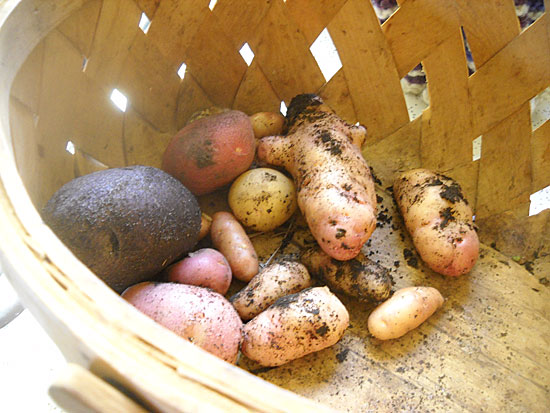
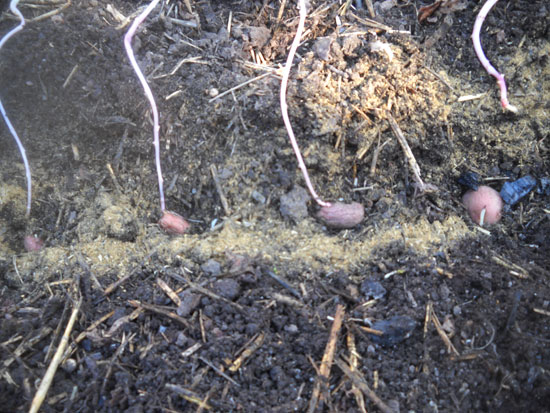
Potatoes are the heart of our garden. They fill two and a half raised beds (ten feet by four) every year, five varieties. We raise enough to be potato independent; we are eating the last few spuds, rubbing off the spooky long tendrils in late June, and then scrabbling under the plants for potato salad for the Fourth of July. Maybe it is my Irish roots, maybe my working class dinner background of meat, potatoes, and frozen veggies, or maybe it is just the gorgeous variety of shapes and colors that emerge from the ground like buried treasure in early August, but I love growing our own potatoes.
Potato growing is a balancing act. I want to plant them early enough so that they do not need too much supplemental water, but not so early that they rot or destroy the soil structure. Last year, that meant the last week in March; this year, because it was a dry spring, I was able to plant by Saint Patrick’s Day, which felt oddly appropriate. I plant densely — five rows in a four-foot-wide bed, with a generous handful of bio-fish fertilizer underneath and a layer of straw mulch over the soaker hoses. Because of the fertility of the soil and the steady spring rains, the system works.
Finding Potato Varieties that Work![]()
We grow five varieties of potatoes. I spend several hours browsing the Irish Eyes catalog, not only because they specialize in early season crops and potatoes that will grow in the Pacific Northwest, but also because they have some excellent charts. I want tough, heavy producing plants. I always plant a fingerling — ‘Ruby Crescent’ has done well for the past few years. It’s a nice knobby plant that keeps for months in the root cellar.
All blue potatoes are really blue all the way through and retain the color when cooked, which is a bonus. ‘Yukon Gold’ is tasty mashed with cabbage in the winter and bakes well, too. ‘Desiree’ produces huge bakers and has a nice red skin, and the ‘Kennebec’ is well rounded, and reminds me of home in New England. Every few years, I trade out a variety when I purchase new seed, but most years, seed potatoes are set aside during the weighing in process.
The plants are looking good this year. They rose to the sky and flowered in June and have now flopped over the edges of the beds, sprawling everywhere. I flopped them back in a few days ago when I needed to trim and mow, but they are strong-minded plants, and they are back in the aisles again. It’s ok. I went out last night and dug around, searching for new potatoes for dinner, choosing a few from each bed. Mixed with garden celery and on a bed of fresh lettuce, they made a fine hot night supper.
There is still growth going on underground. And I think that is what I love most about potatoes — the humble vines on the surface, dying back and losing color, and the buried treasure in the dirt.