Although most folks will agree that crisp summer salads
laced with mouthwatering slices of fresh-from-the-garden
cucumbers are among the high points of any hot season, many
gardeners don’t grow the crisp treats. After all
(the argument often goes), cucumbers grow on vines that’ll
gobble up cropping ground faster than a sweet-talking land
speculator can name a new development. So city people
— and even country dwellers with small garden plots
— can’t afford to grow them, right?
Wrong. Happily, horticultural researchers have been
thinking of limited-space gardeners. And, with the
introduction of several varieties of “bush” or mini-cucumbers, a
new world has opened to aspiring growers who have a
shortage of gardening area.
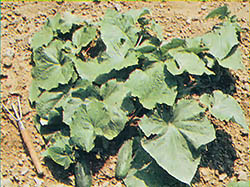
Despite their name, such plants don’t resemble
shrubs. Instead, their compact shape is formed by the
growth of extremely short vines that bear a profusion of
full-sized fruit. With the foliage of a mature plant
measuring only two to three feet across, bush cucumbers are
ideally suited to intensive gardening techniques
whether in a raised bed or a patio pot.
And just how do you grow the “new” plants? Well,
the technique is about the same as that for
conventional cucumbers. The key element is to
remember that all members of this family are heavy
feeders: They need plenty of both organic material and
water and do best, therefore, in well-conditioned
humus-rich soil … not too sandy, not too dense.
A well-prepared organic plot will definitely
encourage cuke production by retaining moisture and
providing a uniform, natural release of the required nutrients. So work your garden area by tilling in a
generous dose of compost and organic fertilizer.
You can start the seeds indoors (or in a cold frame or
greenhouse) for an early crop, or simply plant them
outdoors after all danger of frost has passed. Don’t rush
the season though … the warmth-loving kernels won’t
germinate until the subsurface temperature exceeds
50°F.
After the cukes sprout, thin the seedlings to 12 or more
inches apart and cultivate the plot often. Then, once the
fledgling plants have become established, mulch heavily.
(This last is a must practice as it provides
for good moisture retention, slow nutrient release, and
weed and insect control.)
To container-grow your saladmakers, fill one or more pots
(seven inches or larger) with a rich soil mixture and sow
the seed as you would in the ground, thinning to one plant
per pot after germination. Then simply guard against the
same insect and disease problems that might occur in a
garden.
Fortunately, most compact cuke varieties are relatively
disease-resistant. However, insects such as the striped or
spotted cucumber beetle cause damage — both as
chewers and as carriers of bacterial wilt — and
must be controlled. To protect your plants,
practice the time-tested organic methods of natural soil
maintenance, crop rotation, and heavy mulching. In
addition, try your most repulsive homebrewed hot pepper and
garlic spray on any insects that appear. (Or — as an
extreme measure — dust with pyrethrum or rotenone to
keep bugs at bay.) With reasonable care and some good
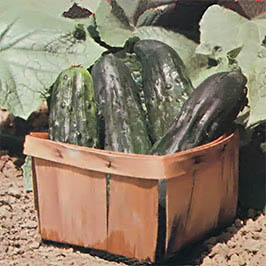
fortune, you should harvest an abundance of bright green,
slender fruits in about eight weeks.
And when’s the best time to pick them? That’s up to you.
Pluck anything from three-inch luncheon tidbits to
eight-inch candidates for the dill crock. (Never let the
cukes rot on the vine. Regular harvesting increases
production and helps prevent insect and disease problems.)
Give bush cucumbers a try this season whether you’re
cramped for space or not! Most major seed company catalogs
offer at least one of the several varieties
available. And whatever specific type you choose, you can
count on a lot of good eating from a little area!