

Make use of these lettuce growing tips and your salads will be a snap.
Imagine that extraterrestrials have invaded and commandeered earthlings’ home gardens in order to produce energy for their fleet of veggie-powered flying saucers. Armed with hoes and digging forks and with determination in their eyes, gardeners take to the streets. To quell the insurrection, the aliens announce they will allow gardeners to grow one vegetable for their own consumption. Which crop would you choose? For me, the choice would be as easy as this scenario is far-fetched: lettuce.
You could make a good case for growing other things instead: a highly caloric crop such as potatoes, a more flavorful one such as tomatoes, or a better keeper such as carrots. I recommend growing lettuce because it’s easy, reliable, requires little space, and enjoys a long growing season, allowing for multiple and continuous harvests. Lettuce is also one of the best vegetables to grow because it offers a nice mix of nutrients in a compact package, including iron, folate, and vitamins A and C. It’s for all these reasons that new gardeners should choose lettuce as their first step in their journey to delicious, homegrown self-reliance. We’ve compiled some proven lettuce growing tips to get you started. For a chart with lettuce variety details, see Great Lettuce Varieties.
Lettuce Types
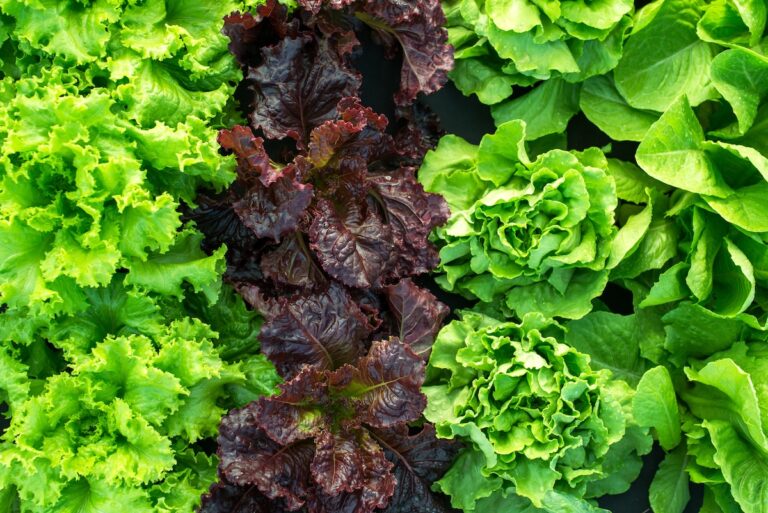
While “iceberg” is the bland poster child for store-bought lettuce, it’s part of a larger, diverse, and better-looking family than people realize. Gardeners can choose from hundreds of varieties, all falling into six types. (See “Six Lettuce Types: Which Ones Will You Try?” below.)

For beginners, I recommend starting with loose-leaf lettuce varieties, also known as “cut and come again” lettuces (meaning you can cut a harvest, then harvest again in a few weeks). These varieties are not only the easiest to grow, but they come in many seed mixes, offering a balance of colors, textures, and flavors.
To add some extra color and zing to your salad bowl, I suggest planting a row of spicy mesclun mix for every row of lettuce you grow. Most seed companies offer mesclun mixes of arugulas, kales, and mustard greens, which, with the addition of some cheese, chopped walnuts, and a couple of edible flowers, can turn a ho-hum salad side dish into a memorable main course.

Preparing to Plant
As with any crop, delicious salad greens start with the soil. Lettuce does best in sandy loam soil with a high level of moisture-retaining organic matter, but don’t be discouraged if you don’t have those conditions. Lettuce grows all around the world in all types of climates and soils, including your own.
There’s no ideal climate for all lettuce types, but most grow best in cool weather. Salad greens can be planted as soon as you can work the soil, which, here in Maine, is early to midspring. Most lettuce varieties germinate well in the range of 40 to 60 degrees Fahrenheit, making them an excellent spring and fall crop for gardeners in temperate areas.

It’s possible to start lettuce seeds indoors in pots, but I don’t bother. Space under my winter grow lights is limited and I prefer to save it for longer-season crops, such as tomatoes, which can really take advantage of a few weeks’ head start.
How to Plant Lettuce
When planting lettuce, begin by working some finished compost (if you have some available) into the soil. Lettuce plants don’t have time to root deeply and will benefit from the extra organic matter close to the surface. Next, rake your bed smooth so you have an even planting surface.
I plant my loose-leaf in rows, alternating lettuce with rows of mesclun and other crops, such as radishes in the spring and beets in the fall. Among lettuce’s many positive traits is that it’s a good neighbor and can be planted next to or between just about anything, provided it has enough water, space, and light.

Rather than planting long rows, I plant one or two short rows across my 30-inch beds every two weeks. More than any other crop, lettuce works best with succession planting because it turns bitter as it matures, especially in warm weather. With succession planting, there’s always a salad ready for the taking. Space your loose-leaf rows 6 to 12 inches apart, depending on the available space and soil fertility in your garden.
One effective way to get the right planting depth and nice, straight rows at the same time is to take a piece of scrap wood and press it into the soil until a faint indent appears. If you’re growing a loose-leaf type or a loose-leaf mix, plant your seeds about 1 inch or so apart in a single line, cover them with about a quarter inch of soil, and gently pat them down to keep them in place. Water well, and within a week you should see them sprout.
What works for planting loose-leaf varieties also applies to heading varieties. The only difference is spacing. Full-head lettuces can be planted either in rows or in a grid pattern 12 to 18 inches apart. If you’re located in a hot climate or want to grow lettuce through the dog days of summer, consider interplanting your rows or heads with taller crops that can shade them.

How to Harvest Lettuce
One of the keys to having tender lettuce is rapid growth, which is why spring-grown lettuce tastes so good. If all the right conditions are present — sunny, mild days, cool nights, sufficient water and good soil fertility — lettuce can go from seed to salad bowl in about 30 days. Most full-head varieties take 45 to 60 days to reach maturity.
Also consider timing when harvesting lettuce. Leaves are at their sweetest and most vibrant in the morning. A study by the U.S. Department of Agriculture from the early 1990s found that lettuce harvested at 7 a.m. contained nearly twice as much natural sugar as the same variety harvested at 2 p.m. While this is true for headers and loose-leafs, recent research indicates that it’s best to harvest baby greens in the evening if they are to be stored for more than a day.
Regardless of when you harvest lettuce, its tender leaves demand careful handling. Harvested greens left in the late spring sun can start to wilt in just 15 minutes, so quickly get them out of the garden and into a cool, moist (but not wet) spot. If I don’t have time to thoroughly wash my greens directly after harvesting, I give them at least a quick rinse in cold water before putting them in the refrigerator’s crisper.

An exciting thing about lettuce harvest time is that it can be a repeat performance. You can harvest loose-leaf varieties twice — and sometimes three times — before the quality of the leaves declines. Make your first cutting about an inch above the soil. Keep your plants weeded and watered, and you should be able to harvest them again two to three weeks later.
More Tips for Growing Lettuce
While lettuce is not a complicated crop, a few things can go wrong — most of them related to heat and moisture. If you live in a wet climate, you may discover the local slugs are eating more salad than you are. One of the best ways to get slugs to stop munching on your lettuce is to make them a more appealing offer: beer! Bury a shallow receptacle, such as an empty tuna can, in the soil amidst the plants and fill it halfway with beer. Attracted by the smell, slugs will crawl into the container, but can’t crawl out.
The greatest menace to lettuce is neither slugs nor veggie-hungry aliens, but the heat. When temperatures exceed 70 degrees, lettuce seeds don’t germinate well and mature plants tend to bolt (meaning they stop producing leaves and go to seed). Regular watering, using shade cloths or tall, shade-making companion plants, and planting heat-tolerant varieties can help, but extreme heat over time ultimately takes a toll on lettuce’s flavor and texture.
The positive flip side to lettuce’s heat sensitivity is that you can enjoy it during the cooler months when not much else grows. In fact, many gardeners and farmers in northern areas use cold frames, low tunnels or minimally heated greenhouses to produce salad greens through winter.

Whatever your climate, I hope you’ll start growing lettuce of your own this year. With organic mixes costing as much as $6 per pound, I can’t think of a better way to hold on to your green than by growing some greens of your own.
Six Lettuce Types: Which Ones Will You Try?
Butterhead: A soft, buttery texture characterizes these varieties, which form loose heads.
Chinese: Chinese varieties generally have long, pointy, non-head-forming leaves and a bitter flavor better suited to stir-fry than salad.
Crisphead: Varieties in this type, which includes iceberg, form tight, dense heads resembling cabbage. They are generally the mildest of the lettuces and are appreciated more for their crunchy texture than their flavor or nutritional value.
Loose-leaf: These varieties are grown as leaves instead of tightly formed heads, and they have a delicate texture and a mild flavor. They are also known as “cut and come again” lettuce, as they can be harvested multiple times.
Romaine, aka “Cos”: This heat-tolerant type grows in a long head of sturdy leaves with a firm rib down the center.
Summer Crisp, aka “Batavian”: Think of this group as an intermediate between crisphead and loose-leaf types.
Human Salad Spinner
So, you’ve grown your own fresh, crisp lettuce, and now it’s time to wash and serve it. A salad spinner works well to quickly remove water after the lettuce has been washed, but if you don’t own a spinner, here’s a trick that will work as well or even better than a spinner: Wrap the lettuce up in a large, clean dish towel and step outside. Swing the bundle of lettuce in circles as fast as you can — like you’re winding up to pitch a softball. Voilà! Most of the moisture will be gone when you open the cloth. You’ll find that salad dressings will coat the leaves more evenly if the leaves don’t have much water on them.
Check out a video demonstration of the human salad spinner technique.
Originally published as “Grow Great Lettuce” in the April/May 2010 issue of MOTHER EARTH NEWS.
Roger Doiron is the founder of Kitchen Gardeners International and parks his salad-powered spaceship in Scarborough, Maine.






