Which plants can I grow to lure birds to my garden?
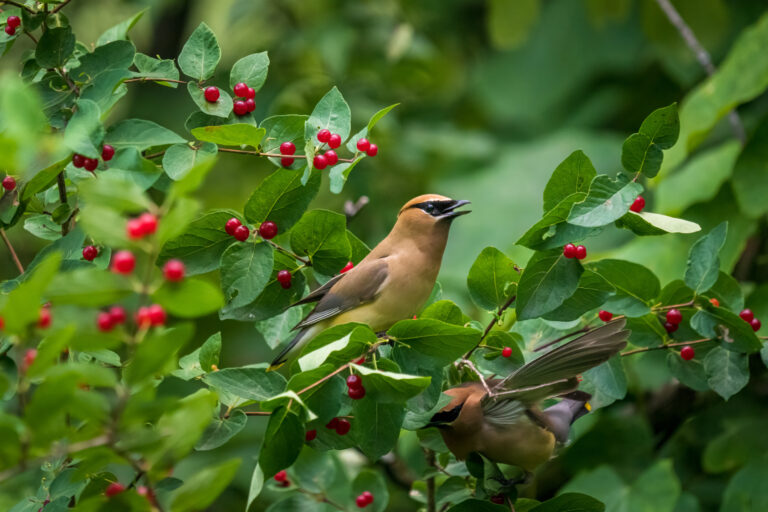
Consider native species that attract and maintain bird populations. Native plants have evolved together with our local birds, and these plants are familiar to the birds as food and shelter. In addition, native species attract a wide range of native insects, which insectivorous birds will happily consume. Visit a local nursery that stocks plants native to your area; it’ll offer you a wide selection of plants and information about those plants. Following are some of the plants to consider for your yard or garden as long as you choose a native-to-you species. (I refer to the fruit of all these plants as “berries,” but technically, some are drupes or small fruits.)
- Arrowwood virburnum (Virburnum dentatum). This easy-to-grow shrub typically grows 6 to 12 feet tall and produces clusters of creamy-white flowers in late spring and early summer. By fall, it forms small berries that are an important food for birds. During the growing season, the dense growth of this plant offers shelter to birds.
- Coral honeysuckle (Lonicera sempervirens). Fast-growing, maintenance-free, and with magnificent flowers that attract hummingbirds. Oh, and beautiful (though inedible) red berries in fall offer additional food for birds. If you have a fence or arbor in a sunny location, this is your plant.
- American holly (Ilex opaca). Though this plant won’t give you anything tasty to eat, it’s an excellent addition to the landscape and will offer food and shelter to your birds. Its berries are an important winter food for many birds, and because it’s evergreen, it offers shelter during harsh weather. Berries are only produced on female plants, so either purchase a tree that’s already producing berries (and make sure a male tree is nearby), or plant several trees and hope for the best.
- Mulberry (Morus rubra). Make sure you plant the native red mulberry. This native has been under pressure from the invasive white mulberry. These invasive mulberries also readily hybridize with the native variety. The mulberry produces a tasty small fruit, but unless you’re diligent, odds are the birds will get them before you do. Like American holly, mulberry trees are either male or female. Only female trees will produce fruit.
- Serviceberry (Amelanchier spp.). Another sure bet for birds in early summer is the serviceberry. There are many varieties of natives to choose from, and they range in size from large shrubs to midsized trees. All of them have delicious small berries that can be eaten right off the plant.
- Elderberry (Sambucus canadensis, S. cerulea, and S. racemosa). Elderberries are a magnet for local birds. Without intervention, the birds will quickly and efficiently strip off all the berries. If you want to save some for yourself, enclose the unripe berry clusters in light mesh fruit bags and leave them on until the berries are fully ripe. (Elderberries shouldn’t be eaten raw. They must be simmered for at least 30 minutes or fermented to eliminate the toxins in the berries.) Elderberry has a wide distribution, but plants suited to one part of the country may not always grow well in another part of the country. Ask your local native species nursery for plants suited best to your local area.