Winnie and Cayus Motika live in a four-bedroom home. Their eldest child just graduated from college and
is living at home while she looks for a job. Their middle child attends law school a few hours away and their youngest is still in high school. They live a few miles outside the capital city in a suburban development that enables them to have a quarter-acre of land, and the sort of house they would not be able to afford nearer to the capital, where Cayus works for an insurance company. Winnie is a government employee who works at the labor department.
Seen from these angles, the Motikas are a normal, middle-class family — except for their grocery bill, which I bet is significantly lower than yours. Despite being working professionals, over 90 percent of what ends up on their dinner table they grow or raise themselves.
How a Kenyan Feeds Her Family
The Motikas’ breakfast is complemented by eggs from 50-some chickens kept in 20-by-10-foot coop. Once a week, chicken is on the dinner menu. Because tomatoes don’t grow well in their climate, Cayus constructed a greenhouse where Winnie proudly has over 20 healthy plants, enough to share with their friends and family.
Their garden plot isn’t huge, but its 2,500 square feet provide kale, peas, beans, potatoes, yams, carrots, onions and corn. By some American measures, the Motikas are Portland hipsters, on the deep end of self-sustainable gardening. But around here, in Kenya, this is more common than not.
After all, why shell out hard-earned Kenyan shillings to fill your dinner plate when, with a little effort and
dedication, you can grow most of it yourself? You won’t find many Kenyans asking themselves this question, as the answer is intuitively ingrained in their lifestyle.
Half a century ago, North Americans were doing a much better job of growing their own food. During World War II, U.S. citizens were encouraged to plant gardens on their lawns to help the war effort. The Department of Agriculture estimates that as many as 20 million gardens were planted.
When the U.S. economy returned to business as normal after the war, most victory gardens went back to their yawning lives as lawns. Except for my father, who ever since I could walk has tilled the lawns of every house we’ve lived in to plant a garden. In his case, he enjoys growing his own vegetables as much as the attention passersbys show when they notice a cornfield where a front lawn should be. Yes, my father was “that dad,” the one who wore Zubaz pants out in public.
The Victory (Garden) Is Yours
Today our government isn’t urging us to plant a victory garden as a war strategy. But as a lifestyle approach, it’s a winning one. Worldwide, the cost of many foods has tripled since 2007. In an economy that’s causing many North Americans to cancel their vacations and cut back on spending habits, growing your own food makes sense — and saves dollars.
There’s also the added bonus for the environment, which wins in more ways than one — less pollution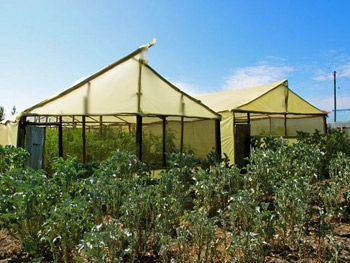
from fertilizers and respite from the toll food transportation takes on it.
In a market where buzzwords such as “organic” add an extra expense to that warm feeling you get when you read it on your produce, the cheapest way to fill your fridge with organic produce is to grow it yourself.
Done right, growing and raising your own food may save you thousands of dollars annually on your grocery bill. It also promotes a healthy diet (you can’t grow a Twinkie). So why aren’t more North Americans doing this?
A full answer to that question requires a book-length elaboration that gazes into who we are as a society. An easier question is “Why do Kenyans garden more than we do?” For Kenyans, it’s a habit that began out of necessity and has continued as families have broken out of generational poverty and entered the middle class.
For most middle class families in Kenya, this change is recent, and the memories of poverty and what it entailed are still present in their minds. It’s certainly possible that as time goes on, Kenyans will let their gardens give way to the TV dinners of convenience. But let’s hope not.
Let’s instead hope that more Americans will see the value of learning from the Kenyans and give growing some of their own food a try. As the world’s population grows, with the economy still stagnating and fuel prices not falling, food prices are likely to continue to edge upwards. Every windowsill, flowerpot, and patch of lawn can be utilized to this end in ways that are aesthetically pleasing, environmentally kind, and good for your health and budget.
Photos by Luke Maquire Armstrong