With Chaya, I was love at first taste. I’m not usually a huge fan of cooked greens, but there’s something about the hearty, somewhat sweet taste of boiled chaya greens that keeps me reloading my plate.
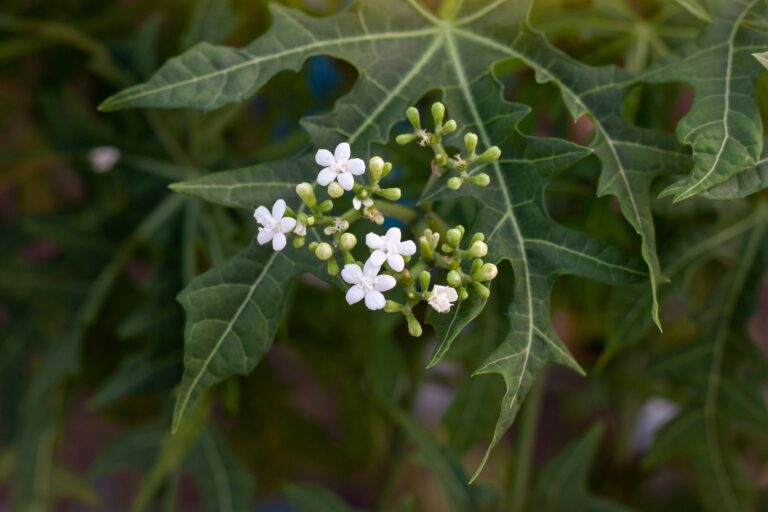
In my recent post on growing Chinese Water Chestnuts, I told you that I’d be back with a look at other good perennial vegetables for the home garden. Today we’ll look at chaya. The Latin name of chaya is Cnidoscolus chayamansa, and it’s also known colloquially as Mexican Tree Spinach. Some varieties have stinging hairs (my cultivar does not), some have deeply lobed leaves, and others have broad leaves (like the main type I grow) that vaguely resemble maple.
Other Alternative Names for Chaya
- Mayan Tree Spinach: This English term highlights its traditional use among the Maya civilization.
- Chaya Col, Chaykeken, and Kikilchay: These names are derived from the Mayan language, reflecting its deep cultural roots in the Yucatán Peninsula.
- Chicasquil: A name commonly used in Costa Rica, particularly in traditional dishes like Picadillo de Chicasquil.
- Tree Spinach: A straightforward English descriptor referencing its spinach-like leaves and tree-like growth habit.
- Cabbage Star and Tread Softly: Lesser-known English names that may refer to the plant’s appearance or caution due to its raw toxicity.
A few years ago, my permaculture-minded friend Craig Hepworth gave me a couple of cuttings, and I popped them in the ground. I was interested but not all that excited about a new green vegetable (I like roots and fruits!). About six months later, my chaya plants had grown to about 4′ tall, and I figured they could spare some leaves for the table.
Since chaya, like its cousin cassava plants, is slightly toxic raw, I fired up a pot full of water and threw in a fistful of freshly cut greens. I didn’t expect much when I pulled a limp mess of steaming greens from the pot and transferred them to my plate. But wow… they were good. Now I’d never go without at least a few chaya plants in my yard.
Some greens, like amaranth and Ethiopian kale, can handle some of the heat of summer: chaya thrives in it. Chaya’s problem comes in the winter. This plant originated in the tropics and simply can’t stand freezing. Since I live in North Florida, I worried about losing it in the cold the first year I grew it, particularly when the frosts came and I saw my plants wilt and the stems brown out.
The next spring, though, they were back – and happier than ever. New growth popped up in April and rapidly grew. At this time of year, I have plants that are about 6′ – and we’ve been harvesting leaves since June.
And that’s another thing – chaya produces greens like crazy. It’s considered to be one of the most productive leaf crops in cultivation. If you live further north than its natural range, chaya can be successfully grown in a pot and brought indoors as a houseplant during freezing weather.
I’ve found these guys to be quite tolerant of a wide range of conditions and soil. I’ve grown them in shade and in sun; in poor soil and in rich. They’re not picky. I’ve also cut stems and had them continue to live and even bud while lying in my greenhouse unplanted for months. That’s my kind of plant.
However, there are some precautions to take when handling chaya. Some varieties, like the spinach tree, contain stinging hairs that can cause skin irritation. Wearing gloves for harvesting is a good practice, especially if you’re unsure of the variety you have. Additionally, like cassava, chaya contains hydrocyanic glycosides, which means it must be cooked before eating to neutralize these compounds.
The best place to find chaya is to ask around among your friends for cuttings. If that doesn’t work, you can buy chaya cuttings here or search the web. Prices and varieties vary from site to site, and this isn’t really a plant that you’ll find in local nurseries, so thank God for the internet!
Something else that’s wonderful about chaya: the butterflies love the tiny white flowers it produces. We have a chaya bush off the side of our back porch, and it’s constantly being visited by a procession of zebra longwings. I don’t know what they find so attractive, but they’re always there.
As a part of the landscaping, chaya is an attractive tropical-looking plant with an interesting growth habit that I think would fit into almost any garden plan. I grow kale, collards, turnips, beets, and lettuce through the winter… but chaya gets us through the summer and early fall.
Try a taste sometime, and I think you’ll fall in love just like I did.
Chaya (Cnidoscolus aconitifolius) FAQ
What is Chaya?
Chaya is a fast-growing perennial shrub, often called tree spinach. Native to Mexico and Central America, it produces highly nutritious leaves that are typically used like spinach once cooked.
What are the health benefits?
Cooked Chaya leaves are packed with:
-
Protein, calcium, iron, vitamins A and C
-
Antioxidants and anti-inflammatory compounds
These nutrients support bone health, immune function, and energy levels.
Can you eat Chaya raw?
No. Raw Chaya contains cyanogenic compounds that can release toxic cyanide. Boil the leaves for 5-15 minutes to make them safe to eat.
How do you cook Chaya?
Boiled Chaya leaves can be added to:
-
Soups and stews
-
Egg dishes
-
Tamales
-
Smoothies (using the nutrient-rich cooking water)
Avoid cooking or storing Chaya in aluminum cookware, as it can cause a toxic reaction.
How do you grow Chaya?
-
Best in warm climates (zones 9-11)
-
Prefers full sun and well-drained soil
-
Propagates easily from stem cuttings
-
Drought-tolerant once established
-
Leaves are ready to harvest in 3-5 months
Are there different types?
Yes, common varieties include:
-
Smooth-leaf (Chayamansa)
-
Star-shaped (Estrella)
-
Rounded (Redonda)
-
Pointed (Picuda)
Each variety offers similar nutrition with slightly different leaf shapes and growth habits.
David Goodman‘s neurotic obsession with edible plants has led him to grow a variety of species that, by all rights, should be impossible in his climate.
All MOTHER EARTH NEWS community bloggers have agreed to follow our Blogging Guidelines, and they are responsible for the accuracy of their posts. To learn more about the author of this post, click on their byline link at the top of the page.