

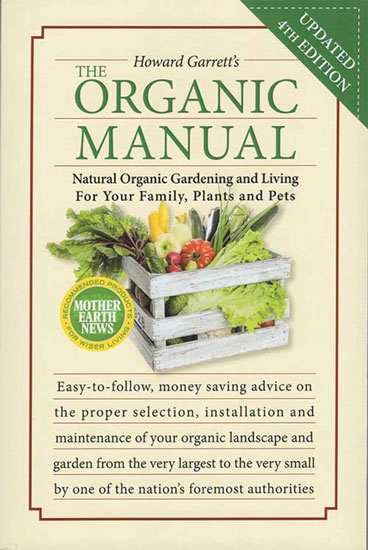
The Organic Manual: Natural Organic Gardening and Living for Your Family, Plants and Pets (Ogden Publications, 2016), by Howard Garrett explains in detail what the organic method is and how to do it. The book offers natural living advice and describes why the organic program is a better alternative to pesticides and chemical fertilizers. The following excerpt is from Chapter 1, “Introduction.”
You can purchase this book from the MOTHER EARTH NEWS STORE: The Organic Manual
Organic Programs are Better in Every Way
This book is about the fact that the natural-organic program works better in every way. It’s also about how to do the program properly so that it works like it should. Organics is the thoughtful and sensitive use of techniques and products that not only sustain, but also improve soil health, plant health and the environment in general. Synthetic chemical fertilizers and toxic pesticides hurt the soil and plants with every application and are therefore unacceptable to use.
The practice of growing plants using organic techniques has been used for as long as man has tilled the earth. Only since World War II has the world of agriculture and horticulture been changed by the introduction of toxic synthetic fertilizers and pesticides. The proliferation of these man-made toxic chemicals temporarily increased the yield of many food crops and ornamentals, but it also increased the long-term cost of production, caused pollution of our air and drinking water, changed the soil structure, accelerated erosion and jarred the entire ecosystem.
Earth’s fertile land has been depleted, and overall quality of production has decreased due to a dramatic reduction of the soil’s health.
Reasons for the continued use of synthetic products include a lack of understanding of how organic techniques work and the fear that, if chemicals are discontinued, plants won’t grow well and will be devoured by insects and diseases. The amount of money spent on synthetic chemical advertising and research at major universities is of no small consequence either. Many people simply don’t know that organic products work effectively and economically and are easy and fun to use. On the other hand, most folks don’t realize how dangerous and damaging harsh pesticides and synthetic fertilizers are, not only to themselves, but to the health of the planet. One of the best-kept secrets is that the organic program can and usually does save 40-50 percent on irrigation. This significant water saving alone should be reason enough to go organic.
Toxic Chemicals vs. Organics
It’s not a chemical vs. organics question. Everything is chemical. Even air and water are composed of chemicals, i.e. hydrogen, oxygen, nitrogen and carbon.
The words “chemical” and “organic” are equally misused and misunderstood. For example, there are products acceptable for use in an organic program that have low toxicity, but are not truly organic; and some organic products are extremely dangerous and not acceptable in a wise organic program.
The point is that the two words, “chemical” and “organic,” have become the passwords for the two philosophies. “Chemical” represents the university-taught approach of force-feeding the plants using synthetic fertilizers and trying to control nature using toxic synthetic pesticides, while “organic” represents the approach of working with nature to improve soil health and using only products that increase the chemical, physical and biological balance in the soil.
It’s a big misconception that organic methods are simply safer ways to kill pests. The basis of organics is an overall philosophy of life, not just a simple decision about what kinds of garden or farming products to use. The organic philosophy relates to the ability to see and understand nature’s systems and work within those systems. The chemical philosophy teaches that man and his products can control nature. But nature can’t be controlled. It’s really futile to even try. Many farmers have come to see that and they are now realizing that we must stop taking the carbon and the life out of the soil and the land out of production. The landscaping industry is also moving, although slowly, toward the organic philosophy, primarily because of the tremendous public demand for safer and more environmentally sensitive techniques and products. The biggest surprise is often the fact that organic programs actually save money.
Another difference in philosophy relates to fertilization. Traditional “chemical” proponents say that plants must be fertilized with a 3-1-2 or 4-1-2 ratio fertilizer four times a year. The organic philosophy contends that the soil should be fed and balanced and that plants don’t need to be force-fed. Balancing the soil is not discussed very often, if ever, in the synthetic chemical programs. The synthetic fertilizers are never really balanced. They have a poor compliment of trace minerals and no organic matter or carbon.
The balance of chemistry, physics and biology is the key. If the soil is biologically healthy, the physics and chemistry will also be in balance. The pH will be between 6.2 and 6.5 and the soil will be alive. In healthy soil calcium will represent approximately 60-70 percent of the available chemical nutrients, magnesium 10-20 percent, potassium 2-5 percent, sodium .5-3 percent and all the trace elements should be in their proper relative proportions.
Another advantage of balanced soil chemistry is that fertilizer inputs can be greatly reduced. Once the soil is balanced properly, the maintenance of plants can be done primarily with mulches, compost, foliar feeding, and an occasional application of carbon based natural organic fertilizers.
A chemically, physically and biologically balanced soil will have proper tilth, positive drainage and the correct populations of living organisms. All you have to do is stop killing the life in the soil with the quick-fix poisons. The end result is healthy plants, animals and people.
Reversing the Chemical Addiction
There are two major soil pollutants – unbalanced, high-nitrogen, synthetic fertilizers and toxic pesticides. Synthetic fertilizers are the most common chemicals used in farming, gardening, and landscaping. These man-made fertilizers are merely soluble salt compounds, usually found in granulated form, and are relatively inexpensive. Synthetic fertilizers provide nothing to benefit the soil; in fact, they leave considerable amounts of salt residue and other contamination. Their most serious flaw is the lack of carbon.
Since the plants will not absorb large quantities of salt, continued use of salt-based fertilizers can lead to loss of plant quality, loss of productivity, and, in extreme cases, phytotoxicity (poisoning of the plants). These fertilizers repel and kill beneficial soil microorganisms and earthworms, they are harsh and interfere with the natural chemical, physical, and biological systems in the soil, and they feed plants too fast with an incomplete diet. High levels of nitrates, which are created by synthetic nitrogen fertilizers, are carcinogenic and frequently show up in our drinking water.
Because of the overuse of high-nitrogen fertilizers and the plant’s inability to use large amounts of nitrogen, the excess is simply leached or washed away and ends up ultimately in our streams, lakes, and aquifers. Some of it volatizes into the air and adds to air pollution.
Pesticides are the second most common chemicals applied to plants and soil. Pesticides include insecticides, fungicides, herbicides, rodenticides and any other poisons used to kill plants or animals. Toxic pesticides disturb or destroy the biological activity of the soil. Pesticides will also affect plant growth, and, when absorbed by the plant, begin passing through the food chain. All living organisms are affected – microorganisms, insects, animals, and people. If used too often at excessive rates, pesticides can virtually sterilize the soil if leaching does not occur and of course the leaching causes other problems.
When pesticides are leached out of the soil, they end up in streams or ground water, available to enter the food chain again. Huge amounts of toxic chemicals are used on home lawns and agricultural crops, making the use of chemicals a serious problem in urban as well as rural areas. Insects and diseases get blamed for the use of these toxins, but the pests are not the problems, only the symptoms of the problems. The real problem is poor soil health, and that problem is increased with each application of toxic chemicals. Chemical programs create a drug dependency and, unfortunately, they have controlled mainstream agriculture and horticulture since World War II.
The damage to our soil’s health can be reversed by returning it to a natural balance. Those of us in the landscape industry and the agriculture industry must take the lead, but homeowners must also get involved in reducing and ultimately eliminating the toxic chemicals we dump into our environment. Besides being dangerous, they aren’t necessary. The organic method works better.
Years ago, J. I. and Robert Rodale began the organic movement in the United States using the studies and writings of Sir Albert Howard of England and Dr. William A. Albrecht of the University of Missouri. Rodale convinced many home gardeners and some farmers to add humus to the soil through organic matter and minerals through natural rock powders to improve the health and nutrition of food crops. The idea was quite simple: healthy soil produces healthy plants; healthy plants produce healthy animals and humans. It’s possible that the simplicity has been one of the major roadblocks. How could something so simple work? Another powerful obstacle has been the concern, “How are we going to make money?”
The purpose of this book is to explain how the natural organic method works and what products are best to use in a complete organic program. The goal is to convince you to use organic method on the farm, the ranch, in landscaping and in greenhouse operations.
You will learn that organic land management offers reduced long- term costs and liabilities and creates and maintains a safe, healthy environment for all concerned.
Food crops grown organically are a critical ingredient in eliminating disease. The elimination of pesticide residue is important, but not the most important issue. Health is the primary issue, and real health comes from eating food containing a proper balance of mineral nutrients, antioxidants and energy. Healthy food can only come from healthy soil.
More from The Organic Manual:
• Gardening and Landscaping Using Organic Farming Methods
Reprinted with permission fromThe Organic Manualby Howard Garrett and published by Ogden Publications, © 2016.





