Photo by Monte Larson
Six a.m. The thermometer reads 18 degrees. Quaking aspen leaves whirl in a gust of wind. Frost laces the pasture. We begin our morning work in the garden, which just a few weeks ago boasted an abundance of crops. Now many annuals have died. Perennials have gone dormant. Yet, much of our garden still thrives.
Before becoming homesteaders, we accepted the notion of short-season gardening. Based on the USDA hardiness zone map, the growing season in our area extends from late May to mid-September. Beyond that, we assumed the only way to garden involved greenhouses or cold frames.
Our first few years on the homestead, we spent several weeks each fall bottling, drying, freezing, and storing. In addition to all our other tasks, we became overwhelmed. In order to make this way of life sustainable, we needed to adjust how much time we allotted to processing food.
We still put up crops for the winter. Few aspects of our DIY life are more satisfying than the products of food preservation: mason jars filled with peaches and pears, dried lemon verbena, rehydrated tomatoes in a winter stew. Yet, over the years, we’ve become more selective about what and how we preserve. The main questions we ask ourselves are how much we enjoy the preserved product and how much time we’re willing to invest in the process.
Our favorite produce is seasonal and fresh. So we began questioning how to extend the season. Once we tried placing repurposed planters over tomatoes each night to keep them from freezing, but we didn’t enjoy using plastic in the garden. Another time we tried surrounding seeded beds with bales of straw, and then covering them at night. That worked, but required more labor than we had to spare. Eventually we discovered cold and frost-hardy crops. We tried to grow some. Much to our delight, we succeeded.
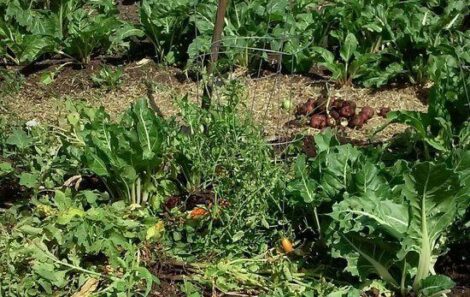
Now, on this cold November morning, the following edible plants continue to thrive: Brussels sprouts, cabbage, carrots, celery, collards, chard, horseradish, kale, lovage, mint, parsley, parsnips, potatoes, sage, rosemary, and sunchokes. So far this fall we’ve harvested nearly one hundred fifty pounds of organic produce in addition to the five hundred pounds we harvested in summer and spring.
For the past several years, we’ve eaten chard, collards, kale, parsnips, and sunchokes directly out of the garden well into winter. Brussels sprouts taste better after a good frost, so we’ll wait a while before harvesting them. (We would wait until winter but for deer.) This is our first successful year growing cabbage. We harvested a head in September, which was bitter and tough. A few weeks ago, we harvested several more, which were tender and sweet. No doubt, the colder weather and additional growing time improved them.
As for sunchokes, we look forward to our ritual of digging through snow to unearth these fabulous tubers. But for now, we spend the morning pruning asparagus fronds, amending the soil, and covering the bed with a layer of straw. We also cover the garlic bed, which we planted last week.
Then we move on to raking and placing the leaves in the garden as mulch. Since we do all of our work with hand tools, this process takes several hours. The physicality of it stimulates hunger. 11:00 a.m. The thermometer reads 40 degrees. We pinch off a handful of sage leaves, bake potatoes, and gather eggs from the coop. We poach the eggs and sauté the leaves until crisp. We savor our garden-fresh meal.
All MOTHER EARTH NEWS community bloggers have agreed to follow our Blogging Guidelines, and they are responsible for the accuracy of their posts. To learn more about the author of this post, click on their byline link at the top of the page.