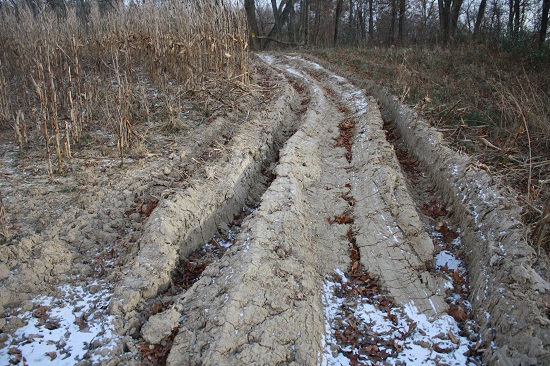
There is nothing more magnificent than a walk through a forest untouched by chainsaws. Conversely, there is not much worse than trekking the fresh remains of a timber where loggers disrespected a property and left it in a torrent mess. However, depending on a landowner’s end-game, logging can be very beneficial if it’s done right.
Knowledgeable farmer-landowners consider timber a marketable crop no different than their grain fields; they benefit greatly from its cyclical income as well as the cover treetops provide for upland game. Unfortunately, many timber owners, especially those of absentee-owner status, become the prey of unscrupulous loggers.
Fly-by-night outfits routinely go door to door with offers sworn to be “top dollar.” Even many long-established buyer/loggers have been known to talk landowners into “high-grading.” This is the total harvest of all large, valuable trees with no regard for the future regeneration of the forest. The timbered landscapes of many clueless, trusting property owners have literally been raped and ruined by deceptive loggers.
Considering the continental distribution of this magazine, it would be impossible to address the diverse TSI possibilities which would benefit individual landowners and their efforts with quality woodland and wildlife management. Therefore, it is this blog’s goal to present some thought-provoking advice for helping landowners be more conscientious guardians of their forested lands. Whether you own 5 acres of timber or 5000, whether you own a white pine forest or low ground covered in softwoods, and regardless of where your property is within the MOTHER EARTH NEWS outreach, your pocketbook and wildlife can benefit greatly by the enhancements of a well-managed forest.
How to Develop a Sustainable Forest Management Plan
Don’t rush into a timber plan. First, ask for the guidance of a regional wildlife biologist before contacting a forester. This is a free service provided by state and federal natural resources agencies and agricultural extension bureaus. These conservation advisers are in high demand, so do not expect an immediate on-the-scene response. Call and set up an appointment and patiently wait your turn.
List your top three property goals by priority and send them with an aerial photo of the timbered tract to the wildlife biologist before your first meeting. Example goals:
1. Create better deer bedding without affecting the property’s turkey and quail numbers.
2. Generate an ongoing income.
3. Enhance my family’s recreational value with trails. An experienced wildlife professional will thoroughly walk the property and make verbal suggestions followed up with a written blueprint.
Write down timber and wildlife management questions relevant to your property before the face-to-face meeting with the biologist. For instance:
1. What can I do to increase the number of deer on my property?
2. Would more nut-bearing trees be beneficial for future income?
3. What can be done to create a more diverse habitat for birds within my forested acres? The only dumb question is one that is not asked.
After you have gotten the advice of a wildlife biologist, it’s then time to enlist the advice of a forester. After picking the brains of the biologist, you will not be prone to ask the forester questions about wildlife. This would be similar to questioning a heart surgeon about dentistry. Avoid pitting one professional against the other with he-said, she-said second-guessing games. Rather, settle on your wildlife priorities first and then outline them to the forester.
Enlist the help of a professional forester. The best advice that can be given to any timber owner is to enlist a professional forester to assist with a long-term strategy for their property. Without the counsel of an experienced arborist, most landowners fail miserably at all aspects of log sales and timber stand improvement (TSI). Candidly, forest management is a craps-shoot without a specialist’s knowledge about regeneration, tree diseases, soil types, growth rates, log values, board-footage estimates, invasive plants, and understory potential.
Some state and federal agencies offer the complimentary services of a forester. The extent of their assistance differs from state to state and even district to district within a state. The degree of forestry counsel by any state or federal agency usually depends on the manpower available during any given year. These agencies may offer free timber assessment and planning only, or provide the full-meal-deal of consulting, marking of trees, acquiring sealed bids, and overseeing the cutting.
The following true story will further emphasize the difference between trusting a buyer/logger and hiring a professional forester. In 1997, a retired engineer received an unsolicited offer of $70,000 from a local timber buyer for the harvest of logs from his 200-acre forest. Suspicious that the bid might be low, the engineer hired a timber management consulting firm to selectively mark his timber. 40 percent fewer trees were cut, which greatly preserved the land’s aesthetic and regenerative value. The consultant requested competitive, sealed bids for a lump-sum offering of the timber. The engineer received a check for $249,000, or $179,000 more than originally offered by the shyster.
Even as I write, landowners are accepting rock-bottom offers from timber-exploiters rather than taking the time to approach timber management as a serious business, one that can put thousands of extra dollars in their pockets. The elderly, absentee landowners and new property owners are usually the ones targeted in log-buying scams. And all too often the buyer hires an independent cutter/hauler and offers the seller more money if they can wait until after the log sale. These scam-artists have been known to fall of the radar post-sale, leaving the seller with no payment and a devastated forest.
State and U.S. natural resources conservation services budgets and manpower have been lackluster over the last decade. Therefore, if you own 100 acres of timber or more, it is advisable to forego free assistance and hire a private forester. This often saves time and the frustration of dealing with an overburdened agency. Governmental programs sometimes have matching funds and grants available for landowners who hire private foresters, so be sure to check.
Private Forest Consultants
A list of your state’s private forest consultants can easily be obtained by Googling “(state) Foresters.” Consultants offer services that range from one-day timber assessment to writing and overseeing a full-blown TSI plans. One-day assessments are usually done on a per-hour or per-acre basis, and the charge for writing and overseeing a complete TSI plan depends on whether there is log sales involved.
Initially, a forestry consultant will establish the exact boundaries of the property and inspects it to determine the forest’s composition, present and future log value, and overall condition. After presenting a verbal assessment to the property owner, the consultant will assist the landowner with long-term TSI goals. The finalized, written plan may include any combination of the following: an immediate marking and sale of mature trees; the marking and systematic thinning of unwanted, diseased or crowded trees; a clear-cut of defined areas followed by replanting of more desirable trees; an understory burn-off; a spot-specific chemical kill-off of an undesirable understory or invasive species; and pruning of trees to increase their future value.
If the owner elects to sell mature timber, a consultant will request multiple bids from buyers. The consultant then matches the high bid against his estimated board-footage value of the selected trees. An owner may have considerably more value than suspected…or less. It will depend on tree grade (from pallet to veneer grade). Veneer logs are by far the most valuable. Single walnut trees of the right stature can fetch $5,000.

A conscientious forestry consultant will oversee the cutting to ensure process integrity. Though most loggers are honest and hardworking, many have been known to cut unmarked trees, litter or steal onsite property. So when the cutting is complete, be sure that you do a once-over of the property.
As a rule, consultants charge a percentage of log sales for their services. This can run from 3 to 10 percent depending on the tract size and the number and quality of logs. This percentage is more negotiable when log value is high. If there are no log sales, consultant may charge by the hour or by the acre. Be sure to get an upfront estimate.
It is even more crucial to implement a TSI plan if a forest was logged before your ownership. Again, start the process with the advice of a wildlife biologist. Timber owners should consider that it’s their utmost responsibility to protect a wonderful, renewable resource that mankind cannot do without. Forests that are mismanaged may not recover in the owner’s lifetime.
All MOTHER EARTH NEWS community bloggers have agreed to follow our Blogging Best Practices, and they are responsible for the accuracy of their posts. To learn more about the author of this post, click on the byline link at the top of the page.