Often when writing about life in the mountains and living in a remote area I have mentioned that it is wise to be prepared for the unexpected. That is especially true in the springtime when the weather can change on a moments notice at the most unexpected times. For the past few weeks the temperatures have been in the 60’s and the snow had melted away and the wild grasses had started to turn green. My garden had been planted, seeds were in the ground. Nights were cool but not near freezing. Migrating birds had arrived and hummingbirds were swarming the feeders. All the signs of springtime were evident and were so prevalent that I had removed the snow thrower from the tractor and taken it in for repair believing that winter was finally over.
Be Prepared
Then on May 12, we had that sudden unexpected cold front with accompanying 26” of fresh wet snow. Garden boxes and flower beds were covered with a thick layer of heavy snow. Rhubarb plants that had started to unfold their leaves were under containers to protect them from the temperatures that dropped into the teens. Nothing makes the point better about remaining flexible than the sudden changes that happen during springtime in the mountains. The storm moved in suddenly and was gone just as suddenly two days later leaving over two feet of heavy wet water laden snow. When I was younger and in the Boy Scouts the motto was “Be prepared”. That especially applies when you are living in the mountains in the spring time.
Saving a Garden
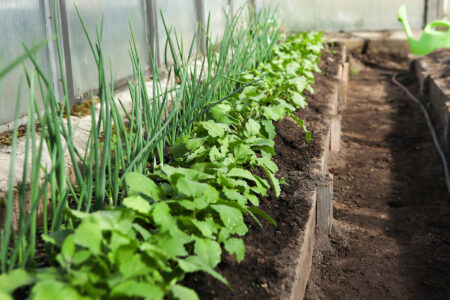
One of the requirements of gardening at high elevation where the soil is rocky and there are many critters like voles, mice, chipmunks, moles and squirrels is to have fully enclosed raised garden boxes with ½” hardware screen on all sides including the bottom. Also because the sun is so intense at 9,750’ elevation I use gardening screen that filters out 50% of the intense sunlight. In sudden and unexpected snow storms the black garden screen allows the finer snow to sift through the top and collect underneath serving as insulation for the seeds. The heavier snow on top then actually serves to slowly water the garden for the next several days as it melts. The garden screen was an unforeseen benefit since it actually helps protect the seeds during severe weather changes like snowstorms or hail.
Trial and Error
Not everywhere do gardeners have to deal with extreme temperatures like here in the mountains. It has been through trial and error that I happened to reach this workable solution. While on occasion we get significant snow storms through June it can be difficult to grow a garden at this altitude and with unpredictable weather. The actual growing season is very short and if we want to reap a suitable harvest we need to plant early risking the sudden changes in weather. By using ½” hardware screen on all sides of the garden box I am able to keep the varmints out and by putting the filtering screen on top of the box it actually reduces my labor when we receive a late snow. This combination has evolved to a very workable solution considering our ever changing weather conditions. I have been able to plant my garden as early as the first of April some years with this arrangement. If the seedlings do happen to come up when we expect severe weather I then place a sheet of plastic over the filtering screen and that preserves the new seedlings.
Some Vegetables Are Hardy
We have found that some vegetables are more hearty than others. I have actually had spinach plants survive the snow and ice of the winter to pop right up again in the springtime. That is not anything I would count on every year but it has occurred on occasion which speaks of the toughness of spinach. I try to plant the spinach and Swiss chard seeds in the fall before it starts to freeze. That way as soon as the ground warms up in the spring they will germinate and can survive our cooler nights. Normally our growing season only lasts 3 months and then the temperatures become too cool at night and the days too short to keep the garden going. This limits the variety and type seeds that we can plant because many do not reach maturity until 100 days or more.
Mountain Gardening
While having a garden in the mountains can be a challenge it is also rewarding to be able to have fresh vegetables on hand when the grocery store is so far away. Even when placing earth boxes on our raised deck the birds and chipmunks seem to find them and manage to get in and destroy our vegetables before we can pick them. We have tried screening but they seem to always find a way around the barrier. Ground squirrels are possibly the most destructive and harmful and are bold enough to come right up on the deck for a meal. In order to harvest some of our raspberries, which grow too tall to cover with screening, we found that planting current bushes and gooseberry bushes in the natural critter run detracts the varmints long enough to harvest a quantity of raspberries. Even though we have 11 acres our garden location is very limited due to the slope. If we locate it further away from the house it is ravaged by deer and elk so we grow up close to the house which usually works for us. The gooseberry and current bushes intercept the small critters effectively. Trickery at its finest and I’m not having to hunt down chipmunks and ground squirrels through out the summer. Perhaps not very sophisticated but quite effective and it requires us gardeners to always be on our A game.
For more on Bruce and Carol McElmurray and the challenges of mountain living go to:www.BruceCarolCabin.Blogspot.com