

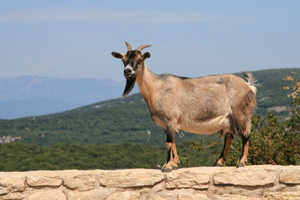
Before you buy any dairy goat, isolate the animal … then [1] check her up close, [2] stand back and take a long, hard look at her overall appearance, [3] watch the doe (from the front, side, and rear) as she walks, and [4] go over all the points on the following list. If the nanny falls to meet two or more criteria, consider her a waste of money … no matter what a “bargain” she may be. To learn more on how to buy a good dairy goat, read MOTHER’s article “Finding the Best Dairy Goats.”
UDDER:
_______a. Well formed (not low-hanging)
_______b. No indication of mastitis, both sides producing
_______c. No double teats’
_______d. Easy to milk
BODY:
_______a. Deep abdominal cavity
_______b. Long torso
_______c. Wide ribs
FEET AND LEGS:
_______a. Straight, strong legs
_______b. No indication of lameness
_______c. Strong pasterns
_______d. One-hand-width separation of front legs
GENERAL APPEARANCE:
_______a. Shiny coat
_______b. Good weight in proportion to size
_______c. Bright eyes
_______d. Pleasing personality
OTHER CRITERIA:
1. Doe kid. Purchase only if either a half sister by the same sire, full sisters, or the kid’s mother is available for your inspection. (The related animal must — of course — meet all the above criteria.)
2. Virgin dry doe. Purchase only if the doe is under two years of age and meets the above criteria.
3. Bred doe (dry or milking). Must come with a written guarantee of pregnancy and a service memo signed by the owner of the buck, if the buck is registered.
4. Lactating doe (of any kind). Witness two consecutive milkings. Minimum daily production for a first freshener (up to three months fresh): three quarts. For second through sixth freshenings, the minimum daily amounts allowable are: four quarts if fresh less than 3 months, three quarts if fresh 5 to 6 months, two quarts if fresh 7 to 8 months, and one quart if fresh over 9 months.





