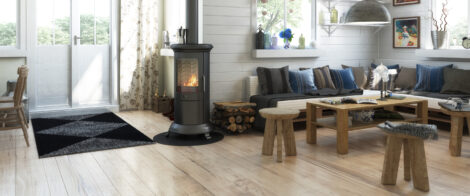
Fireplace
Fireplaces are very inefficient heating systems. To get the most out of yours, you should remember several tips:
- An open or missing damper can allow as much heat to escape as an open door does! Close it whenever the fireplace is not in use.
- Carefully close the damper down as far it will go while maintaining sufficient draft. The wood will burn longer.
- Consider adding a hollow-tube grate. This device picks up cold air at baseboard level, warms it as it passes through the firebox, and then sends the warmed air back into the room. Some models even sport an electric blower.
- A great amount of heat is lost after an evening fire, when the damper must be left open to let out smoke. If you often burn the midnight wood, try covering the fireplace opening with a sheet of aluminum to cut off the flow of warm air escaping up the chimney. Or consider adding glass doors, which allow you to watch the fire without any heat loss.
- Clean your chimney at least once a year, more often if soot and creosote build up.
Hot Water Radiator
- First, dust or vacuum your radiator (and repeat frequently during the season).
- Then, “bleed” any trapped air in your unit. Use the knob at the top of the radiator or a key (available at hardware stores) to open the valve. Keep it open until hot water spurts out. It will be hot and should be caught in a bucket. Then close it securely. Should any of your radiators run cooler than normal during the winter, bleed them and allow the unit to refill completely with water.
- Never put a box over your radiator. Nothing should block the flow of heat.
- Build a radiator reflector to keep heat from escaping through the wall or nearby windows. While these reflectors (made of thin bubble-pack with an aluminum backing) are fairly cheap and available from hardware stores, it’s easy to make your own. Cut a piece of cardboard slightly larger than the wall space behind the radiator. Cover with aluminum foil; then fasten behind the radiator. Whether you buy or build your own, take care that the reflector doesn’t touch the unit itself or heat will be reflected into the walls instead of the room.
Steam Heating System
- Replace any air vents that aren’t working. To check, warm the system up and listen as the air comes out of the vent. You should hear a click, after which the air will stop rushing out. Or, unscrew the vent when the radiator is cold and blow through it. Install a new vent if you can’t blow through it or your radiator doesn’t “click” off.
- Dust or vacuum radiators frequently.
- Don’t cover radiators or block their air flow.
- Prevent sediment build-up in your boiler. Once or twice a month drain half a bucketful of water from the low water cut-off valve (looks almost like a faucet and is usually mounted near the bottom of the boiler with a piece of hose attached to it). Once you have drained off the sediment, open another valve located near the ceiling to let water flow to the boiler. It is important that you add enough water to keep the level adequate to fill the boiler jacket, usually shown in the glass type (sight glass) as its midway point. Do not add too much water at any one time if the unit is on; sudden temperature change can crack the boiler.
Warm Air Heating System
- Replace your air filters and change them again every one or two months.
- Move furniture and rugs away from registers. That breathtaking room arrangement can be redone next spring.
- Check the dampers within the supply ducts coming from the furnace. Make sure that each is adjusted to provide even heat throughout the house (more to frequently used or drafty areas like a front living room, less to well-heated places like interior second floor bedrooms). To do this, position handles on the side of each duct near the furnace to the desired heat flow.
- If your system is gas-fired, remember to turn off the pilot light next summer, using the pilot control knob (don’t blow the light out). If you don’t know how, ask your heating system service company.
To save even more energy around the house, try these do-it-yourself projects:
Insulating Pipes and Heating Ducts
Types of Caulk and Where to Use Caulking