It’s a new year, the traditional time for self-improvement
resolutions. My resolution last New Year’s was to eat a salad from my garden
every day, and it was a more successful resolution than most. Except for
mid-summer, when scorching temperatures burned up most of the garden, we were
able to pick salad greens every week from the garden or our hoophouses. Not to
brag, but we had a pretty impressive ingredient list for our Christmas Day
salad; you can see photos here.
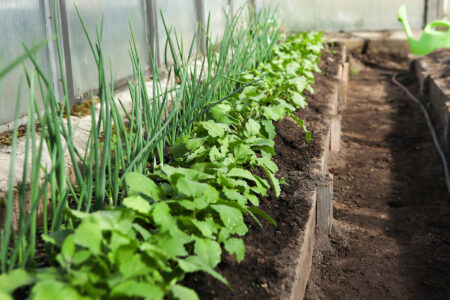
We’ve been growing in unheated hoophouses for a decade now, and
we can’t recommend them highly enough for commercial growers. If you have any
dreams of market farming, the first thing you should buy is a hoophouse. It’s
quite amazing what a single layer of greenhouse poly on hoops can do to create
the perfect growing environment. We can grow year-round in Kansas, Zone 5, and
we get much better yield and quality from hoophouse vegetables.
Even if you’re not inclined toward market gardening, you can
still have all the benefits of a hoophouse in your home garden. Home-built high
tunnels and low tunnels are inexpensive and will easily pay for themselves in
one season.
I put the pencil to a theoretical fall/winter low tunnel garden
that would feed a family of four. I assumed it would be planted in September
and would produce enough veggies for dinners for two to three months. For
example, I figured you might feed your family broccoli twice a week; you could
each eat a pound of carrots per week; and you might use 3 heads of lettuce a
week. Altogether, I assumed you would grow a dozen kinds of vegetables that
like cold weather: beets, broccoli, cabbage, carrots, cauliflower, endive,
kale, lettuce, onions, radishes, spinach, and turnips.
I calculated the yield of my winter vegetable low tunnel (using
the seeding and yield chart at Johnny’s Selected Seeds) and
estimated the cost of buying that amount of produce at $3 per pound. The
result: $500 worth of food from a $250 investment in just four months’ time
from planting to end of harvest.
This theoretical low tunnel covers two 50-foot-long beds, each
bed 4 feet wide. You can plant three rows in the bed, for a total of 300 linear
feet of veggies.
To learn more about growing in hoophouses and low tunnels, I
recommend these resources:
Hoophouse Handbook and Update bundle from
Growing for Market provides a comprehensive overview of how to buy, build, and
grow in unheated hoophouses.
Winter Harvest Handbook by Eliot Coleman.
Farming in coastal Maine, Coleman uses many types of season extension
structures including unheated hoophouses to grow year-round.
Hoop House How-To from the Kerr Center shows
how to build a low-cost hoophouse.
Johnny’s Selected Seeds sells pipe benders to make the correct
shape hoops from locally available materials. You can watch a Video about building a low tunnel with the
QuickHoops Bender and download an excellent 12-page illustrated manual about building low tunnels.