Photo by Getty Images/alicjane
Growing Garlic from Planting to Harvest
There are two main types of garlic: hardneck and softneck. Hardneck varieties are more tolerant of cold winters, and they produce flower stems known as scapes. The scapes are edible, and removing them will divert energy into the bulbs to help them grow bigger.
Softneck varieties don’t produce scapes but they will store for longer.
Planting Garlic
Plant garlic into rich, free-draining soil in a sunny position in the fall. To find out the best times to plant in your area, check out our Vegetable Garden Planner which will provide recommended planting and expected harvesting times for plants your garden.
Carefully break apart the garlic bulb and plant each clove, pointy end up, about 6 inches apart. Leave twelve inches between rows. Cover them with soil so that the tips of the cloves are just below the surface.
Birds may pull the cloves up in winter. If this happens, simply replant them and pop a row cover or netting over the top to prevent it happening again. In very cold regions, plant the cloves in plug trays under cover then plant them out in spring. If you’re growing your garlic in containers, use pots that are at least eight inches wide. Plant the cloves 4 to 6 inches apart.
Growing Garlic
Garlic is very easy-going. Water them if the weather is dry (especially if you’re growing in containers) and keep them well-weeded. Grass clippings or other organic mulches, laid during the growing season, will help to feed plants and keep the soil cool and moist.
Harvesting Garlic
Harvest garlic with a fork or trowel when the leaves have begun die back in summer. The bulbs will then need to be kept somewhere warm and airy to dry out. Once they’re dry, brush off any soil, cut off the leaves, and store them in a cool, dry place on racks woven into a braid. Garlic bulbs will store for months.
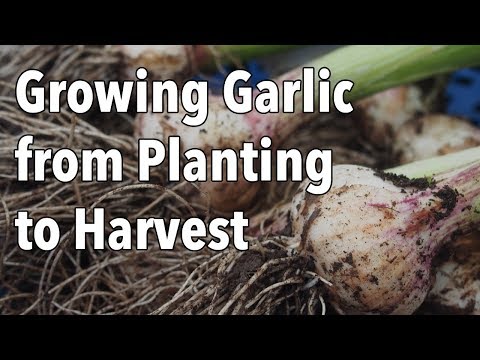
Learn more about growing garlic in this video.
Get More Tips With These Great Gardening Resources
Our popular Vegetable Garden Planner can help you map out your garden design, space crops, know when to plant which crops in your exact location, and much more.
Need crop-specific growing information? Browse our Crops at a Glance Guide for advice on planting and caring for dozens of garden crops.
More Videos
Watch more videos on gardening techniques and other self-reliance, DIY topics on our Wiser Living Videos page.