“Do you sell black garlic?” I have been asked this question with increasing frequency over the last few years. Although black garlic has enjoyed a moderate level of popularity in North America, many people are unfamiliar with it, and even fewer have tasted it. Rich in both flavor and antioxidants, black garlic increasingly can be found in gourmet food stores and restaurants, and in addition, is readily available from online retailers.
The exact origins of black garlic are unknown and somewhat controversial, but it has been produced and used for centuries in various parts of Asia, including Korea, China, and Japan. In addition to being enjoyed as a delicacy in its own right, black garlic was, and still is, used as an ingredient in traditional Asian medicine. In North America, the emphasis is on enjoying it as a culinary delicacy, where it is prized for its rich umami contribution to dishes.
What is Black Garlic?
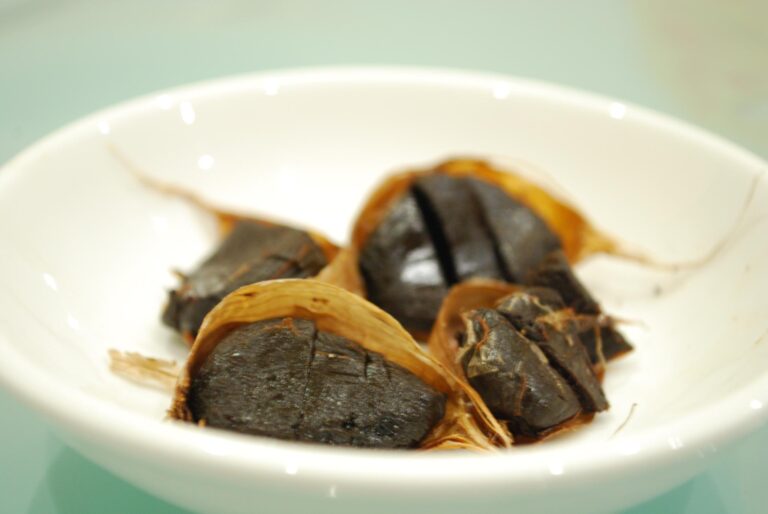
Black garlic is so named because of its matte-black, charcoal-esque appearance. The color change is caused by the combination of sugars and amino acids through a process known as the Maillard reaction, which produces a brown-black polymer called melanoidan. Melanoidan is produced gradually and evenly throughout the garlic, giving the cloves a deepening brown and eventually the characteristic black color. Clove texture also changes, from firm and crisp to a soft and almost jelly-like consistency.
How does black garlic compare to fresh, raw gourmet garlic in terms of health benefits, taste and culinary use? When aliinase is broken down during conversion, a product of the process is S-allycysteine. This water-soluble, and thus very readily absorbed, amino acid is believed to function as an antioxidant by protecting cells from free-radical damage. S-allycysteine, which is present in greater amounts in black garlic than in raw, is also currently thought to help lower cholesterol levels.

What Does Black Garlic Taste Like?
The natural breakdown of the sugars produces a radically differently tasting and textured garlic. Spicy, sharp and pungent raw garlic flavor evolves into a more complex umami taste that is both sweet and savory at the same time. The flavor is often likened to balsamic vinegar, molasses and even fermented black beans. A garlic undertone is still discernable, however it has developed into a much mellower, slightly tangy flavor. Black garlic also undergoes enough changes in its composition that the compounds that cause the pungent odor and bad breath associated with normal garlic disappear, increasing its popularity as a gourmet item.
Black garlic is available as whole cloves, dried, and as a paste. Given the time-consuming process required to produce it, it can be more expensive than other garlic products. Don’t be shy about buying black garlic if you are able to find it, however – it can be enjoyed raw or cooked, and is versatile enough to be enjoyed on its own or as a component of a variety of dishes. For example, it is an excellent ingredient in stock, imparting a rich depth of flavor and providing an excellent base for sauces. The dried powder can be used as a flavoring in salad dressings, and the paste as a delicious spread on its own.
One word of warning: The black garlic, especially if you are using a powder, will impart some of its black color to your dish, which some people may find off-putting. If you have been lucky enough to get hold of some back garlic and are wondering what to cook with it, try our roundup of recipes.
How to Make Black Garlic at Home
Black garlic is commonly referred to as “fermented” garlic, but given the absence of microbial metabolism, this is somewhat inaccurate. Rather, the color, flavor and texture of black garlic are due to enzymatic breakdown, from the slow conversion of the natural sugars in the garlic over time. Nothing, including preservatives or flavorings, is added to the garlic, as all the required sugars are already present inside the cloves.
To produce black garlic, whole bulbs of raw garlic are placed into a sealed container. The container is then placed into a vessel in which the heat and humidity can be controlled. Clay pots, and – more modernly – dehydrators, pressure cookers and even ovens can all be used to create black garlic. Keep bulbs at a moderate heat — approximately 60°C/140°F — for up to six weeks, allowing the sugars ample time to convert.
After the conversion is complete, the garlic can be enjoyed soft and fresh or left unsealed to further mature through oxidation and dehydration. This last step is essential if a dried product such as garlic powder is being produced. Fully processed black garlic can last up to two years in an airtight container and cool, dark storage area.
Andrea Cross grows gourmet garlic at her farm, Calling Quail, in British Columbia, Canada. She attended university and trained as a scientist in the UK before returning to Canada in early 2011, where she started farming garlic two weeks later on her family land.