

Did you know that the roof of your house could probably supply you with all the electricity you’ll ever need, and keep your car running without any fossil fuels? Many of you probably have envisioned photovoltaic solar panels capable of such feats while thinking that their practical manufacture is ten or perhaps even 20 years down the road.
Well, I’ve got good news for you: the solar home of the future is here now. On May 29, 1980 an entirely solar electric house was completed by John F. Long Homes of Phoenix, Arizona. And that structure is only the beginning. Many other such residences are now being built to produce a surplus of electricity during the day. Enough of an excess, in fact, to charge the batteries in an electric car or to be sold to the power company, offsetting any commercial “juice” the homeowner may use during non-daylight hours.
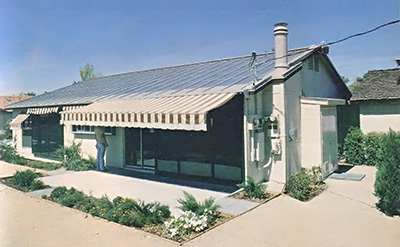
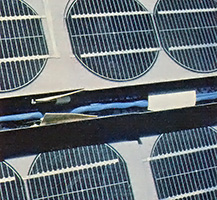
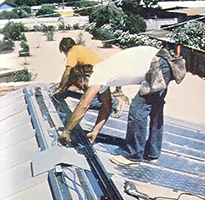
My wife and I were anxious to see Long’s dream house for ourselves, so we took a trip to Phoenix. The home we visited was a modest, conventional-looking building, but was completely equipped with all the electrical appliances found in other residences in the area including air conditioning. In fact, the only visible difference between that dwelling and the neighboring homes was its south-facing roof, which was covered with 7,200 four-inch photovoltaic cells wired together to produce over 6,000 watts of direct current (DC) electricity, which is then converted into standard alternating house current (AC) by an inverter that’s about the size of a TV set.
Get a Check Instead of a Bill From the Power Company
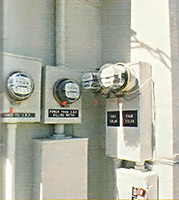
Any extra electricity produced, above and beyond what’s needed by the solar home’s residents during the day, is fed back into the utility company’s powerlines as credit toward the purchased wattage used when the sun isn’t shining. Two electric meters are employed: One records the amount of power coming from the utility into the house. The other registers the surplus solar power going to the electric company for credit. During its first near-year of use, the initial home has sold two kilowatts of electricity for each one kilowatt it buys from the utility. In effect, it’s a small power plant!
When we visited the Phoenix area last summer, the temperature was a sizzling 104°F, but the thermostat inside the solar electric abode registered a cool 68°. The air conditioner was working hard, yet as indicated by the meters there was still a plentiful daily flow of power going back to the utility company for credit.
The local electric plant, known as the Salt River Project, is cooperating in this effort in order to evaluate the compatibility, quality, and control problems (if any) associated with the solar power being fed into its lines. If the project proves successful, a large number of similar installations supplying electricity to the system during the day would help to offset “peak loads” … those periods when air conditioning use is greatest. After all, the heaviest demand for electric cooling occurs during the sunniest part of the day, and that’s also the time when solar cells are operating at top efficiency!
More Homes Are Planned … With Vehicles to Match!
John F. Long has plans to build an additional 100 units like the first one. Folks who buy Long’s homes will also have the option of purchasing an electric vehicle, which can then be regularly recharged by surplus power from the home’s solar electric cells!
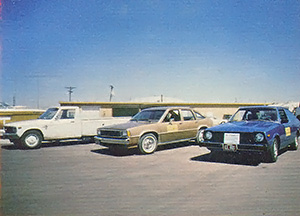
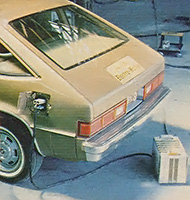
At present there are three car models available for conversion from gasoline to electricity. They are a Datsun B310 sedan, a Chevrolet Citation, and a Chevrolet Luv pickup. All are still competitively priced, even after the conversion is made.
How It Works
The to-be-modified vehicle’s gasoline engine and transmission are removed and replaced with a 25-HP electric car motor and a bank of 16 batteries, all positioned with an eye toward keeping the floor and trunk space open. The conversion also includes the installation of a regenerative braking system, which allows the electric motor to act as a generator when the vehicle is slowing or is going downhill.
I test-drove a converted Citation and was impressed by its quiet, smooth ride. There’s no transmission shifting, and I detected only a slight whining noise from the motor. The car was very responsive, kept up well with traffic, and could attain a speed of 55 MPH. The vehicle’s interior is much the same as that of its gasoline-powered counterparts, although the dash board features a battery meter, of course (instead of a gas gauge), which indicates the amount of power that can be used before recharging becomes necessary.
The electric automobiles should prove useful for local travel. Their range is now a little more than 60 miles between charges, but an improved battery recently became available that is expected (testing isn’t complete as yet) to extend the car’s range to over 100 miles. Naturally, the position formerly reserved for a gas cap now sports an electrical outlet. The car is “filled up” by inserting a plug into the outlet and charging the battery directly from the house’s solar panels during the daytime, or via the exchanged power from the utility company at night. Currently, battery life expectancy is from three to five years.
Consider the Costs
Before you pack your bags and head for Phoenix, you should know that at present there is a waiting list for Long’s homes, and as you might expect the structures are quite a bit more expensive than are their non-solar equivalents. At this point, it appears that the least expensive houses in the project will cost $100,000 each, but even this price wouldn’t be possible without a grant from the United States Department of Energy. (The cost of 7,200 solar cells alone would be well over $70,000 at today’s prices.) The extra sum you do pay above the cost of an equivalent conventional home, however, does qualify for a solar tax credit.
The DOE’s target (prior to any proposed budget cuts) is to bring the price of a photovoltaic watt from today’s $10 to between 40¢ and 70¢ by 1986. It may sound far-fetched, but the goal is actually quite achievable. For instance, consider that the cost of a solar watt only ten years ago was $1,000! Prices should continue to decline as new methods of manufacturing are discovered and as the volume of sales increases.
Furthermore, less expensive solar cells and panels will make retrofitting a practical alternative for homesteaders and other homeowners. The possibilities are endless … especially once the price of cells drops to below a dollar per watt!






