

Two years ago this week, a magnitude 5.7 earthquake struck near Prague, Okla., destroying fourteen houses and shaking the ground as far away as Wisconsin. The November 5, 2011, quake was the biggest ever recorded in a state where tornadoes rather than seismic disasters are the familiar hazard; therefore, it naturally drew the attention of researchers. And now federal and state geologists are warning Oklahomans that the risk of new quakes has risen significantly.
This new state of affairs is apparently connected to the activities of natural gas companies. Five months
ago, a paper appeared in the journal Geology showing how injection of wastewater from oil and gas mining operations into the earth had led to the disaster. Wastewater injection has been practiced near Prague since 1993, but in the report, scientists at the University of Oklahoma, Columbia University, and the U.S. Geological Survey (USGS) noted that the volume of waste being injected into deep holes had increased dramatically with the increasing use of hydraulic fracturing, or “fracking” to free natural gas from tight formations. Waste injection, they found, had caused subterranean fluid pressure to built up to the point at which it set off a cascade of small quakes that eventually triggered the record quake.
Fracking itself was not the direct cause. But the controversial gas-mining process uses vast quantities of fluids, the bulk of which return to the surface as a salty, toxic stew that requires safe disposal. Therefore, the scale-up of fracking has brought a dramatic escalation in the quantity of wastes being reinjected into old wells. (The conventional oil and gas operations that have long been a familiar feature of the Oklahoma landscape also inject wastewater, but in much smaller quantities.)
Officials at the Oklahoma Geological Survey argued at the time of the quake that it was probably “the result of natural causes.” But USGS says wastewater disposal has contributed to a sudden increase in frequency of magnitude 3.0 and greater earthquakes in central Oklahoma. Numbers have gone from about two per year before 2009 to forty per year since. Last month, USGS and Oklahoma Geological Survey officials warned residents of the Oklahoma City area that they are at much higher risk of being hit by a serious quake than they were four years ago. A USGS scientist said that the patterns of tremors he’s seeing “don’t look like normal earthquake sequences” that would occur in the absence of injection.
Oklahoma’s not the only new earthquake-hazard zone to have emerged since 2009. Quakes in the 3.0+ range occurred at a rate of twenty-one per year across the continental United States between 1967 and 2000. But since 2009 they have been hitting at an average of more than a hundred per year, according to USGS scientist William Ellsworth. The increase has been concentrated in Arkansas, Colorado, New Mexico, Ohio, Oklahoma, Texas, and Virginia. While acknowledging that it is often difficult to attribute an individual event to injection, Ellsworth has examined quakes around the country and world that, he concludes, were very likely to have been human-caused. Regarding all those other, less well-understood new quakes, his advice bears faint echoes of former Secretary of Defense Donald Rumsfeld’s musings at the height of the war in Iraq: “Ignorance of the things that we understand we should know but do not leaves us vulnerable to unintended consequences of our actions.”
We’ve been warned.
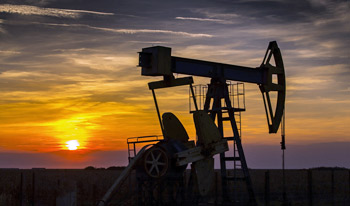
Photo by Fotolia/Calin Tatu
Stan Cox is a senior scientist at The Land Institute in Salina, Kansas, and author most recently of Any Way You Slice It: The Past, Present, and Future of Rationing (The New Press, 2013).






