HARNESSING THE MIGHTY DEEP: Encouraged by the success of Mini-OTEC–an Ocean Thermal Energy Conversion plant based off Hawaii’s coast–Congress has asked the Department of Energy to have 10,000 MW of OTEC generating capacity in place by the year 2000, and to set up a $2 billion loan guarantee program to spur commercial development of the power source. The first OTEC plants will cost more than $250 million apiece. Proposed sites for the facilities include Puerto Rico, Guam, the Virgin Islands, and Hawaii.
CONTINUOUS FERMENTATION? Two huge alcohol producers–National Distillers & Chemical and Archer-Daniels-Midland–claim
they’ve found a feasible continuous fermentation process for distilling
alcohol. The breakthrough would be an improvement over the traditional
“batch” method of fermentation, where a distillery is out of production
25 to 30% of the time so that fermentation vats can be drained and
cleaned. The two companies are keeping mum on details of their findings,
and are particularly quiet concerning how they overcome the biggest
obstacle to continuous fermentation, replenishing the yeasts.
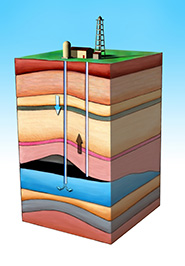
NATURAL GAS GLUT? Private industry and the federal government are at
loggerheads as to whether or not there really is a shortage of natural
gas in view of startlingly large reserves of the fuel that prospectors
have found during recent deep-drilling exploration. The partial
deregulation of prices in 1978 renewed the gas industry’s interest in
finding more of the fuel, and now some energy experts say that as much
as 500 trillion cubic feet of the invisible gas exists in the U.S. It’s a
quantity large enough to last for another 25 years even if no more is
ever discovered.
SOLAR TOWN: When the Kickapoo River–swollen by a three-day deluge–put
the downtown area of Soldiers Grove, Wisconsin six feet under water in
1978, town leaders decided to rebuild on higher ground and to convert
the town to solar power! As a result, Soldiers Grove became the first
American community to rely on the sun to heat its entire commercial
district. Residents now frequent a sun-heated grocery, bank, and medical
clinic … and many are eagerly waiting for one of the town’s bars to
finally “go solar.”
PUTTING THEIR MONEY WHERE THEIR MOUTHS ARE: Pro-nuclear forces–who were successful in convincing Maine voters not to shut down the Maine Yankee nuclear plant during last fall’s referendum–raised a hefty $750,000 war chest for their cause. Among the contributors to the campaign were 40 out-of-state utilities, banks, and investment firms (all of which have financial interests in nuclear power), Westinghouse and General Electric (which produce nuclear reactors) … and, it’s reported, L.L. Bean, the mail order outdoor clothing and equipment supply house that has long been associated with environmental issues.
PEDAL VISION: Annoyed by his children’s addiction to television, Dr. Jim Holmes–an emergency room physician in Scotts Valley, California–has developed what he calls “pedal vision.” If Jim’s youngsters want to “earn” an hour of watching cartoons or other “off-limits” entertainment, they’re required to climb aboard a bicycle/alternator/battery setup and generate enough power for the TV show. So far, the Holmes pedal-power rig has logged 400 miles!
CAVEAT EMPTOR: In their eagerness to take advantage of federal solar tax credits, many folks are installing commercial systems that may be of marginal quality and dubious performance. The Solar Energy Research Institute has prepared a booklet, “Don’t Get Burned With Solar Energy,” to help consumers evaluate the cost-effectiveness of sun power in their particular homes. It’s available for free from the Document Distribution Service.
BARGAIN BASEMENT: The Honeywell Corporation has devised a plan for the low-cost cooling of towering office buildings, which calls for the creation of vast, sub-basement caverns filled with ice. The freezing of the liquid would be computer controlled to take advantage of off-peak electrical rates. During warm weather, the subterranean ice floes would be used to chill circulating water. Honeywell says the system would work on the same principle as “lemonade swirled around ice cubes in a cool summer drink.”
GEL POND: A professor at the University of New Mexico has developed a solar gel pond which uses a transparent polymer that floats on top of salt water and acts as a thermal insulator. Heat trapped beneath the polymer layer is then harnessed by circulating the hot water through an external heat exchanger. The advantages of the gel pond include go.od heat retention, minimal evaporation, and reduced contamination by foreign particles (since any debris will land on the easily washed polymer covering).
The Energy Department estimates that the federal government has spent more than $37 BILLION IN SUBSIDIES to foster the growth of commercial nuclear power during the past 30 years …. The city of New Orleans is experimenting with PHOTOVOLTAIC NAVIGATIONAL LIGHTS across Lake Pontchartrain’s causeway, since the solar cells are less expensive to operate than the traditional battery-powered lanterns …. Sun-Diamond–one of the nation’s largest processors of walnuts–is building a co-generation system to burn the company’s CAST·OFF WALNUT SHELLS. The nut-fired facility will generate electricity for the plant’s heating and refrigeration, and surplus “juice” will be sold to the local utility …. Brazilian automakers report that as many as 9 out of 10 purchasers of new cars in that country want ALCOHOL-POWERED VEHICLES because of the relatively low cost of ethanol. Most Brazilian auto dealers now have waiting lists for alcohol burners.