

Learn about the benefits of promoting green living using green maps in communities.
For thousands of years, maps have played pivotal roles in human history. They’ve been used to chart voyages of discovery, find buried treasure, even fight wars. In our modern, car-oriented society, we depend on maps to help us get where we want to go. Today, communities are using the visual power of maps in a provocative new way: to chart a path toward a greener, more environmentally sustainable future.
From Kalamazoo, Michigan, to New York City, students, teachers, and activists are creating green maps to promote farmer’s markets, locally produced goods, natural food restaurants and environmentally sustainable businesses.
Green maps also are being used to reconnect people with community parks, bike paths, recycling centers and museums — unique places that give our communities a rich sense of identity, but are often overlooked in today’s fast-paced culture.
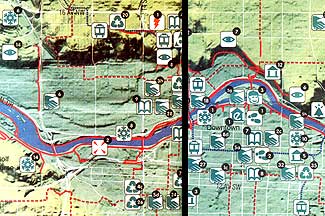
Like conventional road maps, green maps provide practical information for residents and visitors by using a set of icons. But that’s where the similarities with road maps end.
Green maps involve people in the rediscovery of their community. Filled with compelling facts, figures and the stories behind the symbols, green maps help users understand where their water comes from, how their buying choices affect the environment and what they can do to promote a greener, more sustainable way of life.
It’s an idea that’s quickly catching on. There are now 165 green map projects in 36 countries around the world, with more map projects springing to life every month. “It’s amazing to see the growth,” says Wendy Brawer, one of green mapping’s founders and director of the New York Green Map System, a nonprofit group providing global support for local projects.
In the United States alone, more than 60 towns, cities and regions have completed or are working on their own green map projects. Brawer says by reconnecting people to nature, history and local culture, green map advocates are hoping to turn the tide against the mounting environmental and social threats facing communities throughout the United States and around the world.
Legerton says the green maps inspired one North Carolina resident to donate five riverfront acres to the community for a local nature center.
Green Maps Mark Progress
Many areas across the country are struggling to maintain their identities in the face of rapid growth, urban sprawl and an increasing sense of social isolation. (See “From Suburbia to Superbia!” page 54 in this issue). According to Timothy Beatley and Kristy Manning, authors of The Ecology of Place, development continues to consume land at an increasing rate. In the United States, a staggering 1.3 million acres of farmland are lost to development every year. Other regions face faltering economies from the loss of manufacturing jobs, further tearing the social fabric that binds communities together.
“American communities, and indeed the American people, have some important choices to make about the types of places they wish to inhabit and the kinds of environments they hope to leave their children and grandchildren,” write Beatley and Manning.
Increasingly, communities are striving to integrate environmental, economic and social concerns in what’s being called “sustainability.” Brawer says green mapping contributes to sustainability by helping residents rebuild social networks, promote green businesses, select low-impact daily options, understand their environment and rediscover sites that bring special meaning to the place they call home.
Green Mapping Evolves
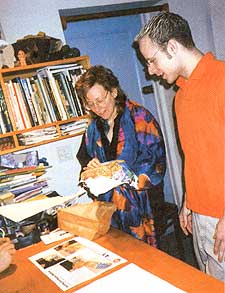
Brawer, an energetic artist and self-labeled “eco-designer,” has been involved with green mapping from its beginning. In 1992, she originated New York City’s Green Apple Map,” the world’s first green map, to highlight the city’s green places and resources.
“We were surprised New York even had an environment to fill the map,” she says. But by the third edition, more than 700 places filled its pages.
Brawer’s efforts met with overwhelming response from people around the world, and she soon realized the powerful role that maps play.
“By mapping something, it becomes yours,” says Brawer. “Maps help us to understand the places we live.”
Renee Murray, leader of Woodbury, Minnesota’s green map project agrees with Brawer. “People can take hold of a map, touch it and tell stories using it,” she says.
Brawer’s initial successes led her and her colleagues to devise a system of colorful, visually appealing icons for each green map feature to unify maps and make them instantly recognizable. Though the content of each community’s green map would differ, Brawer hoped the artfully created icons would cut across language and cultural barriers, making maps accessible to users around the world.
In 1997, Brawer helped prepare a new green map for New York, this time using the icons. By the end of 2001, 67 communities around the world had published more than 1 million green maps and green mapping had received more than 10 awards for its contribution to environmental education. Brawer’s organization, Green Map System, now has a small staff, board of advisers and a growing legion of volunteers.
Green Maps: A Grassroots Approach
Local leadership is key to the success of green mapping, a grassroots approach that involves community residents from the ground up. Jason King, a landscape architect heading up Portland, Oregon’s green map, says the city’s map is being developed one neighborhood at a time. By August, all the maps will be linked to form one large, citywide map.
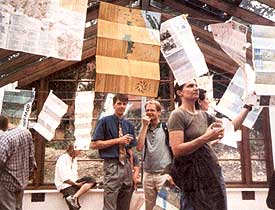
King says for Portland’s first green map of the city’s Sabin neighborhood, volunteers took to the streets, walking each block to take photos and talk with neighbors, and map parks, bike shops, natural food stores, vegetarian restaurants, local art and other points of interest. Mappers also held several neighborhood workshops where residents could draw on maps and share ideas.
Much of green mapping’s success depends on dedicated local residents, students and volunteer professionals to research and produce each map. Every map differs, driven by what each community values and chooses to include. As a result of extensive community input and dialogue, often the process is more rewarding to participants than the end product.
“Our goal was to really empower people through information,” says King.
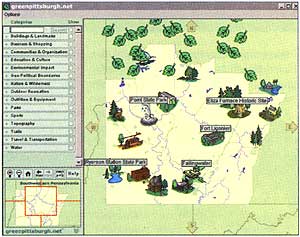
Pittsburgh, Pennsylvania’s green map, covering an 11-county area in the southwest part of the state, empowers the community in a different way. Project co-ordinator Any Kapp says Pittsburgh’s map, available at www.greenpittsburgh.net, allows more than 120 contributors to update information using an interactive website, ensuring the map is always current.
“It’s really become the discovery tool it was intended to be,” says Kapp.
Getting Youth Involved in Green Mapping
Robeson County, North Carolina’s green map, among the largest and most ambitious projects to date, is focused on directly involving school youth in mapping. It’s also one of the first green maps to focus on cultural and historic sites.
One of the state’s poorest regions, Robeson County’s agricultural and textile manufacturing economy has been devastated in recent years with the loss of thousands of jobs. Many of the county’s youth come from families hit hard by poverty and racism, leaving them with a sense of hopelessness about their future.
“Youth can’t build self-esteem without self-identity,” says Mac Legerton, director of the Lumberton, North Carolina-haled Center for Community Action. “But if we convince them why their community is unique, they will take pride in it.” He say’s green mapping is cultivating a sense of community.
In an eighth grade civics education class at Fairgrove Middle School, located in rural southeast North Carolina, 15 students gather around a gigantic piece of drawing paper draped across their classroom floor. On it they’ve drawn a map of their community filled with colorful symbols showing rivers, farmer’s markets, old trees, American Indian burial grounds and even old cotton gins. It is the product of several exhausting days of research, interviews of community elders and field trips by the students.
“The map is a good way for us to learn and give back to our community because we are putting information together that will be useful for others,” says eighth grader Ryan Hunt.
At 1,000 square miles, Robeson County is North Carolina’s largest county, and home to large African American and American Indian populations. Legerton says the Student green maps already are transforming the community, helping to heal racial tensions and teaching students about common bonds found in their shared history.
Many students have launched community service projects based on their map research, and local landowners are taking notice. Legerton says the green maps inspired one resident to donate five riverfront acres to the community for a local nature center.
The Fairgrove Middle School map is just one of 66 maps being prepared by local schools, all involving youth in research, writing and map making. Eventually, local high schools will combine the maps into one large, countywide map.
Promoting Green Tourism
Communities are also using green maps to promote ecotourism. In Pinellas County, on Florida’s Gulf Coast, the county’s St. Petersburg-Clearwater Area Convention and Visitors Bureau developed a Web-based green map to draw tourists to its 37 miles of beach, parks, bird-watching sites and other natural attractions. According to Bureau director Carole Ketterhagen, green mapping was a natural fit for a county that has received many national awards for its environmental stewardship.
“We know visitors come here because of our environment and culture, says Ketterhagen, who immediately recognized the potential of green mapping to promote not only the county’s beaches and natural areas, but also its vibrant museums and arts scene. Now the county is updating its green map to include natural food stores and restaurants and other environmentally friendly services.
Similarly, Rhode island’s green map, the first map prepared for a state, has become a vital part of its tourism program. Published by the state’s multi-agency Greenways Council, the map guides visitors to trails, historic places and nature-oriented activities.
“I get calls from local tourism groups, bike stores and state agencies requesting copies,” says Rhode island’s map project coordinator George Johnson. “It’s been quite popular.”
Companies providing financial support for map projects are not permitted to influence their content, and information sources are carefully documented.
Looking to a Green Future
Brawer says although green map projects have been largely successful, some have experienced bumps along the way. Residents have complained about places left off maps, while other local projects have sparked lively debate about what belongs on a green map. But every effort presents the opportunity to learn and grow, Brawer says.
We try to anticipate and address conflicts before they happen,” she says. “But green mapping is a community-driven process and maps can always be revised, particularly online versions.”
To avoid green-washing by companies or groups hoping to jump on the sustainability bandwagon with false claims, companies providing financial support for map projects are not permitted to influence their content, Barber says. She also encourages project leaders to thoroughly document the sources of information used to develop each map.
Green Map System has opened a store on its website to sell green maps from around the world, and an online atlas is in the works to showcase the stories behind all the maps. More importantly, she hopes to continue connecting green map volunteers. Thanks to a gift from the Rockefeller Foundation, this year many green mappers will meet in person at their first global meeting.
“In so many ways the Green Map System has exceeded my vision of what we could accomplish together in support of community and cultural sustainability,” Brawer says.
Green mapping also has left a lasting impression on Robeson County’s students. Like Brawer, the children also are developing a new vision of what they can accomplish.
“Being in this class has brought us together as one group,” says one student. Now, they can map their path together to create a greener, more livable future.
Dave Wortman writes about the environment, travel and the outdoors from his home in Seattle. He can be reached at dewortman @ earthlink.net.
For More Information
Green Map System
www.greenmap.org
All projects are linked to Green Map System’s website.
Center for Community Action
Lumberton, North Carolina
members.carolina.net/cca






