

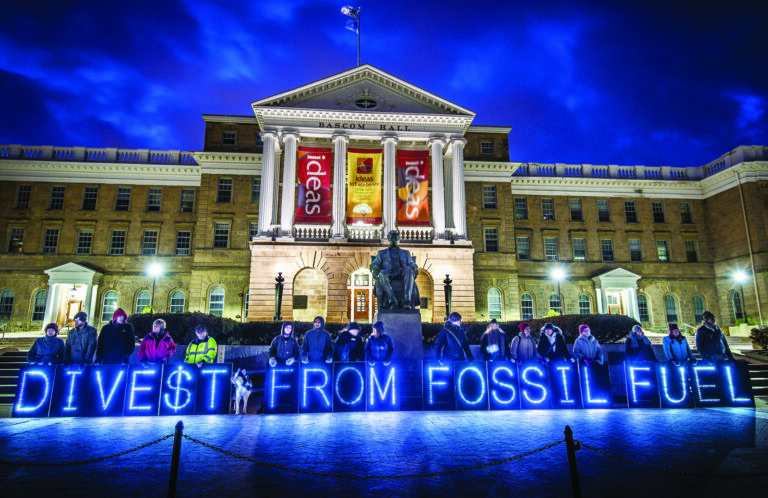
Numerous institutions, from philanthropic foundations to powerful corporations, fund, insure, and invest in fossil fuels — so a growing grassroots movement is calling on those institutions to divest from the volatile fossil-fuel industry, citing it as a driver of human rights violations, deforestation, and climate destruction.
The divestment movement began as a decentralized network of people who used their membership or support of universities, churches, and organizations to push for divestment on a local level. As a result of this pressure, more than 1,100 institutions have made divestment commitments, bringing the amount of divested funds above $14 trillion.
Now, a new arm of the divestment movement has emerged that’s bigger in scope and involves a coalition that has come together under the name Stop the Money Pipeline. Elana Sulakshana, an energy finance campaigner at Rainforest Action Network (RAN), says this movement primarily targets financial institutions, the biggest backers of the fossil-fuel industry. RAN’s 2020 fossil fuel finance report, “Banking on Climate Change,” shows that 35 banks have invested a total of $2.7 trillion into fossil fuels since 2016, the year after the Paris Agreement was adopted, and that bank financing for fossil fuels is on the rise at a time when climate science is calling for rapid global decarbonization. Of those 35 banks, JPMorgan Chase is by far the top fossil-fuel funder, providing $268 billion in funding for fossil fuels since 2016.
People in the divestment movement have aimed to create reputational risk for these banks by shutting down bank branches with songs and signs; regularly contacting CEOs; encouraging employees to raise questions internally; and pressuring legislators to mandate the disclosure of climate risks and consequences.
Their actions have had an impact. “Fossil fuel companies have cited divestment as a reason they don’t have enough financial backing, and major oil and gas companies like Shell are fighting divestment as a threat to their business,” Sulakshana says. “Divestment is one piece in pushing for a just transition from the extractive economy to a regenerative democratic economy. And we’re calling on financial institutions to prioritize people and the planet above profits, and reinvest that money in an economy that supports communities.”
Extreme Home Energy Makeovers
The Knoxville Extreme Energy Makeover (KEEM) was a two-year program to reduce energy usage in Knoxville, Tennessee. But it wasn’t just about energy — it also focused on education and equity, to benefit the community and economy as well as the environment.
The program, which ran from 2015 to 2017, upgraded Knoxville homes by weatherizing the structures and increasing their energy efficiency. The $15 million that funded KEEM came through the Tennessee Valley Authority’s (TVA) Mitigation Projects. According to Brian Blackmon, Knoxville’s sustainability director, local partners had already been discussing how to address low-income home weatherization — so they applied together for the money and then implement a program that would maximize the funds. Small businesses received $8.5 million, and with the rest of the $15 million, 1,278 lower-income families received comprehensive upgrades that have saved 6,086,500 kilowatt-hours.

Blackmon says the annual energy savings can power 507 average Knoxville homes, and that the program reduced emissions by 4,300 metric tons — all while increasing residents’ comfort and spending autonomy. “This made nearly 1,300 of our residents’ homes more affordable and comfortable to live in. On top of those families receiving direct service, we were able to host public workshops for anyone in the community to learn how to have more control of their utility bill,” Blackmon says. That educational impact also extended to folks who didn’t financially qualify for the upgrade services. “Most folks think of weatherization and energy efficiency programs as a plug-and-play solution, but [they] can certainly be maximized by small adjustments in our behavior,” Blackmon says.
After KEEM ended, the Knoxville Utilities Board (KUB) continued to provide workshops and weatherization assistance. Since 2015, KUB has provided more than $2 million in weatherization assistance to people in need. Plus, KEEM has a direct successor in TVA’s Home Uplift, a program for home energy upgrades that improve residents’ quality of life.
To learn more, you can search for “Knoxville Extreme Energy Makeover” on the Knoxville website.
World’s Largest Lithium-Ion Battery
A massive storm in South Australia toppled transmission towers, disconnected power generators, and interrupted the transmission connection between South Australia and Victoria in late 2016. The resulting statewide blackout required several days of recovery, so in response, the South Australian government announced a plan to install the world’s largest lithium-ion battery to stabilize the state’s grid.
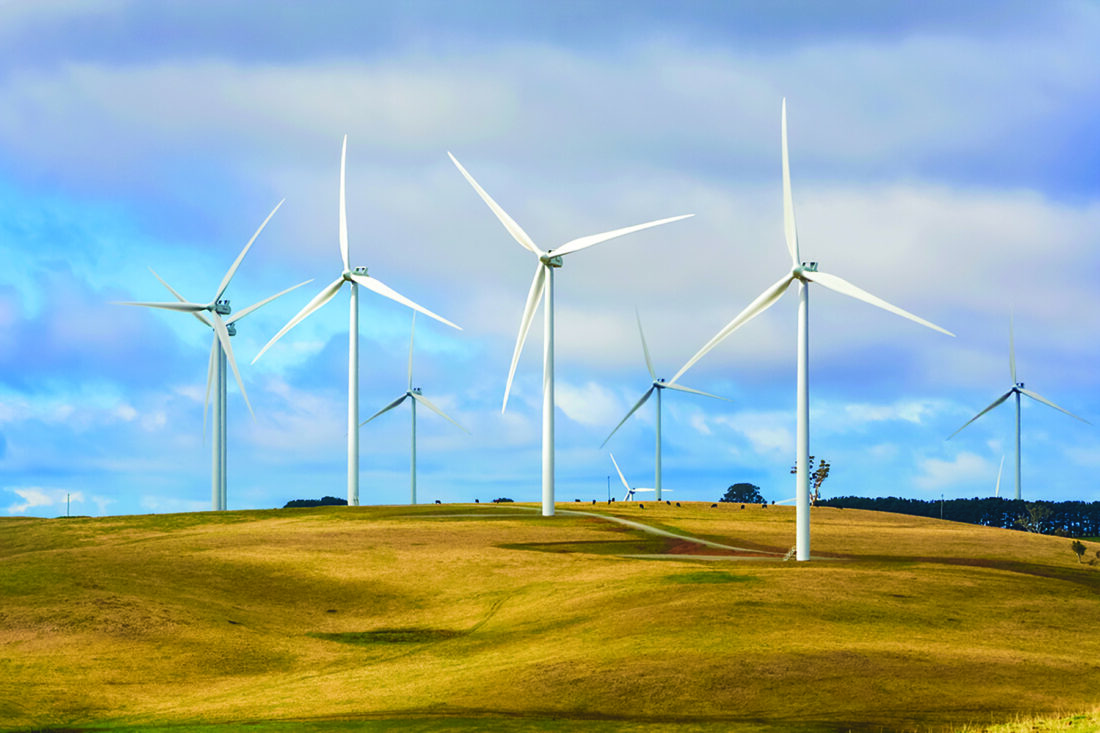
It accomplished this with an agreement between itself; Tesla, which supplied the battery; and the French renewable energy company Neoen, which owns and operates the battery, called the Hornsdale Power Reserve. Engineering consultant Aurecon is the government’s specialist technical advisor for its clean energy transition. Steve Wilson, Aurecon’s technical lead for the project, says the battery is most often used to balance electricity supply and demand. “It has the ability to respond within the blink of an eye to support the power system upon major disturbance events, such as the unexpected loss of a large power generator,” Wilson says. “It also generally charges when wind and solar generation is plentiful, and discharges during peak periods when the demand for electricity is higher.”
In 2019, the battery’s storage and output capacity began to be expanded from 100 megawatts to 150 megawatts, which will improve the system’s resilience and support the integration of additional wind and solar power by supplying “inertia” to the grid. The expansion will support South Australia in reaching its goal of being net 100 percent renewable by 2030. And, according to Wilson, the battery has cut electricity costs. Aurecon recently conducted a study and found that the battery was responsible for energy cost savings of approximately $116 million in Australian dollars over 2019.
Funding for Future Farmers
The farms of the future will require a cohort of farmers-in-training who are ready to meet the growing demand for organic production. But, according to the nonprofit California Certified Organic Farmers (CCOF), fewer youths are entering the agriculture sector. To fill the vacancies by supporting budding farmers and entrepreneurs, CCOF offers Future Organic Farmer Grants to help finance organic education efforts from kindergarten through college. These grants can bolster a classroom’s project-based learning, fund a Supervised Agricultural Experience (SAE), or support collegiate studies in organic agriculture.
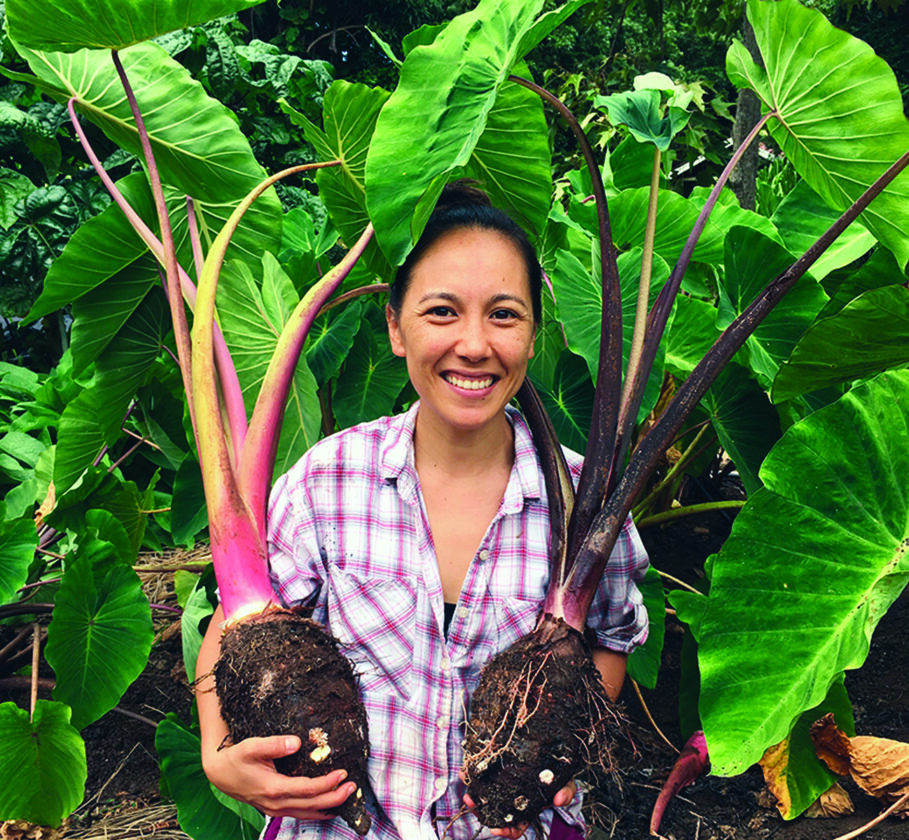
The Future Organic Farmer Grants are distributed to three categories of applicants. The first category is for teachers of kindergarten through eighth grade, who must submit an organic-agriculture project proposal when applying. Up to 25 grants of $1,000 each are available for this category, and CCOF awards a large portion of grant funds to teachers in school districts with half or more of their students enrolled in a reduced-cost lunch program.
Another 25 grants of $1,000 each are available for middle and high school students who are in the Future Farmers of America (FFA) and are planning to complete an SAE project, which must adhere to U.S. Department of Agriculture organic production standards.
Finally, for higher education and vocational students who are pursuing degrees or certificates in organic agriculture, CCOF offers up to 25 grants of $2,500 each to assist with tuition and educational expenses.
In the latter two categories, each applicant’s financial need is taken into consideration for grant approval. To date, the program has dispensed more than $600,000 in grants, assisting tens of thousands of students across the United States, and more than 80 percent of the higher education grant recipients have gone on to work in organic industries or to become farmers. To learn more and apply for a grant, go to the CCOF website.
Publishing in a Pandemic
In early April, a pandemic swept the globe and rapidly changed the way we live, work, and play. It was brought on by a novel coronavirus that causes COVID-19, an infectious respiratory disease that can be dangerous, especially for immunocompromised and older individuals. Because no vaccine yet exists to prevent the spread of the virus, various states and counties have instated stay-at-home policies to try to contain it.
At the time of publishing, we’re in the initial stages of the outbreak in the United States, and our editorial staff is working from home to stay safe. We plan to continue publishing our magazines and online content throughout this crisis, bringing our readers the self-sufficiency and do-it-yourself content they’ve come to count on over the past 50 years.
The best way to prevent illness, according to the Centers for Disease Control (CDC), is to avoid exposure by maintaining distance from other people. To keep yourself, your family, and your community safe, follow the CDC’s most up-to-date safety recommendations:
- Clean your hands often with soap and water, especially after you’ve been in a public place, or after blowing your nose, coughing, or sneezing.
- If soap and water aren’t readily available, use a hand sanitizer that contains at least 60 percent alcohol.
- Avoid touching your eyes, nose, and mouth with unwashed hands.
- Avoid close contact with people who are sick.
- Put distance between yourself and other people if COVID-19 is spreading in your community, especially if you’re at higher risk of getting very sick.
- Stay home if you’re sick, except to get medical care.
- Cover your mouth and nose with a tissue when you cough or sneeze, or use the inside of your elbow. Throw used tissues in the trash and immediately wash your hands.
- If you’re sick, wear a face mask (if you can) when you’re around other people and before you enter a health care provider’s office.
- If you’re not sick, wear a homemade face mask. Medical face masks are in short supply and should be saved for caregivers, but there are many patterns for homemade masks to reduce the risk of community spread.
- Clean and disinfect frequently touched surfaces daily.
Whether your day-to-day has been majorly disrupted or your off-grid routine remains much the same, you can build resilience for yourself and your community by growing and preserving your own food, making your own soap, and checking in on your neighbors — just not face to face! The below articles offer guidance on increasing your own and your community’s food self-sufficiency and security. For more resources, go to our coronavirus roundup page at Pandemic Self-Sufficiency.





