

Following a Peregrine Falcon
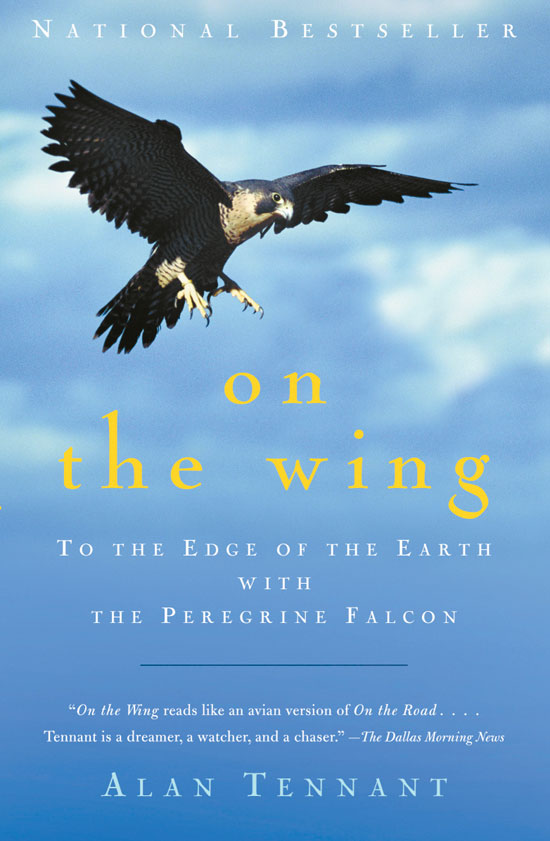
In the 1980s, On the Wing author Alan Tennant volunteered with a team of biologists striving to shed light on the mysteries and dangers surrounding peregrine falcons’ transcontinental migrations from their breeding territories north of the Arctic Circle to their wintering grounds on South Padre Island, and back again.
Written from the perspective of a passionate naturalist and romantic idealist, Tennant’s On the Wing relates his obsession with trying to follow a migrating falcon, a feat never attempted before. To accomplish his quest, he enlisted the help of George Vose, a 70-year-old ex-World War II fighter pilot and Vose’s almost-as-ancient, rattletrap, single-engine Cessna plane.
An inveterate and accomplished aviator, Vose had been hired by the U.S. Army to radio-track the short-term movements of peregrines as they left South Padre Island. It was during one of these tracking flights that Tennant, onboard to observe, grew frustrated with the Army’s limited research goals and began to hatch a plot to follow a falcon all the way home. A self-proclaimed outlaw, Tennant “borrowed” the Army’s sophisticated tracking equipment and, together with Vose, began a multi-year transcontinental odyssey of enlightenment and concern over the plight of peregrine falcons, which are the fastest animals on the planet.
As a current member of the Padre Island Peregrine Falcon Survey team, I am struck by the author’s vivid portrayal of the stark beauty and unique natural history of South Padre Island and its importance as a refuge for peregrines, as well as for hundreds of other migrating bird species. In captivating narrative, Tennant describes the landscapes and habitats, the wonders and the perils encountered by peregrines along their migration routes — scenes that I have often imagined after releasing a freshly banded falcon to continue on its way.
Unfortunately, Tennant exercises literary license with some of the facts, such as the portrayal of Prescott Ward, a biologist who took exception to Tennant’s unauthorized and illegal activities. Tennant did not have the proper training or the necessary permits required to work with peregrines, and his actions put the whole project at risk of being shut down. Still, his concern for the species is sincere.
Though the peregrine falcon has recovered from the brink of extinction, there still are threats such as rampant coastal development and the spread of the West Nile Virus and Avian Influenza. The public’s fascination with peregrines and concern for their welfare remains as passionate today as when Tennant and Vose undertook their own epic migrations.
More than just a superb account of natural history, On the Wing is part exotic travelogue, part epic adventure saga, part coming-of-middle-age chronicle and part buddy story. Tennant’s tale is wondrous, suspenseful, hilarious and introspective. It is a book that crosses many genres and should appeal to a wide variety of readers.
Brian Latta is a field biologist for the Predatory Bird Research Group at the University of California at Santa Cruz, working primarily with peregrine falcon recovery. He’s also a member of the Padre Island Peregrine Falcon Survey team, which has studied peregrine migration since 1993. The aforementioned book is On the Wing: To the Edge of the Earth with the Peregrine Falcon. By Alan Tennant (Knopf, 2004).






