


Bison (Reaktion Books, 2015) by Desmond Morris relays the history of the bison, from the very first fossil records from 2 million years ago to today’s population. Morris discusses the highs and lows of the bison throughout their time in the American West. The following excerpt is his explanation for how the American Indians utilized the bison they hunted.
This book can be purchased with a 20 percent discount on the University of Chicago website using the discount code PRBISON, courtesy of Reaktion Books.
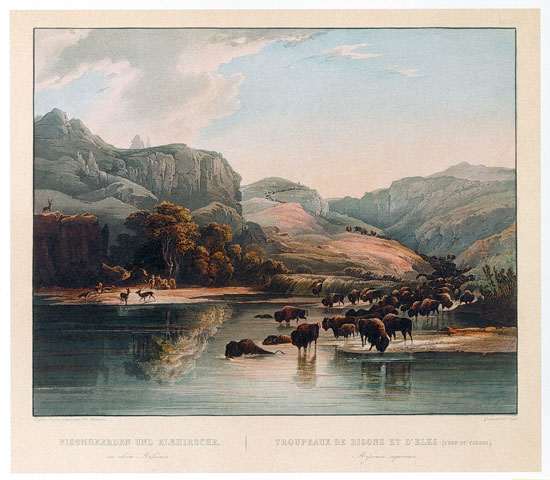
For advancing tribes of these first American – the Paleo-Indians – these bison herds must have been a welcome sight. Those pioneering human groups that settled in the woodlands and on the plains of North America would soon come to rely on this species as their key to survival. Its herds not only supplied their food, but also skins for clothing and for dwellings. But humans were thin on the ground at this stage and the bison were plentiful, so a balance was achieved. The new predators were able to kill as many bison as they liked without causing any serious damage to the herds.
Once a tribal kill had been made, the bison carcass was carved up for many uses. Records suggest that there were as many as 65 different ways in which the American Indian tribes would utilize a dead bison. These can be summarized as follows:
Food. The flesh of the bison provided a high-quality meat that was the main source of protein. In addition, humans also ate the tongue, the testicles, the bone marrow, the intestines and other internal organs. They dried some of the meat to consume as a pemmican in the winter months. They drank the blood and any milk they found. Special delicacies were raw brains, raw liver and raw nose-gristle, Skin-scrapings were mixed with berries to make a jelly. Pounded bones were boiled, the grease skimmed from the surface and put into bladders, from which it was used as a kind of butter.
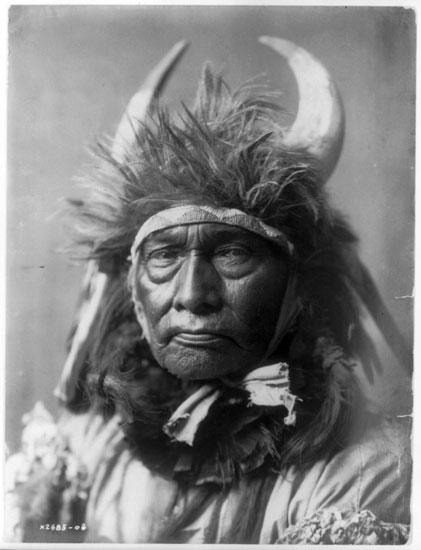
Clothing. Hides were cut and stitched to make regalia for both adults and children. They were also used to fashion caps, moccasins, and mittens. Snowshoes were made from sinews. Hide with hair was employed to make gloves and ceremonial robes. Headgear made of horns and hair was worn on special occasions.
Weapons. Arrows and arrow-straighteners were made from ribs, and arrow-points from horns – to be used against the species that supplied them. Bow-strings were made from sinews. Shields were created from tough hides. When horses were introduced as an aid to hunting, the saddle-covers were made from hide and the whips from tails.
Utensils. Cups were made from hide, hooves, and horns. Horns were also employed in the making of spoons and ladles, and also a variety of containers including tobacco holders and medicine holders. Other containers were made from the intestines. Hide was used to make kettles, carrying cases and water bags.
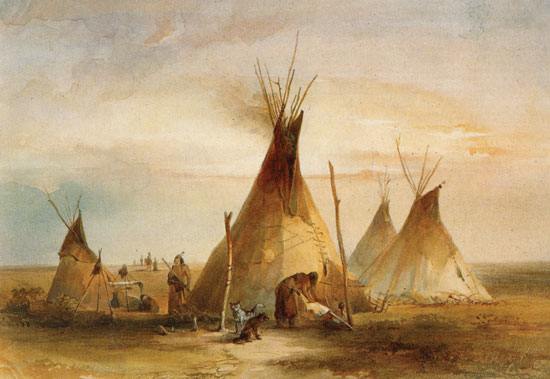
Dwellings. Tepees and other dwellings were covered in hides, webbing and thread were made from sinews, rope and yarn from hair and bedding from hide and hair attached.
Household Goods. The rough surface of the bison’s tongue was used as a hairbrush, its tail as a fly-swat, its hair to stuff pillows and cushions, its long bones to make tools, its shoulder blades to make hoes, its gallstones as a source of yellow pigment, its fat to make soap, its dried dung as fuel for camp fires, its penis and its boiled bones to make glue, its brains as a hide-softener during tanning, its fat as a paint base, and its teeth and hair to make ornaments.
Ceremonies. Bison dung was sometimes used for ceremonial smoking sessions, and bison skulls were employed during tribal rituals. For ceremonial music, rattles were crafted from hooves and drums from hides.
Vehicles. The hide was used for covering canoes and on the Indian travois, which was kind of sledge dragged along the ground, usually by travois-dogs of a special breed.
So, for the tribal Natives, killing a bison was like visiting a supermarket. It would be wrong, however, to imagine that a bison hunt was an everyday event.
Reprinted with permission fromBison (2015), by Desmond Morris and published by Reaktion Books.
Regularly vetted or edited for accuracy.





